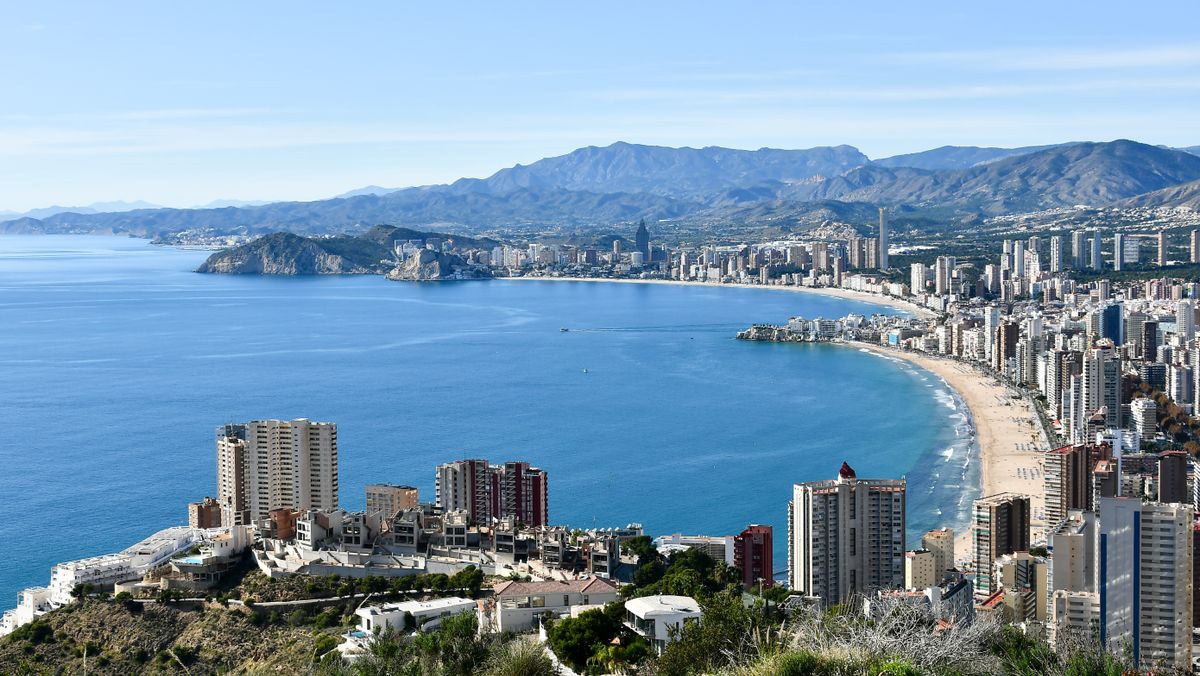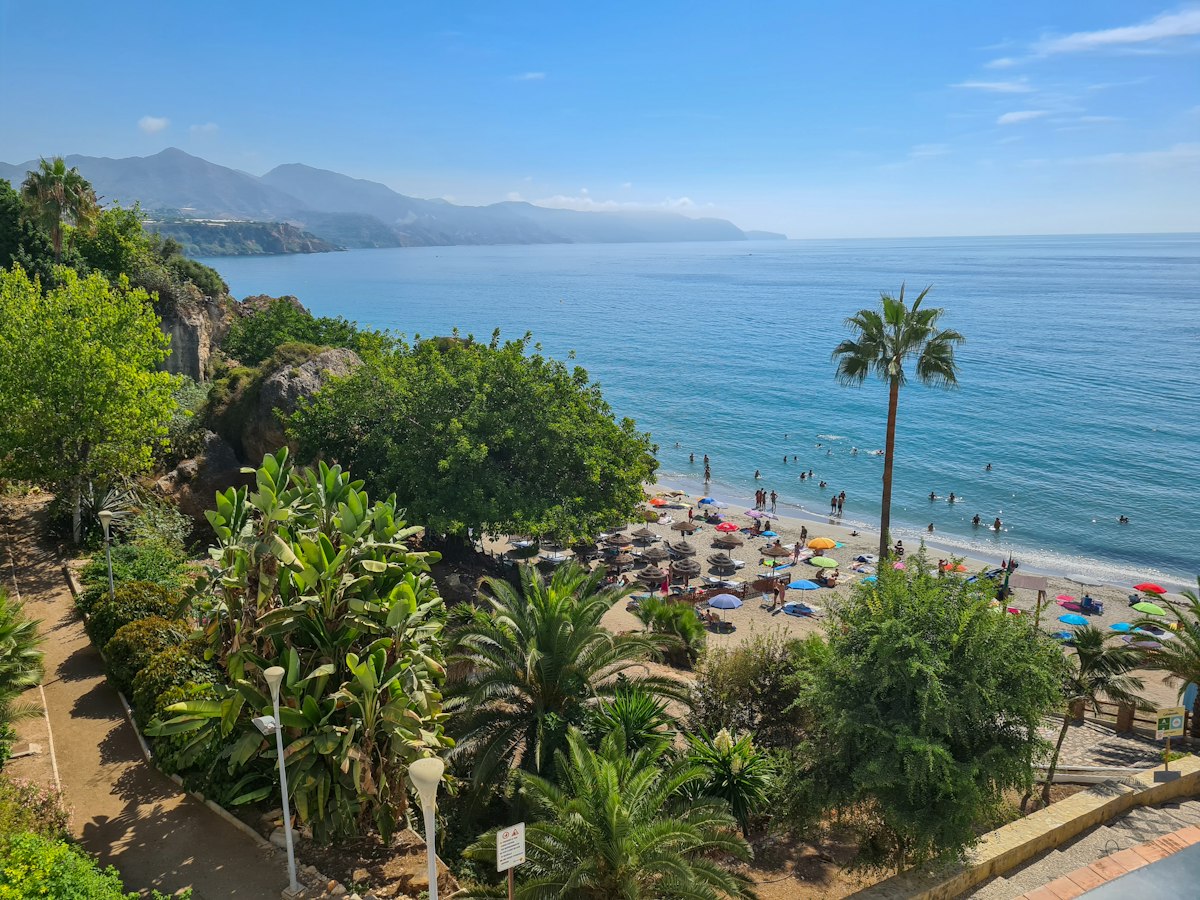
Fuengirola is the Costa del Sol's workhorse. It doesn't have Marbella's glamour or Estepona's postcard old town, and it has never pretended to. What it has is a 7km beachfront, a train line straight to Málaga Airport, one of the largest British expat communities in Spain, and property prices that sit 40–60% below Marbella for a broadly comparable coastal lifestyle.
That combination makes it one of the most rational purchases on the coast — which is exactly why it rarely gets the breathless coverage Marbella attracts. Nobody writes lifestyle features about sensible. But if your priority is a property that's easy to buy, easy to rent, easy to reach, and easy to sell again, Fuengirola deserves a serious look.
This guide covers what property actually costs in each part of town in 2026, what the rental market genuinely delivers, how Fuengirola stacks up against its neighbours, and the downsides the listings won't mention.
Fuengirola at a Glance
Fuengirola sits roughly 25 minutes from Málaga Airport on the western Costa del Sol, wedged between Benalmádena to the east and Mijas Costa to the west. The town proper is home to around 85,000 people, swelling well beyond that in summer, and it is one of the most densely international municipalities in Spain — British, Irish, Finnish (there's a famous Finnish community here), Dutch and Scandinavian residents are all present in numbers.
Three practical facts define the town for property buyers:
The Cercanías train. Fuengirola is the western terminus of the C-1 suburban rail line, which runs every 20 minutes to Málaga Airport (about 25 minutes) and Málaga city centre (about 45 minutes) for a few euros. No other town west of Fuengirola has rail. For airport transfers, car-free living, and rental appeal, this is a genuine structural advantage over Marbella and Estepona, where you're dependent on buses, taxis or a hire car.
The 7km promenade. The Paseo Marítimo runs unbroken from Carvajal in the east to Sohail Castle in the west — one of the longest seafront promenades in Spain, lined with chiringuitos, playgrounds and bike lanes. Almost every neighbourhood covered in this guide sits within a 10-minute walk of it.
Year-round life. Fuengirola is a working Spanish town first and a resort second. Shops, restaurants, healthcare and schools operate at full tilt in January, not just July. For anyone planning to live here, that matters more than any beach club.
Is Fuengirola Good Value Compared to Marbella?
On the numbers, unambiguously yes. Fuengirola is a mid-market Costa del Sol town, with most stock trading between €2,000 and €3,800/m² in 2026. Marbella's average sits well above €4,500/m², with the Golden Mile and Puerto Banús far beyond that. In practical terms: a €250,000 budget in Fuengirola buys a decent two-bedroom apartment a short walk from the beach. In Marbella, the same money buys a studio in an outlying urbanisation or nothing at all. Our Marbella property guide sets out that market in full if you want the direct comparison.
The value question is whether you're giving anything up. You are — but less than the price gap implies. What Marbella has that Fuengirola doesn't: prestige, a luxury dining and beach club scene, a deeper pool of high-end villas, and stronger long-term price appreciation at the top of the market. What Fuengirola has that Marbella doesn't: the train, a shorter airport run, a more Spanish year-round economy, and entry prices that leave room in the budget for the actual living.
The honest framing: Marbella is a luxury asset market; Fuengirola is a liveability market. If you're buying trophy property, Fuengirola isn't your town. If you're buying a home or a rental workhorse, the value is hard to argue with.
Fuengirola Property Prices by Area (2026)
Prices below reflect typical asking prices in early 2026. Fuengirola is overwhelmingly an apartment market — detached villas exist mainly on the Mijas side of the boundary. If a villa is the goal, browse villas for sale on the Costa del Sol and expect to be looking at Mijas, La Cala or further west.
Fuengirola Centro
The town centre runs back from the port and the central stretch of beach, around the Plaza de la Constitución and the pedestrianised shopping streets. This is the most urban part of town: dense mid-rise blocks, mostly 1970s–1990s construction, everything walkable, the train station on your doorstep.
Expect €2,400–€3,500/m², with front-line beach blocks pushing higher. A renovated two-bed runs €230,000–€330,000; unrenovated stock in the same buildings trades from around €180,000, and the renovation-margin play is real here because the location can't be replicated. Downsides: older buildings mean variable community fees and occasional lift/facade works (check the community minutes before you buy), parking is scarce, and August is loud.
Best for: walkability, rental demand, buyers who don't want a car.
Los Boliches
Los Boliches, immediately east of the centre, is Fuengirola's sweet spot and the heart of the British and Irish community. It's slightly calmer than the centre but still fully urban, with its own Cercanías station, its own church square, a proper Saturday market, and a beach that many locals rate above the central stretch.
Prices sit at €2,300–€3,400/m². A two-bedroom apartment within ten minutes of the beach runs €220,000–€320,000; three-beds from around €300,000. Stock near the seafront on Paseo Marítimo Rey de España commands a clear premium. Los Boliches is consistently the most liquid part of the Fuengirola market — properties priced correctly sell fast, which cuts both ways when you're the buyer.
Best for: first-time Spain buyers, retirees, anyone who wants expat infrastructure without an expat ghetto.
Torreblanca
Torreblanca climbs the hillside at the eastern end of town, above its own train station. It's a mixed area: older Spanish blocks and townhouses lower down, and progressively larger apartments and semi-detached houses with sea views as you climb. This is where Fuengirola gets cheapest.
Expect €2,000–€2,800/m². Two-beds start around €170,000–€200,000, and hillside properties with genuine panoramic sea views can be found under €300,000 — a view that would cost double elsewhere on this coast. The trade-offs are the hills (steep enough that mobility matters — test the walk from your shortlisted property to the station before offering), patchier build quality in some 1980s blocks, and a quieter commercial scene than Los Boliches.
Best for: budget buyers, view hunters, buyers who don't mind driving or climbing.
El Chaparral / Western Fuengirola
At the western end of town beyond Sohail Castle, the built form changes: lower density, newer stock, golf. El Chaparral itself — technically straddling the Mijas boundary — is built around the El Chaparral Golf Club, with modern developments of apartments and townhouses set among pine woods above a quieter stretch of beach.
New-build and recent resale product here trades at €3,000–€3,800/m², the top of the Fuengirola range. Modern two-bed apartments with communal pools run €300,000–€420,000; townhouses from roughly €400,000–€550,000. You're buying newer construction, better outdoor space and lower density, and giving up walkability — this is car territory, and the train doesn't reach here.
Best for: lock-up-and-leave buyers, golfers, those who want new-build spec without new-build Marbella prices.
The Mijas Costa Border
West of El Chaparral, Fuengirola bleeds into Mijas Costa — Calahonda, Riviera del Sol, La Cala de Mijas — which is administratively a different municipality but functionally the same property market. Prices in the established urbanisations run €2,000–€3,000/m², with La Cala's newer beachside developments above that. This is where villa and townhouse stock opens up properly: detached three-bed villas from around €450,000–€600,000, versus €900,000+ for the equivalent in greater Marbella.
If your search starts in Fuengirola and your budget wants more space, this corridor is the natural next step. Our Costa del Sol property guide covers the wider coast town by town.
Rental Potential: The Two-Season Advantage
Fuengirola's rental case rests on something most Costa del Sol towns can't offer: two overlapping markets.
Summer holiday lets perform as you'd expect anywhere on this coast. A well-presented two-bed near the beach in the centre or Los Boliches achieves €900–€1,400/week in July and August, with strong shoulder seasons from Easter through October. Occupancy for properly managed and marketed units routinely exceeds 80% across the summer half of the year. Note that Andalucía requires a VUT tourist licence for short lets, and since 2024 communities of owners can restrict new holiday lets by a three-fifths vote — verify the community's position *before* you buy, not after.
Year-round demand is where Fuengirola separates from pure resort towns. The large British, Irish and Finnish resident communities, plus Málaga's overheated rental market pushing workers down the train line, generate genuine 12-month tenant demand. Long-term rents for a two-bed run €1,000–€1,400/month in 2026 — figures that were unthinkable five years ago. That gives owners a real choice: chase peak short-let income with the licensing admin, or take a stable long-term tenant at a gross yield of roughly 5–6% on mid-market stock and never think about changeovers.
Winter lets are the third option: October-to-May lets to Northern European retirees at €800–€1,200/month combine neatly with summer holiday letting.
Whichever route you take, run your numbers on net yield, not gross — purchase costs in Andalucía add roughly 10–13% to the price. Our buying costs in Spain guide breaks down ITP, notary, registry and legal fees line by line.
Pros and Cons vs Other Costa del Sol Towns
Where Fuengirola wins:
- Connectivity. The train to the airport beats every town west of it. No transfer bookings, no €70 taxis.
- Price-to-lifestyle ratio. Beachfront-adjacent living from €200,000 is simply not available in Marbella or increasingly in Estepona.
- Year-round economy. The town doesn't hibernate in November the way La Cala or parts of Calahonda do.
- Rental flexibility. Strong summer *and* long-term demand; most towns on the coast only have one.
- Liquidity. High transaction volume means realistic pricing data and easier resale.
- Looks. Fuengirola is a functional 20th-century beach town. If Andalusian charm is the brief, Estepona or Mijas Pueblo will make you happier.
- Prestige and appreciation ceiling. Top-end capital growth on this coast concentrates in Marbella, Benahavís and Estepona's new-build belt. Fuengirola appreciates steadily, not spectacularly.
- Density and summer crowds. The centre in August is intense. If you want quiet, buy in El Chaparral or Torreblanca's upper streets — or a different town.
- Ageing stock. Much of the centre and Los Boliches is 40–50 years old. Budget for community works and check the building's ITE (technical inspection) status.
Buying in Fuengirola: Practical Advice for UK Buyers
The process is the same as anywhere in Spain — get an NIE number, open a Spanish bank account, instruct an independent lawyer (never the agent's recommended one without checking independence), pay a reservation then a 10% deposit at the *contrato de arras*, and complete at the notary. Post-Brexit, UK buyers face no restrictions on purchase, but remember the 90/180-day Schengen rule applies to how long you can stay without residency.
Fuengirola-specific points worth flagging:
- Resale dominates. Roughly 90% of what you'll view is resale. Budget 7% ITP (transfer tax in Andalucía) plus ~2–3% in fees. New builds carry 10% VAT plus 1.2% stamp duty instead.
- Check the community. In older blocks, ask for the last two years of community meeting minutes. You're looking for unfunded facade or lift works, and for any vote restricting tourist rentals.
- Orientation matters. South and southeast-facing units command a premium for a reason — north-facing flats in the centre's canyon streets can be genuinely dark.
- Mortgages. Spanish banks typically lend UK residents up to 70% LTV. Get an agreement in principle before you view; sellers here take fast, financed-and-ready buyers seriously.
The Bottom Line
Fuengirola is what a rational Costa del Sol purchase looks like in 2026: €2,000–€3,800/m², a train to the airport, a beach that runs the length of the town, and rental demand in every month of the calendar. It will never be fashionable, and that is precisely why the numbers work. Buy in Los Boliches or the centre for liquidity and lifestyle, Torreblanca for budget and views, El Chaparral or the Mijas border for modern space — and whichever you choose, do the community-minutes homework that most buyers skip.
Frequently Asked Questions
Q: How much does an apartment in Fuengirola cost in 2026?
Expect €2,000–€3,800/m² depending on area and condition. A typical two-bedroom apartment within walking distance of the beach costs €220,000–€330,000 in the centre or Los Boliches, from around €170,000 in Torreblanca, and €300,000–€420,000 for modern stock in El Chaparral.
Q: Is Fuengirola cheaper than Marbella?
Yes, substantially — Fuengirola trades 40–60% below Marbella on a per-square-metre basis. A budget that buys a studio in Marbella buys a well-located two-bed in Fuengirola, though Marbella retains the edge in prestige and top-end capital appreciation.
Q: Can I rent out my Fuengirola property to holidaymakers?
Yes, but you need a VUT tourist licence from the Junta de Andalucía, and since 2024 your community of owners can vote to restrict new holiday lets. Check the community's rules before buying; well-run two-beds near the beach achieve €900–€1,400/week in peak summer.
Q: Which is the best area of Fuengirola for British buyers?
Los Boliches is the usual answer: it has the largest British community, its own train station, a good beach and strong resale liquidity. Buyers wanting newer property and more space should look at El Chaparral or across the Mijas Costa border.
Q: How do I get to Fuengirola from Málaga Airport?
Take the C-1 Cercanías train — it runs every 20 minutes directly from the airport to Fuengirola in about 25 minutes for a few euros. Fuengirola is the only town this far west on the coast with a rail link, which is a genuine advantage for both owners and rental guests.
Ready to find your property in Spain?
Browse thousands of verified listings from licensed local agents.
Browse properties →