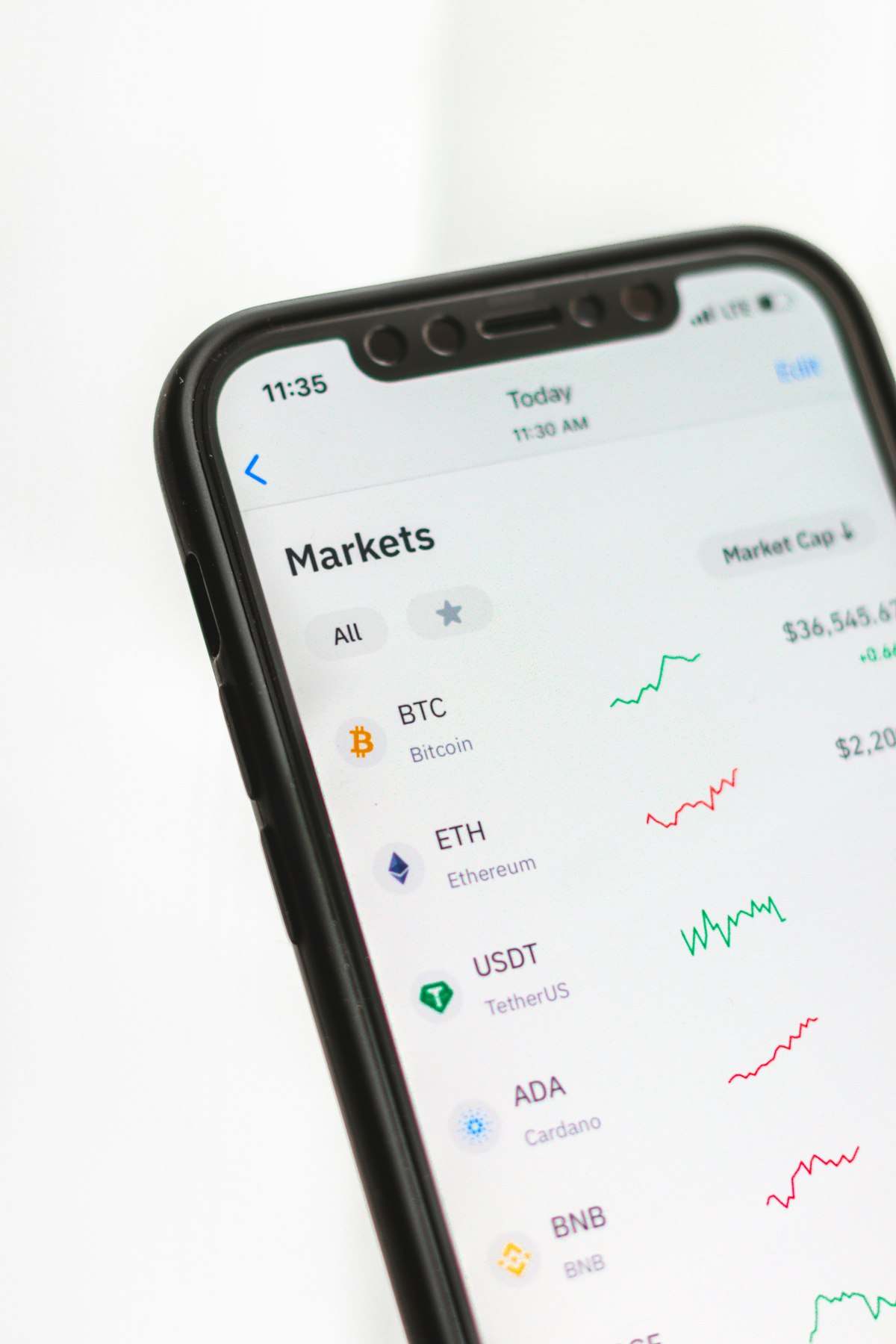
Crypto holders sitting on large gains are increasingly eyeing Spanish property as a way to convert digital wealth into something tangible — a villa in Marbella, a flat in Valencia, a seafront apartment on the Costa Blanca. The question lands in our inbox regularly: *can I buy in Spain with Bitcoin?*
The honest answer is: not directly, and the tax hit on conversion is something you need to plan for long before you sign anything. But there are legitimate routes — and a small corner of the high-end market where sellers will take crypto, convert it themselves, and proceed normally. Here is what actually works in 2026.
The Legal Reality: Spanish Property Transactions Require Euros
Spanish law is unambiguous on this point. When you sign the *escritura* — the deed of sale at the notary — payment must be made in euros via a traceable bank transfer from a Spanish bank account. Notaries are required to verify the source of funds. There is no provision in Spanish property law for payment in cryptocurrency.
This is not unique to Spain. Most European countries take the same position. The Spanish property system runs on the *Agencia Tributaria* reporting chain — the notary reports the transaction, taxes are calculated in euros, the land registry records the price in euros. Crypto simply does not slot into that infrastructure.
So the first thing to accept is this: you are not buying Spanish property with crypto. You are buying Spanish property with euros that were previously crypto. The conversion step is where most of the complexity — and the tax — lives.
The Route: Crypto → Fiat → Spanish Bank Account → Property
The standard path for a crypto holder buying Spanish property looks like this:
1. Convert cryptocurrency to euros on a regulated exchange (Coinbase, Kraken, Bitstamp are the most commonly used in Europe) 2. Remit euros to a Spanish bank account — you will need one regardless; see our guide to opening a Spanish bank account as a non-resident 3. Use those euros to purchase the property in the normal way
Each step has practical considerations. Major exchanges have withdrawal limits — Coinbase Pro, for example, allows substantial daily withdrawals but very large amounts require verification and may trigger internal review. For amounts above €50,000 or €100,000 you should expect to provide full source-of-funds documentation to both the exchange and the receiving bank.
Spanish banks — particularly the larger ones like Santander, BBVA, and CaixaBank — are increasingly comfortable receiving funds originating from regulated crypto exchanges, provided the paper trail is clean. They are not comfortable with funds from unregulated platforms, peer-to-peer transactions, or wallets with no verifiable origin. The compliance team at your Spanish bank will ask questions; the answer needs to be documented, not verbal.
The Real Challenge: Capital Gains Tax on Crypto Disposal
Converting crypto to euros is a taxable event. This is the part that catches people out.
In the UK, HMRC treats every disposal of cryptocurrency — including conversion to fiat — as a capital gains event. You pay CGT on the gain above your cost basis. As of 2026, UK CGT rates on crypto disposals are aligned with property gains: 18% for basic-rate taxpayers and 24% for higher and additional-rate taxpayers. Your annual CGT allowance is currently £3,000.
If you bought Bitcoin in 2018 at £6,000 per coin and sell it in 2026 at £60,000, your gain per coin is £54,000. On a higher-rate bill, that is £12,960 in UK CGT — per coin. A buyer converting enough crypto to fund a €500,000 Spanish property purchase should model their home-country tax liability before touching the sell button. The Spanish property may be the goal; the UK tax bill is the obstacle.
Practical planning points for UK buyers:
- Spread disposals across tax years. The UK tax year runs April to April. Converting in two tranches — one in March, one in April — uses two years' CGT allowances and two sets of thresholds
- Use your annual £3,000 allowance each year if you have holdings you intend to liquidate eventually
- Offset losses. If you hold other crypto assets that are now worth less than you paid, a simultaneous disposal of those crystallises a loss that can be offset against gains. Keep records.
- Get specialist advice before converting. A UK accountant who understands crypto (not all do) can model your position and identify timing opportunities
Spanish Crypto Tax: What If You Are Already Spanish Tax Resident?
If you have become Spanish tax resident — spending 183+ days per year in Spain, or having your centre of economic interests there — your crypto disposal is taxed in Spain, not the UK.
Spain taxes cryptocurrency gains within the savings income base (base del ahorro) of personal income tax (IRPF). The 2026 rates are:
| Gain Band | Rate |
| --- | --- |
| First €6,000 | 19% |
| €6,001–€50,000 | 21% |
| €50,001–€200,000 | 23% |
| €200,001–€300,000 | 27% |
| Above €300,000 | 28% |
Spanish residents also have an additional reporting obligation: the Modelo 720. This requires Spanish tax residents to declare foreign assets — including cryptocurrency held on exchanges outside Spain — where the total value exceeds €50,000. Failure to declare carries severe penalties, historically among the harshest in the EU (the penalty regime was partially reformed following European Court of Justice scrutiny, but non-compliance is still very expensive). If you are resident in Spain and hold crypto on Coinbase, Kraken, or a hardware wallet, you may have a Modelo 720 obligation already.
Sellers Who Accept Crypto: The Niche That Does Exist
In the high-end market — particularly Marbella, Ibiza, and to a lesser extent prime Barcelona — a small but growing number of sellers and developers will accept cryptocurrency as payment. They are not receiving BTC in the legal sense: what typically happens is the buyer transfers crypto to an agreed wallet or exchange account, the seller converts to euros, and the euros fund the escritura in the normal way.
This arrangement exists primarily as a convenience for buyers who do not want to go through a regulated exchange themselves. The seller — usually a developer with financial and legal support — takes on the conversion process. Prices are typically fixed at the euro equivalent at a point in time, with terms around exchange-rate fluctuation in the period between agreement and completion.
The same tax rules apply to the buyer in this scenario. The moment you transfer your crypto, you have disposed of it. That disposal is a taxable event in your country of residence, regardless of what the other side does with it. The property purchase itself is still executed in euros.
If you are specifically looking for this type of transaction, working with an agent who specialises in the luxury market is the most practical route. It is not common; do not expect standard estate agents to know how to facilitate it.
Crypto-Backed Mortgages: Borrowing Without Selling
An increasingly discussed option for buyers with large crypto holdings is the crypto-backed loan — effectively a mortgage that uses your Bitcoin or Ethereum as collateral rather than requiring you to sell it.
A handful of private banks and specialist lenders now offer this product. The mechanics: you pledge your crypto holdings as collateral, the lender advances euros (typically 30–50% of the collateral value, given volatility), and you use those euros to fund the property purchase or a deposit. You retain exposure to the crypto upside. If the value of your collateral drops below the lender's threshold, you receive a margin call and must top up or the position is liquidated.
Why this matters for tax: if you borrow against crypto rather than selling it, you have not disposed of it. No disposal means no CGT — in the UK or Spain. You service the loan from income or other funds, and your crypto position remains intact. The catch is the interest rate: crypto-backed loans typically carry rates of 8–15% per year, well above conventional mortgage rates, reflecting the volatility risk the lender is carrying.
This route suits buyers who have very large, very low cost-basis crypto holdings where the CGT bill on disposal would be enormous, and where the interest cost of borrowing is lower than the tax cost of selling. It requires specialist financial advice — this is not a mainstream product and the terms vary significantly between providers.
Anti-Money Laundering: What the Law Requires
All parties to a Spanish property transaction — the notary, the estate agent, the lawyer, and the bank — have statutory AML obligations under Spanish law (Ley 10/2010) and EU directives. Cryptocurrency is specifically within scope.
The key points:
- All transactions above €10,000 require source-of-funds documentation regardless of payment method
- Any involvement of crypto will trigger enhanced due diligence from your lawyer and bank
- You will need to evidence the origin of the crypto — when you acquired it, at what price, on which platform, and how it was converted. Exchange transaction histories, wallet addresses, and purchase records all become relevant documents
- Notaries are obliged to refuse to proceed where source-of-funds cannot be satisfactorily documented
Start assembling documentation early: full exchange transaction histories, records of initial acquisition, any wallet-to-wallet transfers and their explanations, and a clear paper trail from crypto to the euros arriving in your Spanish bank account.
The Practical Reality: How Most Crypto Buyers Do It
The majority of crypto buyers purchasing Spanish property in 2026 follow a version of this approach:
1. Plan disposals 12–18 months in advance, timed across UK tax years to manage CGT exposure 2. Use a regulated European exchange — Coinbase, Kraken, or Bitstamp — that produces clean, exportable transaction records 3. Convert gradually, rather than in one large transaction, both for tax planning and to avoid exchange-rate risk on a single day's price 4. Remit to a Spanish bank account held with a major bank (Santander and BBVA tend to be most experienced with this) 5. Provide full documentation to the receiving bank before the transfer — do not send a large unexplained wire and hope for the best; call ahead, explain the origin, and send the records proactively 6. Engage a Spanish lawyer from the outset; do not attempt to navigate the AML requirements without legal support
The process is bureaucratic but entirely workable for a buyer with a legitimate, documented crypto history. It is the same as buying with any other large asset sale — the discipline around paperwork is the critical factor.
Frequently Asked Questions
Can I buy a house in Spain directly with Bitcoin? No. Spanish law requires property transactions to be completed in euros via a traceable bank transfer. You must convert your Bitcoin to euros before the escritura can be signed. A very small number of high-end sellers will handle the conversion for you, but the legal transaction always completes in euros.
Do I pay tax when I convert crypto to buy property in Spain? Yes. If you are UK tax resident, converting crypto to euros is a disposal subject to UK CGT at 18% or 24% on any gain above your cost basis, after your £3,000 annual allowance. If you are Spanish tax resident, the gain is taxed in Spain at 19–28% under IRPF. The property purchase itself does not trigger additional tax on the crypto conversion.
Do I need to declare crypto assets in Spain? If you are Spanish tax resident and hold cryptocurrency on foreign exchanges exceeding €50,000 in total value, you are required to declare it on the Modelo 720. Non-residents do not have this obligation — but you will need to provide full source-of-funds documentation when remitting funds to a Spanish bank.
Can I get a Spanish mortgage using crypto as collateral? Standard Spanish banks do not accept crypto as mortgage collateral. However, specialist private lenders and some international banks offer crypto-backed loans that can be used to fund a property purchase. Interest rates are significantly higher than conventional mortgages (typically 8–15%), and margin call risk is real if your collateral drops in value.
---
Searching for property in Spain? Browse listings on Voya →
---
*Information current as of July 2026. Tax rules on cryptocurrency are evolving rapidly in both the UK and Spain; rates and reporting requirements may change. This article is for general information only and does not constitute tax or legal advice. Consult a specialist advisor — ideally one with expertise in both UK and Spanish tax — before making any significant crypto disposal or property purchase.*
Ready to find your property in Spain?
Browse thousands of verified listings from licensed local agents.
Browse properties →