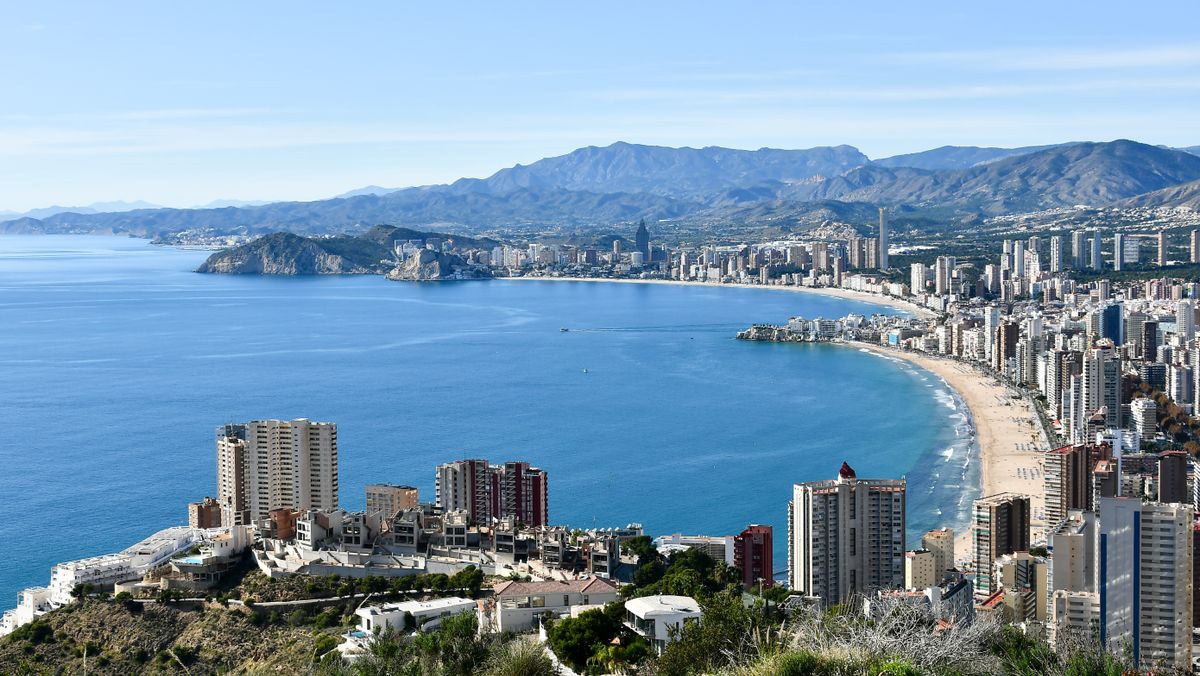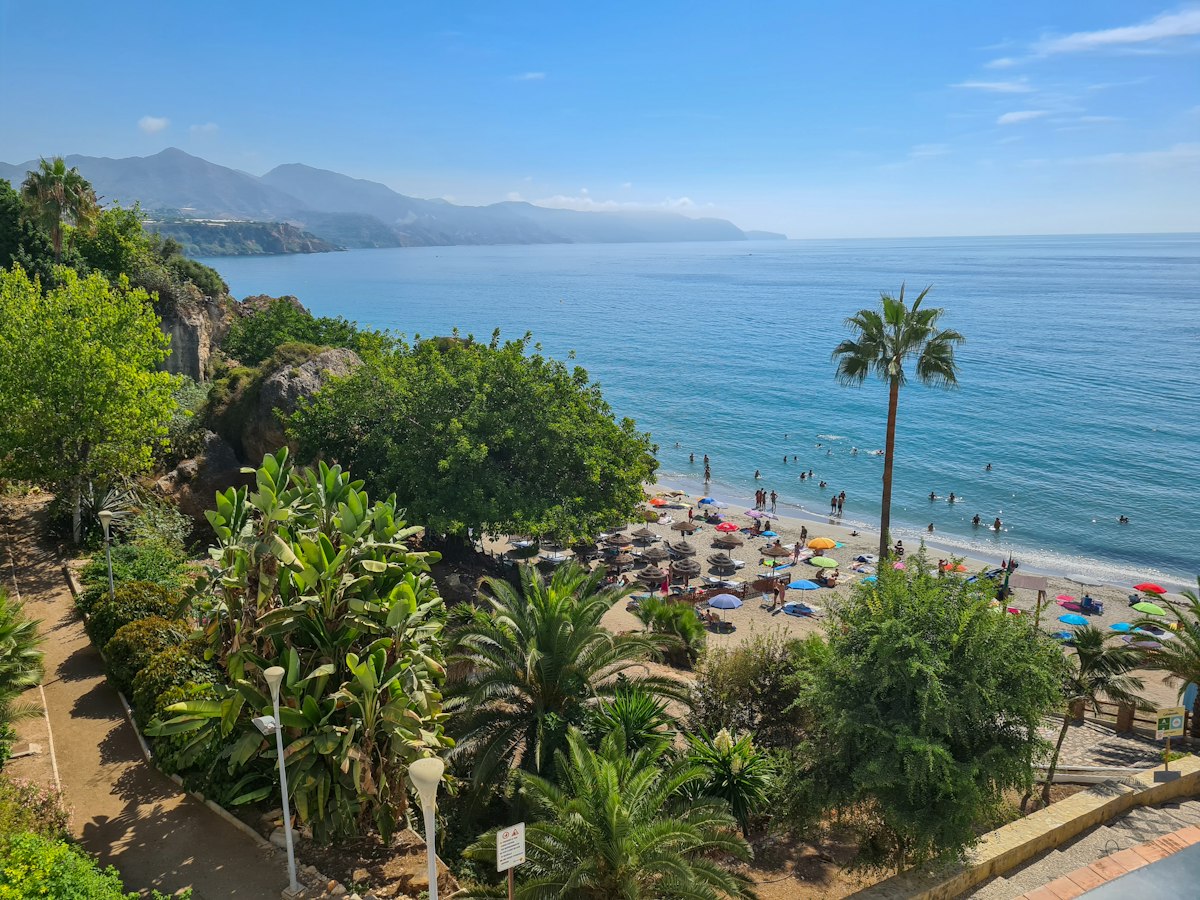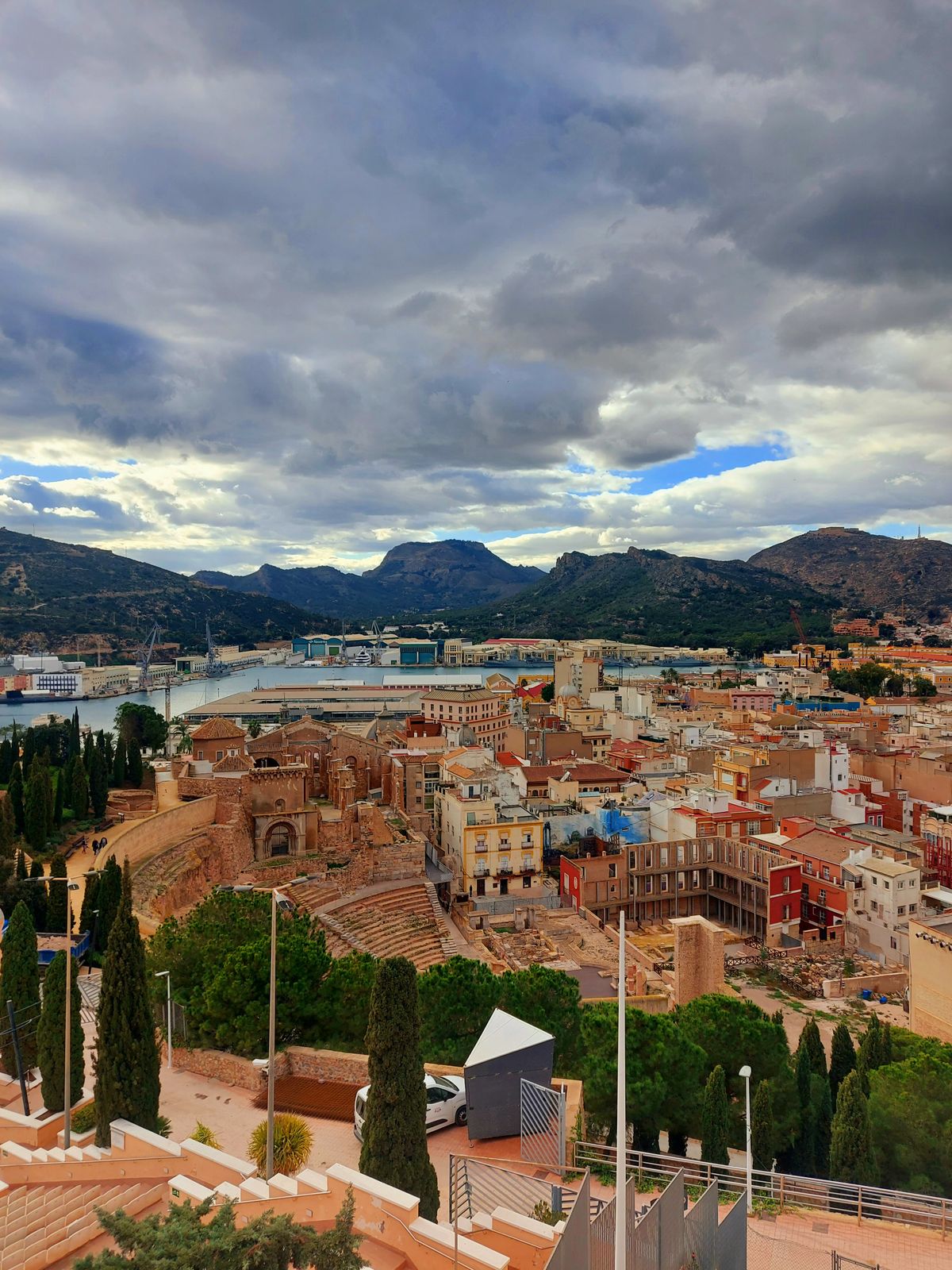
Estepona sits 30km west of Marbella on the Costa del Sol and has spent the last decade quietly becoming one of the best-value property destinations on the Spanish coast. That's not estate-agent spin — it's the conclusion of buyers who came for Marbella, checked the prices, and decided they preferred Estepona's attitude anyway.
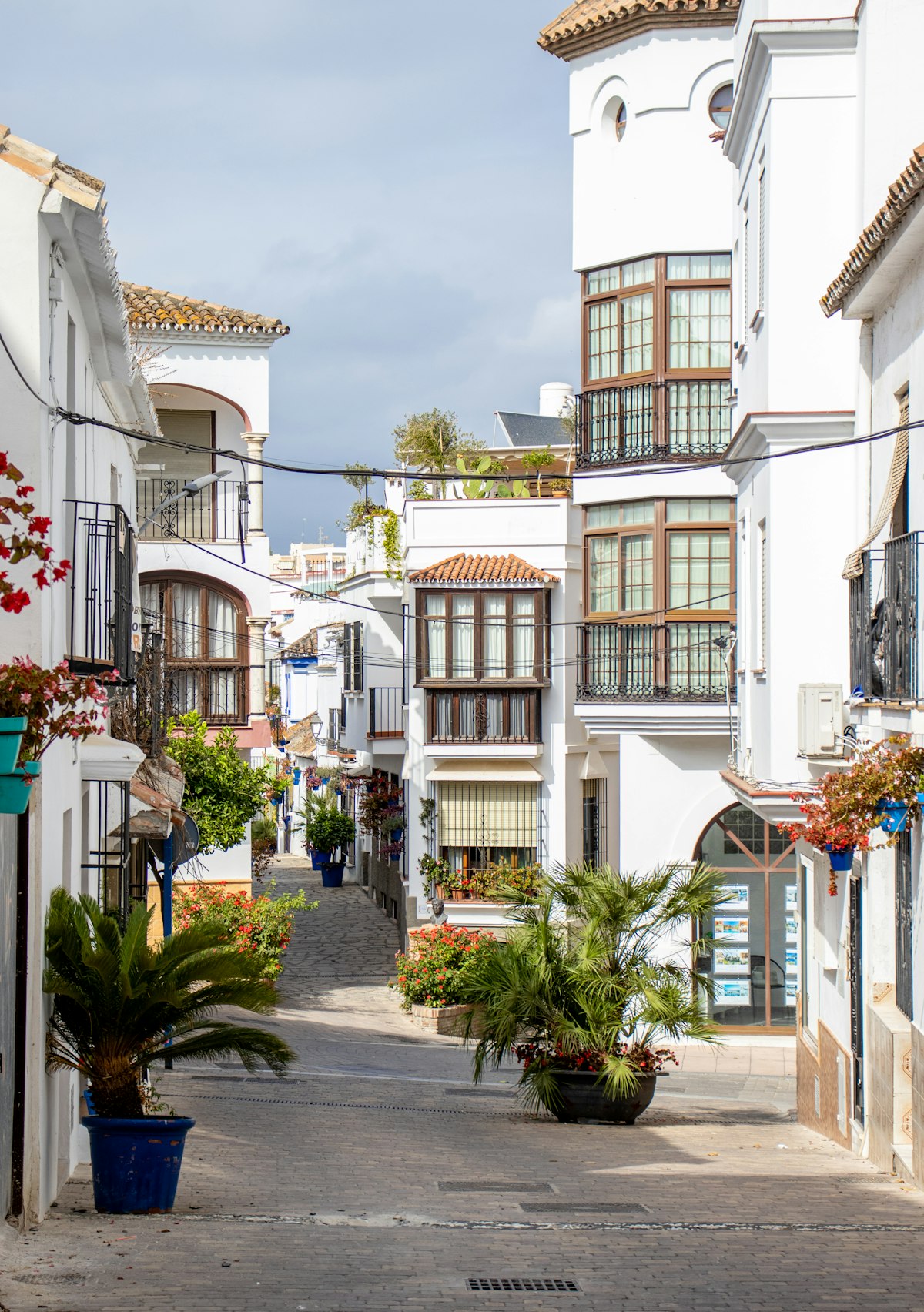
The town has a genuinely charming old quarter — the flower-pot streets, the ceramic murals, the proper tapas bars — and unlike some old towns in Spanish resort destinations, it hasn't been hollowed out and given over to tourists. People actually live there. The beaches are good, the marina is well kept, and the New Golden Mile stretching east towards Marbella has attracted serious luxury new-build development that in some cases gives Marbella's product a run for its money at a lower per-metre price.
This guide gives you the unvarnished picture: what property actually costs in each neighbourhood, what different budgets realistically buy, rental yield data, and the honest downsides that will only become apparent once you've committed. If you want the polished brochure version, there are plenty of estate agents in town who'll oblige. This isn't that.
Is Estepona a Good Place to Buy Property?
Yes — for the right buyer. Estepona sits at a sweet spot that not many Costa del Sol towns can claim: it's close enough to Marbella to benefit from the broader lifestyle infrastructure (shops, restaurants, healthcare, international schools), but far enough removed to have its own independent character and meaningfully lower prices.
The town's investment in its historic centre over the past decade has been substantial and visible. The Old Town's transformation — painted murals on every corner, pedestrianised streets, the renovated Plaza de las Flores — isn't cosmetic. It's driven genuine year-round footfall that sustains local businesses and keeps the area feeling alive outside peak summer. That matters if you're buying primarily for your own enjoyment rather than rental yield.
The market dynamics are also favourable. The New Golden Mile — the coastal strip between Estepona harbour and Puerto Banús — has seen heavy institutional development interest, which typically signals confidence in an area's medium-term trajectory. Off-plan sales have been strong, and completed developments have largely retained or increased their launch prices on resale. There's no guarantee of continued appreciation, but the fundamentals are not contrived.
For British buyers specifically, there's a large, well-established expat community across the municipality — British, Irish, Dutch, and Scandinavian in roughly that order of concentration. That means English-speaking professionals (lawyers, healthcare, schools) are readily available, and the social infrastructure for a relocated British family or retiree is already in place.
Why Estepona Keeps Selling
Reason one: the price gap versus Marbella is real and persistent. At the time of writing, a comparable new-build two-bedroom apartment on Estepona's New Golden Mile costs roughly 20–30% less per square metre than an equivalent product on Marbella's Golden Mile. That gap has persisted for several years despite Estepona's rising profile. For buyers who want the aesthetic — beachside infinity pools, high-spec finishes, mountain-meets-sea views — but would rather not pay Marbella prices, Estepona makes a compelling case on numbers alone.
Reason two: the old town is the real thing. A lot of Spanish resort towns have "charming historic centres" that amount to a few pedestrianised streets and some vaguely traditional-looking bars designed for tourist consumption. Estepona's Casco Antiguo is the exception. It was here before the tourists arrived, it functions as a working Spanish neighbourhood, and the restoration work has enhanced rather than sanitised it. If you want to buy somewhere that feels like Spain rather than an approximation of Spain built around a golf course, that matters.
Reason three: the rental market is growing. Estepona's tourism numbers have been rising consistently, driven partly by spillover from Marbella (where holiday let regulation has been tightening) and partly by the town's own growing profile. The New Golden Mile in particular produces strong holiday-let yields, and the Old Town's character generates good demand for boutique short stays. Andalucía's licensing regime is generally more permissive than the Valencian Community's, though the direction of travel is towards tighter regulation — see our full guide to renting out property in Spain for current rules.
Property Types and Price Ranges
Estepona's market splits broadly into four categories, each with distinct price dynamics.
Resale apartments in established areas represent the most accessible entry point. Older stock — 1990s–2010s builds in Seghers, Cancelada, and the town centre — trades at €1,800–€3,000/m² depending on condition and location. A two-bedroom apartment in this tier runs €160,000–€320,000.
New-build apartments on the New Golden Mile sit at the top of the Estepona market. Developers targeting the luxury segment are pricing at €4,000–€6,000/m², with some ultra-premium schemes pushing beyond that. A new-build two-bed on the New Golden Mile starts at approximately €350,000 and can easily reach €600,000 for a well-specified unit with sea views. New-build VAT in Andalucía runs at 10%, compared to 7% ITP on resales — a meaningful difference at these price points. See the buying costs guide for the full tax breakdown.
Townhouses and semi-detached villas in the golf areas — El Paraíso, Atalaya, Bel-Air — offer more floor space per euro. €280,000–€480,000 buys a well-maintained three-bedroom townhouse with a communal pool. Detached villas on golf course plots start around €500,000 for older builds; newer product with sea views reaches €1,000,000–€2,000,000+.
Old Town apartments occupy a specific niche: smaller footprints, character properties, strong rental demand from visitors who want the authentic Spanish experience. Prices have risen sharply here — €2,500–€4,000/m² — as the area's reputation has spread. A one-bed in the old quarter runs €150,000–€220,000; a two-bed, €200,000–€380,000.
The Best Areas to Buy in Estepona
Old Town (Casco Antiguo)
The Old Town is the emotional heart of Estepona and the reason the town punches above its weight in terms of profile. The famous flower-pot streets (Calle Adorno is the one everyone photographs), the ceramic murals, the refurbished fish market on the beach — this is a neighbourhood that has been invested in, and the investment shows.
For buyers, it offers strong short-term rental demand, genuine character, and a lifestyle that feels rooted in Spanish culture rather than expat-bubble comfort. The trade-off is practical: streets are narrow (parking is genuinely difficult), buildings are older (check structural condition carefully, and budget for renovation on anything over 20 years old), and apartment footprints tend to be smaller than modern builds. If you're primarily a lifestyle buyer who wants to walk to local markets and tapas bars, the Old Town is hard to beat. If you need a garage and a utility room, look elsewhere.
Prices: Apartments €200,000–€380,000 for two beds; €150,000–€220,000 for one beds.
New Golden Mile
The New Golden Mile is the coastal strip running east from Estepona harbour towards San Pedro de Alcántara and Puerto Banús. It is the most actively developed part of the Estepona municipality and the area attracting the most institutional attention. Developments here are typically gated communities with underground parking, gym, infinity pool, concierge — the full luxury resort formula.
The appeal is obvious: you're buying into a product that competes directly with Marbella's best new-build at a discount, with reasonable proximity to Puerto Banús (10–20 minutes by car). Rental yields are among the strongest in the area because the product matches what high-end holiday renters expect.
The honest caveat: the New Golden Mile is still heavily under construction. Buyers who completed on off-plan units in 2022 or 2023 have in some cases been living on or adjacent to building sites for two-plus years. If you're buying off-plan here, build significant contingency time into your expectations. Also check what's planned for the plots around your development — your sea view may have a shelf life.
Prices: New-build apartments from €350,000 (two-bed, entry spec); €500,000–€800,000 for premium two or three beds with sea views; villas €700,000–€2,000,000+.
Cancelada
Cancelada is a residential suburb sitting slightly inland between Estepona and San Pedro. It's family territory — there are good schools (including international options nearby), supermarkets, everyday services, and a scale of living that feels suburban rather than resort. It is the area where Estepona's permanent expat residents tend to concentrate because it functions as an actual neighbourhood rather than a holiday development.
Prices are meaningfully lower than the coast. Resale two-bedroom apartments run €180,000–€320,000; townhouses €250,000–€420,000. It's the area to look at if you're relocating rather than buying a holiday let, and value per square metre is the highest priority.
Prices: Apartments €180,000–€320,000; townhouses €250,000–€420,000.
Seghers / Playa de la Rada
Seghers and the broader Playa de la Rada area lie on the western approach to Estepona town, stretching along the beach towards the municipal boundary. It's an established residential area — mixed new-build and older resale stock — that sits between the glamour of the New Golden Mile and the noise of the town centre. The beach here is quieter than the town beaches, and the area has a calm, residential feel.
For buyers who want proximity to the beach without the construction frenzy of the New Golden Mile or the parking headache of the Old Town, Seghers is worth serious consideration. It lacks the New Golden Mile's infrastructure density, but the beaches are good and the area feels settled. Resale stock here often offers the best value on a per-square-metre basis for beach-adjacent property.
Prices: Apartments €220,000–€400,000; villas €500,000+.
El Paraíso / Atalaya
El Paraíso and Atalaya are the golf-course communities sitting inland of the New Golden Mile, roughly between Estepona and Estepona's municipal boundary with Benahavis. El Paraíso Golf Club anchors the area. The character is quietly affluent — spacious plots, mature vegetation, golf buggies on the road, no particular rush about anything.
This is where you get the most floor space and garden per euro in the Estepona municipality. Townhouses on or near the golf course run €280,000–€480,000; detached villas €500,000–€1,500,000 depending on specification, position, and views. It's not beach living — the coast is a 10–15 minute drive — but for buyers whose priority is space, privacy, and the golf lifestyle, it makes more sense than cramming into a New Golden Mile apartment at double the per-metre price.
Prices: Townhouses from €280,000; villas from €500,000.
What Your Budget Actually Buys
At €200,000: You're looking at a two-bedroom apartment in Cancelada (resale, probably 15–20 years old, decent condition), or a studio/one-bed in the Old Town. The Cancelada option is the more pragmatic choice if you're planning to use the property regularly — more space, easier parking, functional neighbourhood. The Old Town option wins on character and short-term rental potential but will be smaller and may need cosmetic work.
At €350,000: The market opens up considerably. A modern two-bedroom apartment on the New Golden Mile becomes accessible at the lower end of new-build pricing, though you'll be looking at entry-level specs and inland-facing units. Alternatively, a well-presented three-bedroom townhouse in El Paraíso or Atalaya gives you a genuine family home with a garden and golf access. The New Golden Mile option wins on rental yield and resale liquidity; the golf townhouse wins on lifestyle and value per square metre.
At €500,000+: You can access a quality three-bedroom apartment on the New Golden Mile with decent sea or golf views, or a detached villa in the golf areas. Above €700,000, the product starts to compete directly with Marbella — frontline golf villas, proper sea views from upper New Golden Mile developments. At this budget, the comparison with what €500,000–€700,000 buys in Marbella (likely an older, smaller property) becomes genuinely compelling in Estepona's favour.
Rental Potential — Realistic Numbers
Estepona's rental market has strengthened materially over the past three years, driven by rising tourism numbers and some displacement from Marbella as that market has tightened. The numbers below are based on typical achieved rates for well-managed properties — not the optimistic projections in developer brochures.
New Golden Mile luxury apartment (2-bed): Peak season (July–August) €1,500–€2,500/week; shoulder (May–June, September–October) €900–€1,400/week; winter €1,200–€1,800/month on medium-term let. Achieved annual gross yield: 4.5–6% for well-managed properties with consistent occupancy.
Old Town apartment (1–2 bed): Strong demand for boutique short stays driven by the neighbourhood's character. Peak €900–€1,500/week; good shoulder demand given the year-round appeal of the area. Annual gross yield: 4–5.5%.
Cancelada apartment: Better suited to medium or long-term lets (3–12 months) than peak holiday lets. Typical medium-term rates €900–€1,300/month for a two-bed. Annual gross yield: 3.5–4.5%.
A few important caveats on these numbers. Gross yield is not net yield — factor in management fees (typically 15–20% of revenue), community fees, IBI (local property tax), insurance, and maintenance. Net yields in the 3–4.5% range are realistic for well-run operations; the headline 5–6% figure is before those costs. Also: Andalucía's tourist licence regime has been tightening. You need a Vivienda con Fines Turísticos licence to operate legally, and some communities have placed restrictions on short-term letting. Check the specific building or urbanisation rules before buying with rental income as a primary motivation. Our guide to renting out property in Spain covers the licence process in detail.
The Honest Downsides
The airport is further than buyers expect. Málaga airport is 80km from Estepona — under normal traffic conditions, a 55–70 minute drive, but the A-7 coastal road through Marbella and Fuengirola can be significantly slower in high season. Buyers who've looked at towns closer to Málaga (Fuengirola at 30km, Benalmádena at 25km) sometimes underestimate what 80km means in practice. If you're planning frequent weekend visits from the UK, that transfer time adds up.
The New Golden Mile construction situation is real. Multiple large developments are under construction simultaneously, and completions are staggered over a multi-year window. If you buy off-plan or into a recently completed scheme, your views may be partially or substantially blocked by building work for an undefined period. Developers will be cagey about what's planned for adjacent plots — do your own research with the local planning office (Gerencia de Urbanismo) before committing.
Old Town parking is genuinely difficult. Not "a bit inconvenient" difficult — actually difficult. If you're buying in the Casco Antiguo and you have a car, budget for an underground parking space or accept that you'll be circling streets regularly. Properties with garages command a meaningful premium precisely because of this.
The market has moved. Estepona's "best kept secret" status is increasingly historical. Prices on the New Golden Mile in particular have risen substantially since 2020, and the value gap with Marbella, while still real, is narrower than it was three years ago. Buyers who heard about Estepona from friends who bought in 2018 may find the numbers less compelling than that earlier experience suggested.
Estepona vs Marbella — Which Should You Choose?
This is the practical decision most buyers in this part of the Costa del Sol eventually face, and the answer depends more on what you're actually optimising for than on which town has better marketing.
Choose Marbella if: Your priority is resale liquidity in the absolute top tier of the market. Marbella has deeper demand at the €700,000+ level, a larger international buyer pool, and the brand recognition that supports consistent resale values in luxury product. If you're buying primarily as an investment and need exit flexibility, Marbella's liquidity is a genuine advantage. Also: if the social scene — the restaurants, the beach clubs, the summer calendar — is a priority in its own right, Marbella delivers at a level Estepona doesn't match.
Choose Estepona if: Price per square metre matters and you want Costa del Sol quality without the Marbella premium. If you want a town that feels like it belongs to its residents rather than its visitors. If the Old Town's authentic character genuinely appeals — as a lifestyle choice, not just a marketing line. If you're a family relocating rather than a pure investor, Cancelada and the golf areas offer a functional, comfortable long-term base that Marbella's more transactional atmosphere can make harder to find.
The honest comparison: Estepona is quieter, friendlier in pace, and cheaper. It lacks Marbella's star power and doesn't pretend otherwise. For a majority of UK buyers — particularly those looking at the €200,000–€600,000 range — it consistently delivers more property and more authenticity per euro than its more famous neighbour. For buyers at the top end of the market or primarily motivated by the lifestyle that comes with Marbella's name, the extra cost may be justified.
See our Costa del Sol property guide for a full town-by-town comparison, and the buying property in Spain guide for the complete process walkthrough.
Final Verdict
Estepona is not a compromise choice. For the right buyer — someone who wants genuine Spanish character, Costa del Sol sunshine, and meaningful value relative to the Marbella alternative — it's a first choice.
The Old Town is one of the most genuinely charming residential neighbourhoods on the Spanish coast. The New Golden Mile product is competitive with Marbella's best new-build at a real price discount. The rental market is growing. The expat infrastructure is well established. And the town has invested in itself in a way that suggests it's building long-term value rather than cashing in on short-term tourism.
The caveats are real: the airport is far, parts of the coastline are active building sites, and the "best-kept secret" positioning is increasingly dated. Go in with accurate expectations and do proper due diligence — you'll need an independent Spanish lawyer (not the developer's lawyer), you'll need an NIE number before you can buy, and you'll want to understand the Spanish mortgage options available to non-residents if you're not buying cash.
Done right, Estepona delivers on what it promises. And for most buyers coming from the UK, what it promises is exactly enough.
Ready to find your property in Spain?
Browse thousands of verified listings from licensed local agents.
Browse properties →