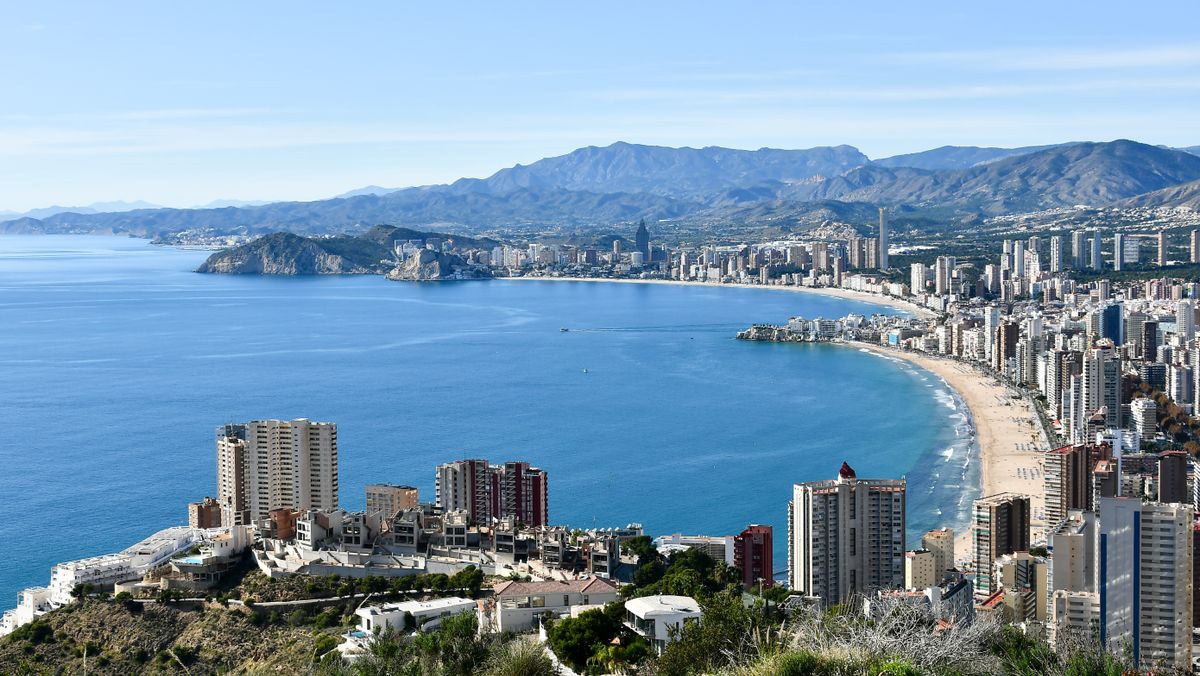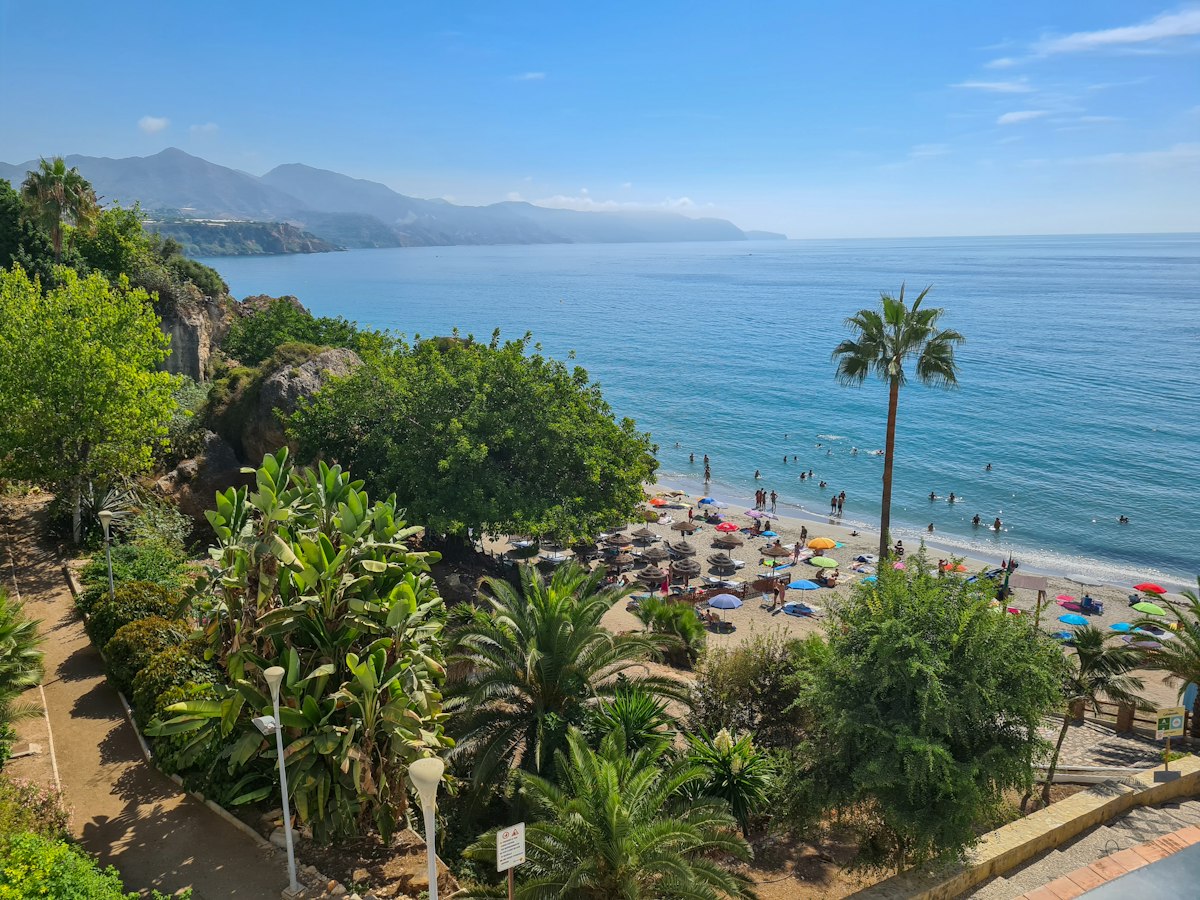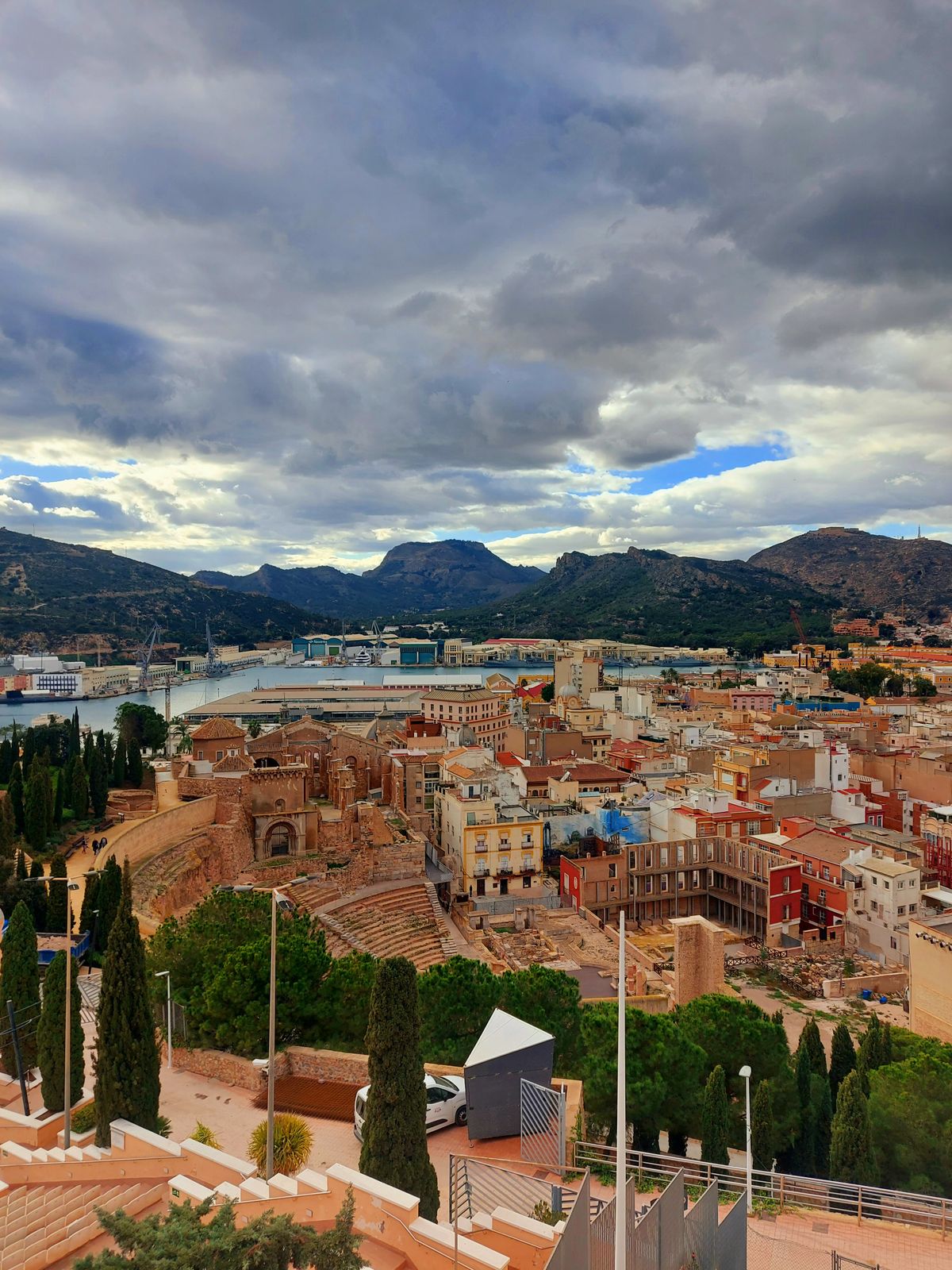
The Mar Menor is one of the most unusual stretches of coastline in Europe. A saltwater lagoon roughly 170 square kilometres in area, separated from the open Mediterranean by a 22-kilometre sandbar — La Manga del Mar Menor — and ringed by small resorts, fishing villages, and Spanish market towns. The water inside the lagoon barely moves, sits several degrees warmer than the sea, and is notably saltier and denser than the Mediterranean. You float in it differently. Children swim in it safely. Wind and kitesurfers treat it as a training ground because there's power in the breeze but almost no swell.
That physical setting is what drives the Mar Menor property market. It's not a conventional coast. It doesn't compete with the glamour of Marbella or the breadth of the Costa Blanca. What it offers — calm water, easy access from the UK, competitive prices, and a loyal international buyer community — is a different kind of appeal that rewards buyers who understand it.
This guide covers the whole lagoon area: what it is, what's happened to it, and how each of the main resorts compares for buyers at different budgets and with different priorities.
The Lagoon: What Makes It Special
The Mar Menor is Europe's largest saltwater lagoon. It measures roughly 22km north to south and up to 7km east to west. Its average depth is barely 4 metres — in many areas, considerably shallower. The water temperature in summer can reach 30°C or above. In winter it stays mild relative to the open sea.
The therapeutic qualities of Mar Menor water have been promoted since Roman times. The higher salinity — around 47–52 grams per litre, compared to 38 for the open Mediterranean — gives the water natural buoyancy. It's a genuine quality-of-life reason to be here, particularly for older buyers and anyone recovering from joint problems or looking for gentle, low-impact exercise.
For families, the calm and shallow lagoon is simply the best swimming environment on the Spanish coast. There are no waves. There's no undertow. You can stand at chest height 200 metres from the shore.
The Environmental Situation: What Happened and Where Things Stand
Any honest Mar Menor guide has to address the algae blooms head-on.
In 2019, and again with less severity in 2021, the lagoon experienced serious ecological episodes — algae explosions driven by decades of agricultural nitrate runoff from intensive vegetable farming in the surrounding Campo de Cartagena plain. The images that circulated internationally were alarming. Dead fish, green water, national news coverage. Some buyers walked away.
Here's the 2026 picture: the lagoon has recovered substantially. Water quality monitoring shows marked improvement since 2021. The Spanish government's Mar Menor recovery plan has produced measurable results in reducing nitrate levels entering the lagoon. In 2022, the European Union granted the Mar Menor legal personhood — a first for any body of water in Europe — giving it explicit legal protections and an ongoing oversight mandate.
The honest position is this: conditions today are significantly better than in 2019–2021. The lagoon is swimmable, and hundreds of thousands of people used it without incident in 2024 and 2025. The underlying agricultural pressure on the lagoon catchment hasn't been fully resolved — this is a structural challenge that will take years of policy enforcement to address completely. But the crisis is no longer acute, and the legal framework around the lagoon's protection is now the strongest it has ever been.
If you're buying here, follow the water quality data at miteco.gob.es and treat it as one variable among many — not a dealbreaker, but not something to wave away either.
Access: One of Mar Menor's Biggest Underappreciated Assets
Murcia International Airport (also known as Juan de la Cierva or Corvera Airport, IATA: RMU) is located at San Javier — which is on the lagoon itself. This is genuinely unusual: the airport is not just near the Mar Menor, it's part of the Mar Menor area. Direct flights operate from London Stansted, Luton, Manchester, Birmingham, and East Midlands, plus connections from Dublin, Stockholm, Brussels, and Amsterdam.
From the airport to La Manga strip: approximately 20–25 minutes by car. To Los Alcázares: around 10 minutes. To Cabo de Palos: 30 minutes.
Alicante-Elche airport is roughly 90 minutes north — useful for additional flight options or if you're also considering the southern Costa Blanca.
The combination of genuinely local airport access and competitive property prices is one of the Mar Menor's strongest arguments for buyers who want usable, accessible holiday homes rather than aspirational investments.
The Mar Menor Resorts: How They Compare
The lagoon is ringed by distinct settlements that suit different buyer profiles. Here's an honest comparison.
La Manga del Mar Menor — The Strip
La Manga is the 22km sandbar itself — a narrow spit no more than a few hundred metres wide at any point, with the open Mediterranean on the east and the lagoon on the west. It's the most recognisable part of the Mar Menor and the most debated.
The strip is heavily built up. Apartment blocks — many from the 1970s and 80s — dominate. There's no space for villas with gardens. What you get instead is something genuinely unique: walk to a calm lagoon beach in one direction, an open sea beach in the other, from the same apartment.
The infrastructure is resort-focused: bars, restaurants, supermarkets, watersports rentals, and rental agencies are all along the strip. In peak summer (July–August), it's busy and vibrant. From October to May, it's significantly quieter — some businesses close, the energy drops.
Who it suits: families with children, summer rental buyers, golf buyers wanting affordable access to La Manga Club, and anyone who wants strong summer occupancy at a low entry price.
Property prices: Studio and one-bed apartments from €80,000. Two-bed from €110,000–€180,000. Larger units and penthouse positions from €180,000–€250,000. Lagoon-front or sea-front positions carry a 20–35% premium.
*See our full La Manga del Mar Menor property guide for detailed pricing, rental yields, and buyer advice.*
Los Alcázares — The Local Town on the Lagoon
Los Alcázares is a proper Spanish market town that happens to sit directly on the lagoon. It's not a purpose-built resort. It has a main street, a weekly market, year-round Spanish residents, and local services that keep running in winter. The seafront promenade (paseo) runs along a long, gently shelving lagoon beach — one of the best on the entire shoreline.
This is the Mar Menor for buyers who want access to the lagoon without the density and seasonality of La Manga. You trade the novelty of the strip for something more grounded: a community, a year-round rhythm, slightly more space.
Property is primarily apartments and bungalow-style developments. There's more ground-floor garden stock here than on the strip. The town is visibly improving — investment in the paseo and waterfront has continued, and newer developments near the southern end of town have raised the standard of available stock.
Who it suits: buyers planning year-round or extended stays, retirees, families who want a community feel rather than a resort feel, and buyers who want to be embedded in Spanish daily life.
Property prices: Apartments from €90,000. Two-bed properties from €110,000–€170,000. Ground-floor apartments with communal garden from €120,000.
*See our full Los Alcázares property guide for more detail.*
San Javier and Santiago de la Ribera — Airport Town with a Promenade
San Javier is the administrative municipality that includes Santiago de la Ribera, the beachfront barrio on the lagoon. The airport is here. The town has a large international community — UK, Scandinavian, Dutch, and Belgian buyers are well represented — alongside a solid Spanish population.
Santiago de la Ribera has a well-maintained promenade along the lagoon frontage, with good restaurants, a marina, and a lively summer season. It's less built-up than La Manga and less local-feeling than Los Alcázares — somewhere in the middle, with a steady international character.
Being 10 minutes from the airport is a significant practical advantage: no long transfers, straightforward if you're using the property for short breaks, and easy for renters to get in and out.
Who it suits: buyers who visit frequently and value airport proximity, international communities who want a sociable expat scene, and those who want a beach promenade without the density of La Manga.
Property prices: Apartments from €100,000. Two-bed lagoon-view properties from €130,000–€200,000. Detached villas and larger townhouses from €220,000+.
*Full detail in our San Javier and Santiago de la Ribera property guide.*
Cabo de Palos — Fishing Village at the Southern Tip
Cabo de Palos sits at the southern end of La Manga, where the strip meets the mainland. It's a proper fishing village — small, unhurried, built around a harbour and a lighthouse. Restaurants here serve fish caught the same morning. The pace is entirely different from La Manga strip.
The sea around Cabo de Palos is part of a protected marine reserve — one of the best dive sites in the western Mediterranean. That protects the water quality here and makes it a draw for a specific kind of buyer: not the high-rise apartment seeker, but someone who wants character, scarcity, and a premium on natural beauty.
Stock is limited by definition. There isn't much land and there isn't much development. Prices per square metre are higher than the strip because supply is constrained and the village has a genuine following. You're not getting a bargain; you're paying for irreplaceability.
Who it suits: buyers who prioritise character over convenience, those who want a quieter base (though summer gets busier), divers and water enthusiasts, and anyone who values scarcity in a property market.
Property prices: Apartments and small townhouses from €150,000–€180,000. Quality sea-view properties from €220,000+. The market is thin — patience required.
*See our full Cabo de Palos property guide for detail on stock types and what's typically available.*
Torre Pacheco and Roda Golf — Inland, Golf-Focused, More Space
Torre Pacheco is the inland market town that serves much of the Mar Menor hinterland. For buyers, the primary draw is golf: the area is home to several courses including Roda Golf & Beach Resort, Mar Menor Golf Resort, and others. Property here is bungalows, townhouses, and detached villas on golf developments — more space, more garden, more privacy than any of the lagoon-side options.
The trade-off is that you're not on the water. You're 10–20 minutes by car from the nearest beach. For buyers who use a Spanish property primarily as a golf base, that's not a trade-off at all — it's the point.
Golf resort communities in this area tend to be international and established. Management companies run facilities, and most developments have pools, clubhouses, and maintenance infrastructure.
Who it suits: golf-focused buyers, those who want a detached villa with garden at a reasonable price, and buyers who find the lagoon-side resorts too dense or too seasonal.
Property prices: Bungalows and two-bed townhouses from €120,000. Detached golf villas from €180,000–€350,000+. Larger, well-positioned villas with private pools from €280,000.
*Full breakdown in our Torre Pacheco and Roda Golf property guide.*
Watersports: Why the Mar Menor Is One of Spain's Best Bases
The lagoon's combination of reliable wind (primarily the Levante from the east and the Poniente from the west) and flat water makes it one of the best windsurfing and kitesurfing locations in Europe. The shallow depth means conditions are forgiving for learners; the consistent breeze means experienced riders aren't waiting around.
Los Alcázares and Santiago de la Ribera both have established watersports clubs and hire operations. Paddleboarding, kayaking, and sailing are viable on any calm day. The Club Náutico de Los Alcázares and Club Náutico de Santiago de la Ribera have active memberships and racing programmes.
The marine reserve around Cabo de Palos extends into the Mediterranean and is considered among the finest dive sites in Spain — sea caves, wrecks, and exceptional visibility when weather allows.
If you're buying partly for an active water-based lifestyle, the Mar Menor area has more variety than almost anywhere on the Spanish coast.
Property Types Across the Mar Menor
High-rise apartment blocks: dominant on La Manga strip and to some extent in Santiago de la Ribera. Often 1970s–2000s construction. Wide quality range — condition matters enormously, inspect in person.
Low-rise apartment developments: more common in Los Alcázares and Torre Pacheco. Typically two or three storeys, with communal pool and garden. The most common purchase type for buyers at €100,000–€180,000.
Ground-floor bungalows with garden: available in Los Alcázares and the golf resort towns. Suit buyers who want some private outdoor space without maintaining a full villa.
Townhouses: available across most areas. Good value in Torre Pacheco; more scarce and premium-priced in Cabo de Palos.
Detached villas: primarily on golf developments inland. More available stock than the lagoon-side towns, which are constrained by land.
Who Buys Around the Mar Menor?
The buyer mix is international and well-established. UK buyers remain the largest non-Spanish group — the community here predates the modern budget airline era, built partly on the old San Javier Air Base connections and the long-running appeal of the climate.
Scandinavian buyers (particularly Swedish and Danish) are a significant second group, with strong representation in Los Alcázares and Santiago de la Ribera. Dutch and Belgian buyers are also well present, drawn by the direct Murcia airport connections from Amsterdam and Brussels.
Spanish domestic buyers are active in Los Alcázares and Torre Pacheco in particular — this is genuinely a cross-market area rather than a purely expat property zone, which tends to support year-round services and community stability.
Rental Yields: Summer Strong, Winter Variable
The Mar Menor generates its rental income in a concentrated summer window. July and August are the core months; June and September are productive in the better-positioned resorts. Outside that, demand varies considerably by location.
La Manga strip: the highest summer demand but the sharpest winter drop-off. A well-managed two-bed generating €800–€1,000/week in peak weeks can gross €12,000–€18,000 on a good year — 8–12% gross yield on a €150,000 purchase at the optimistic end.
Los Alcázares and Santiago de la Ribera: slightly lower peak rates but better winter occupancy than the strip, particularly for long-term winter lets to snowbirds. More stable annual income profiles.
Cabo de Palos: limited stock means less data, but quality properties with marine reserve views can command premium nightly rates.
Golf resorts: year-round demand from golf tourists, which extends the season for rental income — April, May, October, and November are productive months here.
All rentals require a Murcia region Vivienda Turística licence. Enforcement has tightened, and buying without sorting the licence is a real risk. Budget time and cost for this process before you plan your first rental.
See our Murcia rental income guide for a full area comparison and honest net return calculations.
Mar Menor vs the Rest of Murcia: Is It the Right Choice?
The Mar Menor isn't the only option on the Costa Cálida. Puerto de Mazarrón to the south-west has a different character — less lagoon-focused, more fishing port and cliff coves. Águilas at the far south is more authentically Spanish, less international, and less visited, with prices reflecting that. Cartagena is an historic city rather than a resort.
For a broader overview of what the region offers, see our full Murcia Costa Cálida property guide.
The Mar Menor's advantages — the unique lagoon environment, strong international infrastructure, easy airport access, and established buyer market — make it the most straightforward entry point to Murcia property for most buyers. The question isn't usually "Mar Menor or somewhere else" but "which part of the Mar Menor."
Frequently Asked Questions
Is the Mar Menor safe to swim in now?
Yes, for the vast majority of the swimming season. Water quality has improved significantly since the 2019–2021 algae bloom episodes. Spanish authorities monitor the lagoon continuously, and beach closures when they do occur are temporary and localised. Hundreds of thousands of people swam in the lagoon in 2024 and 2025 without incident. Check current water quality data at miteco.gob.es before swimming if you want the live picture.
Which is the best area to buy in the Mar Menor?
It depends entirely on what you want. For summer rental income at the lowest entry price: La Manga strip. For year-round livability and a Spanish community feel: Los Alcázares. For airport convenience and an international social scene: San Javier / Santiago de la Ribera. For character, scarcity, and marine access: Cabo de Palos. For space, golf, and garden: Torre Pacheco. There's no universally "best" — but there is a best for your particular use case.
How far is Mar Menor from the airport?
Murcia International Airport is inside the Mar Menor area — it's at San Javier, right on the lagoon shore. Los Alcázares is around 10 minutes from the terminal. La Manga strip is 20–25 minutes. Cabo de Palos is 30 minutes. This is one of the Mar Menor's strongest practical advantages over other Spanish coastal areas.
Is La Manga a good investment?
At the price points available, La Manga strip offers strong summer rental fundamentals and real entry-level value. The environmental story around the Mar Menor, while improving, has kept buyer sentiment cautious, which has helped maintain accessible pricing. If the lagoon continues its recovery trajectory and visibility improves, there's an argument for upside. Treat it as a lifestyle investment with a solid summer income component rather than a pure capital growth play.
---
*Property prices current as of Q2 2026. Always verify current figures and rental licence requirements with a qualified Spanish abogado. This guide is for informational purposes and does not constitute legal or financial advice.*
---
Thinking about buying around the Mar Menor? Search available properties across the lagoon area — or read our Costa Cálida overview for the broader regional picture.
Ready to find your property in Spain?
Browse thousands of verified listings from licensed local agents.
Browse properties →