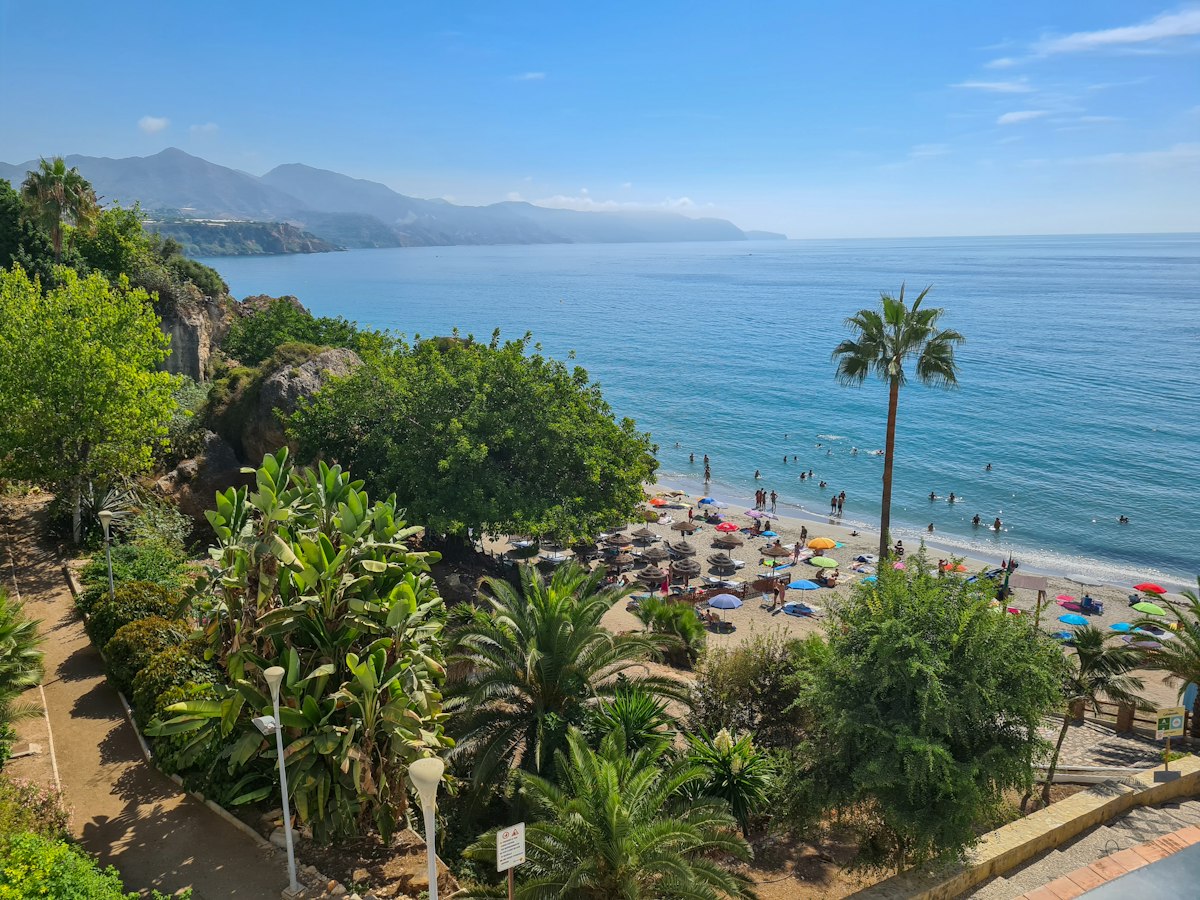
There is a stretch of Atlantic coastline in the province of Cádiz that, by rights, should be far more famous than it is. Long pale beaches backed by dunes. A white-washed town centre that climbs gently from the sea, its streets too narrow for cars, its whitewash almost luminous in the Andalusian sun. Fish landed metres from where it is cooked and served. No high-rises. No package-tour infrastructure. Just an extraordinary piece of Spain doing almost exactly what it has always done.
Conil de la Frontera sits 50 kilometres south of Jerez de la Frontera on the Costa de la Luz — the Atlantic coast that runs below the Portuguese border down to the Strait of Gibraltar. It has been popular with Spanish holiday-makers, particularly families from Madrid and Seville, for decades. International buyers have been slower to discover it. That is changing, and for anyone paying attention to where the European travel conversation is heading, the timing of that discovery matters.
Where Is Conil and What Makes the Costa de la Luz Different?
The Costa de la Luz occupies the western-facing Atlantic coast of Andalucía, stretching from the Portuguese border in Huelva province south to Tarifa and the Strait of Gibraltar. It is categorically different from the Costa del Sol, and the differences are worth understanding before you consider buying here.
The Atlantic produces cooler water (expect 18–22°C in summer, compared with 24–26°C on the Costa del Sol), bigger waves, and stronger winds. The beaches are longer, wilder, and more exposed. There are no promenades lined with fish-and-chip shops. The hotels are smaller, the restaurants more local, and the foreign visitors — until recently — relatively few.
This is not a package-tourism coast. The summer crowds are overwhelmingly Spanish — families from the interior cities who have been coming for generations, young people from Seville and Madrid doing the circuit of Cádiz beach towns. What Conil offers to international buyers is something increasingly rare: an unpackaged, genuinely beautiful Atlantic resort town that still belongs mainly to the Spanish.
The climate is hot and sunny in summer, warm and pleasant in spring and autumn, mild in winter. The wind is significant — Cádiz province is one of the windiest in Spain — but the Conil coastline is somewhat more sheltered than Tarifa, 60km to the south, which takes the full force of the Levante. In July and August, afternoon winds are strong enough to fill a kite; in September and October, conditions can be almost perfect.
Conil Town: The White Heart of the Costa de la Luz
The town itself is the first thing that strikes buyers seriously. Conil's historic centre is a maze of whitewashed streets, pedestrianised lanes, and small squares that manage to be genuinely beautiful without feeling sanitised. This is a working Andalusian town — there is a fish market, a weekly market, local bars where the clientele is mostly Spanish, bakeries that have been in the same families for generations.
The old town sits above the sea, with the Torre de Guzmán — a medieval watchtower — providing the principal landmark. Below it, the town slopes down to the main beach at Playa de la Fontanilla, a wide arc of Atlantic sand flanked by beach bars and restaurants. In summer this beach fills with Spanish families; in the evenings the bars that line it serve fresh fish and cold Manzanilla until late.
The town is large enough to have everything you need — supermarkets, pharmacies, schools, medical centre, excellent restaurants — without feeling like a city. Out of season it is quiet but not dead; the permanent population of around 22,000 sustains a functioning year-round community.
Key Areas and Beaches
Playa de la Fontanilla
The main town beach, directly accessible from the centre on foot. Broad, sheltered by the headland to the south, and backed by a line of chiringuitos (beach restaurants) that represent some of the finest casual seafood eating on the southern Atlantic coast. This is the beach for families, the beach where Spanish holidaymakers set up camp at nine in the morning and stay until sunset.
Properties close to Fontanilla — a five-minute walk from both the beach and the town centre — command the highest prices and the most reliable rental demand.
La Roche
North of town, the coastline opens into a spectacular system of dunes and beaches that runs almost unbroken for several kilometres towards Chiclana. La Roche is where the more bohemian, surfer-adjacent crowd tends to go: fewer facilities, less structure, longer stretches of sand where you can walk for an hour and barely see another person.
The area around La Roche has some villa and detached house development — the landscape permits it where the town centre does not — and it is where you will find some of the most interesting residential properties in the Conil market.
Cala del Aceite
A small rocky cala (inlet) east of the town centre, lined with the traditional fishermen's huts — now almost uniformly converted to holiday use — that are one of Conil's most distinctive and coveted property types. A cala property here is a lifestyle purchase with genuine scarcity: these huts rarely come to market, permissions for reconstruction are complicated, and the waiting list of people who would buy one is effectively infinite.
El Palmar
Ten kilometres north of Conil, El Palmar is technically a separate village but increasingly discussed in the same breath as Conil by anyone paying attention to this coastline. It consists of little more than a long beach — one of the best surf beaches in southern Spain — a handful of boutique hotels, a growing number of excellent restaurants, and a small residential community that has become fashionable among exactly the kind of European urban professional who used to go to Comporta in Portugal.
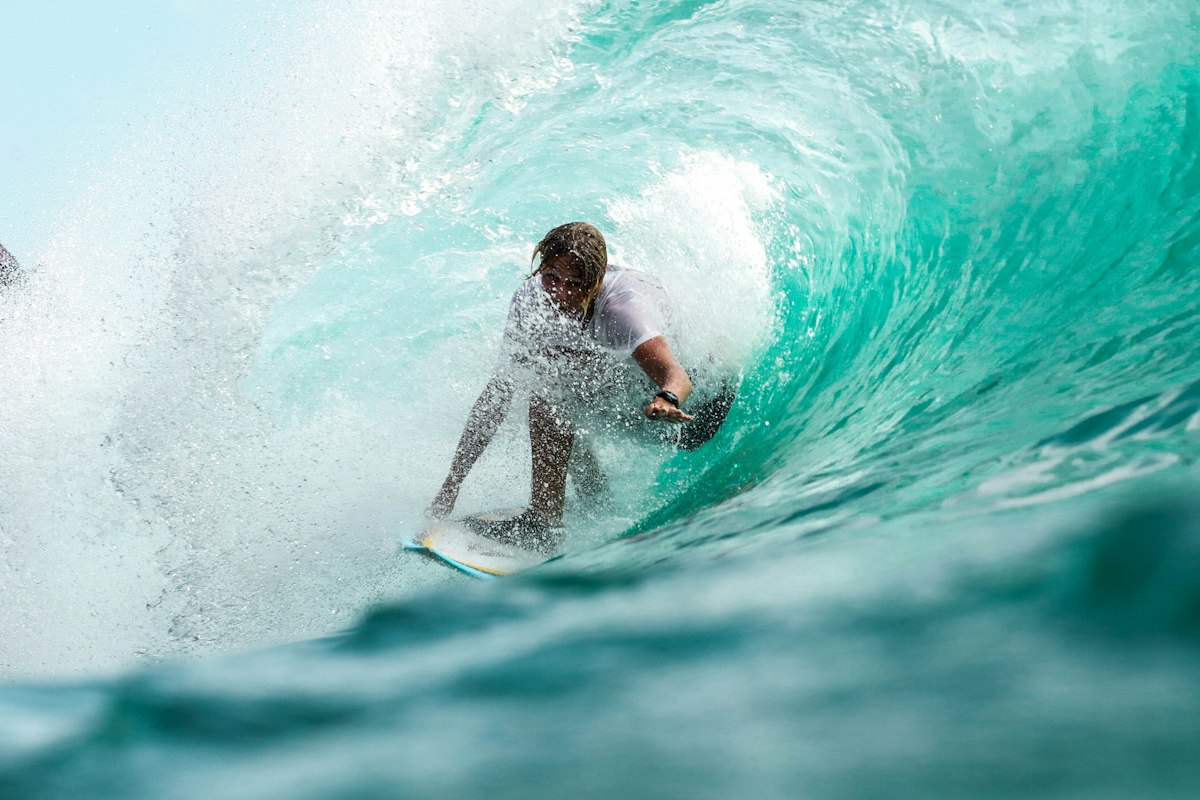
El Palmar is a genuine surf village: the wave is consistent, the crowd is knowledgeable, and the whole infrastructure of board hire, lessons, and surf culture is present. But over the past few years, the restaurants have got significantly better, the hotel offering has expanded (including some very good places that would not be out of place in a design magazine), and the overall quality of the experience has elevated.
Property supply at El Palmar is extremely limited. There is no grid of streets and apartments here — it is a small cluster of houses and a few small developments, and that will not change. When something comes to market, it goes quickly and is not cheap relative to the size of the building. Expect to pay €200,000–€600,000 for the limited residential options, with very little below €250,000 for anything habitable.
Property Types and Prices
Conil's property market divides roughly into four segments, each reflecting a different lifestyle proposition:
Town Apartments
The most accessible entry point and the most liquid part of the market. Apartments in the town centre and the streets immediately surrounding it range from simple one-bedroom flats in need of updating — available from €100,000–€150,000 — to larger, renovated two-bedroom units with terraces that sell for €180,000–€280,000. Three-bedroom apartments in good condition with parking will typically run €200,000–€350,000.
The old town centre skews small in floor plan — as it does in any medieval Andalusian town — but a well-renovated apartment with a rooftop solarium commands a significant premium and rents exceptionally well.
Townhouses
The category where Conil's character really lives. Townhouses in and around the pedestrianised centre, often across three narrow floors with private terraces and occasionally a small private patio, sell for €180,000–€380,000 depending on size, condition, and proximity to the beach. Renovation potential exists throughout; building work in Conil is generally more straightforward than in the designated heritage zones of larger cities, though the old town has its own planning sensitivities.
Villas and Detached Houses
The wider Conil municipality — the La Roche area, the countryside between the town and Chiclana, the rural hinterland to the east — contains a market for detached villas and country houses that operates at quite different price points.
A basic villa without sea views, in reasonable condition, can be found from around €200,000–€280,000. A well-presented villa with a private pool, garden, and good access, within a short drive of the beaches, typically falls in the €300,000–€450,000 range. Properties with direct or genuinely elevated sea views — which are rarer than the agents will initially claim — move into the €450,000–€800,000 bracket, occasionally higher for exceptional positions.
El Palmar
As noted above, a separate and even more supply-constrained market. €200,000–€600,000, and the €200,000 options are not numerous. The scarcity is structural and permanent.
Why Supply Is Genuinely Constrained
This is the point that most property market commentary in Spain glosses over, but in Conil it genuinely matters.
The Conil coastline sits within and adjacent to several layers of environmental protection. The Parque Natural de la Bahía de Cádiz and the broader network of ZEPA (Special Protection Areas for Birds) and ZEEC (Zone of Special Ecological Importance of the Coastline) designations cover significant portions of the municipality. The dune system north of town — La Roche and the coast running towards Chiclana — has substantial protected status that effectively prevents new coastal development.
The town's own planning has historically been conservative by Cádiz province standards. There is no planned large-scale residential development in the pipeline that would materially increase supply. What exists is largely what will exist: the growth in demand from international buyers, and the extension of the Spanish domestic market, will have to be absorbed by a fixed or slowly growing stock.
This is not an argument that property values can only rise — it is an argument that supply-side pressure is not going to relieve demand pressure, which has specific implications for liquidity and yield.
Getting to Conil
Access is honest rather than brilliant:
- Jerez Airport (55km, approximately 45 minutes): The primary entry point for most international buyers. Ryanair operates direct UK routes, and there are connections to multiple European cities. It is not a major hub, but for a holiday home market it is adequate.
- Cádiz city (40km, approximately 35 minutes): The nearest city, with good facilities, a hospital, and international connections. Worth noting that Cádiz is one of Europe's most beautiful cities — an extraordinary bonus for buyers in this area.
- Chiclana de la Frontera (20km, approximately 20 minutes): The nearest large town, with a full range of services, supermarkets, and infrastructure. Many Conil residents use Chiclana for practical errands.
- Gibraltar Airport (approximately 100km, 1 hour 15 minutes): British Airways and EasyJet connections — useful for UK buyers who want direct flights, though the distance is real.
- Málaga Airport (approximately 200km, 2 hours): The main hub for the Costa del Sol, technically reachable but genuinely far.
The Rental Market
Summer rental demand in Conil is extremely strong — but it is important to understand the nature of that demand before building a yield case.
The July–August peak is dominated by Spanish domestic tourists: Madrileños, Sevillanos, and other urban Spanish families booking holiday rentals that they return to year after year. These are not the backpackers of Benidorm or the package tourists of the Costa del Sol. They are higher-spending, quality-conscious, and increasingly booking via platforms rather than through traditional local agencies. A well-presented two-bedroom apartment near Fontanilla can realistically generate €1,500–€2,500 per week in high summer.
The international market is growing but still modest by Costa del Sol standards. German and Dutch visitors — who have a long-standing affinity for the Costa de la Luz — are the main international contingent. British visitors remain relatively few, which creates an interesting dynamic: it is a strong rental market that is not yet fully priced for international expectations.
Shoulder season (May–June, September–October) has been extending reliably over the past decade as the town's profile has risen and as more European buyers discover the Atlantic coast in the cooler, less-crowded months. October in Conil — warm, quiet, exceptional food, half-price flights — is one of southern Spain's underrated secrets.
Winter occupancy is low. This is not a year-round rental market in the way that, say, the Costa del Sol has become for retirees. Plan your yield case accordingly.
Gross yields of 5–8% are achievable for peak-season properties with good management and reliable occupancy in high summer. Properties that capture shoulder-season bookings will perform at the upper end; those that rely purely on peak summer will be at the lower end.
Important: Andalucía requires all holiday rental properties to be registered under the VUT (Vivienda de Uso Turístico) system before advertising or taking bookings. Registration involves meeting minimum habitability standards and passing an inspection. This is not optional — enforcement in Cádiz province has tightened considerably in recent years. Factor this into your purchase due diligence.
The Food: An Underrated Selling Point
It would be negligent to write a guide to buying property in Conil without addressing the food, because the food is exceptional and it is, for a certain type of buyer, one of the primary reasons to be here.
The Costa de la Luz sits adjacent to the tuna route — the almadraba tuna fishing tradition that runs from Conil south to Barbate and Zahara de los Atunes. Red tuna (atún rojo) caught on these grounds is among the finest in the world; the fish market in Barbate, 25km south, is the primary source for the restaurants that serve it. In Conil, you will eat some of the best tuna of your life, cooked simply and served at tables on the street, at prices that would be considered very reasonable in any major European city.
The seafood beyond the tuna is equally serious: fresh anchovies (boquerones), clams, prawns from the bay, and the fried fish tradition of Cádiz — the finest in Spain, argue its partisans — served in paper cones or on plates that are essentially perfect. A long lunch at a good restaurant on the Fontanilla seafront, with a bottle of chilled Manzanilla from Sanlúcar, costs a fraction of what an equivalent meal would cost in London, Madrid, or Copenhagen.
Who Buys in Conil?
The buyer profile in 2026 is shifting but still heavily domestic:
- Madrileños and Sevillanos who have been coming for generations and are now buying rather than renting — the traditional backbone of the market
- Urban Spanish professionals from Barcelona, Valencia, and other cities discovering the Atlantic coast
- German and Dutch buyers — the established international contingent, drawn by the Atlantic character of the coast and the authentic Spanish atmosphere
- British buyers — a small but growing number; Conil remains genuinely under the UK radar, which is both a risk (illiquid resale market to a narrow international pool) and an opportunity (prices still reflect mainly domestic demand)
- Digital nomads and remote workers — particularly attracted to El Palmar and the more bohemian end of the market
Why Consider Buying Now?
The investment argument for Conil is built on three things: price differential, supply constraint, and the trajectory of international discovery.
On price, the comparison with the Costa del Sol is instructive. A two-bedroom apartment in Nerja or Estepona of equivalent quality to a Conil apartment typically costs 30–50% more. Marbella equivalents are 2–3x the price. The Atlantic coast lifestyle is different — wilder, more Spanish, less sun-lounger and more sea-swimming — but it is not inferior, and the price differential has not closed in the way that many buyers expected it to.
On supply, the planning and environmental protections described above are real and durable. This is not a market where a large developer can acquire agricultural land on the fringe of town and build 500 apartments. The stock is constrained.
On international discovery: the travel media conversation around the Costa de la Luz — and specifically around Conil and El Palmar — has accelerated materially over the past three years. The buyers who move now are moving ahead of that curve; the buyers who wait for Conil to become fully established on the international market will pay the price of the fully established market.
None of this is a guarantee. Markets are not linear, and the illiquidity of a Spanish coastal town that remains primarily domestic is a real risk to hold in mind. But the structural argument — constrained supply, growing international demand, significant discount to comparable southern Spanish alternatives — is credible.
Buying in Conil: Practical Notes
Purchase costs run at 10–12% on top of the purchase price in Andalucía: ITP transfer tax at 7% for resale properties, plus notary fees, land registry fees, and legal costs. Our buying costs guide has the complete breakdown.
Legal representation is non-negotiable. Use an independent Spanish-qualified lawyer — not one referred by the agent, and not one based in a different region who is unfamiliar with the specific planning and environmental context of Cádiz province. The proximity to protected coastal and nature reserve land means that checking an individual property's planning history, legality of any extensions, and land classification status is especially important.
NIE number (Número de Identificación de Extranjero) is required for all property purchases in Spain. Our NIE guide explains how to obtain one.
Finance: Non-resident mortgages in Spain are widely available at 60–70% LTV. Spanish banks are comfortable with Conil property as security — it is a well-established market with good transaction history. See our Spanish mortgage guide for non-residents for what to expect.
Holiday rental registration: As above, VUT registration in Andalucía is mandatory before advertising any property for tourist rental. Start this process early — it can take several months.
Frequently Asked Questions
Is Conil de la Frontera a good place to buy property?
For the right buyer, yes — strongly so. The combination of genuine natural beauty, unspoiled Atlantic character, constrained supply, and a price point significantly below equivalent Costa del Sol locations makes a compelling case. The caveats are real: access via Jerez Airport is more limited than Málaga or Alicante, the resale market to international buyers is smaller, and winter rental income is limited. Buyers who will use the property personally, rent it well in high summer, and hold for the medium to long term are well positioned.
How do I get to Conil de la Frontera?
Jerez de la Frontera Airport (55km) is the primary entry point, with Ryanair direct connections from the UK and services from various European cities. Gibraltar Airport (approximately 100km) offers British Airways and EasyJet routes from London. Málaga Airport (approximately 200km) is the nearest major international hub, though the drive is two hours. There is no train service to Conil itself; a hire car or taxi from the airport is the practical option.
Is Conil expensive compared to the rest of Spain's coast?
No — it remains materially cheaper than equivalent-quality locations on the Costa del Sol or Costa Blanca. Town apartments start from around €100,000–€150,000; good townhouses from €180,000. This discount reflects the more limited international buyer pool and the less developed flight connectivity from northern Europe — two factors that are slowly changing.
What is El Palmar like, and should I consider buying there?
El Palmar is a small, surf-focused beach village 10km north of Conil — genuinely beautiful, increasingly fashionable, and characterised by extremely limited property supply. It attracts a design-conscious, outdoors-oriented European crowd and has excellent restaurants and boutique hotels out of proportion to its size. Buying here requires patience: inventory is scarce and turnover is slow. When properties do come to market, expect €200,000–€600,000 for a small house. The scarcity is structural and will not resolve — if anything, El Palmar's growing profile will tighten supply further.
What is the seafood like in Conil?
Exceptional. The area is part of the almadraba tuna-fishing tradition — red tuna from the Barbate grounds nearby is some of the finest in the world — and the daily fish market underpins a restaurant scene that punches far above the town's size. The Cádiz tradition of fried fish is equally serious. If you care about food, you will not want to leave.
Ready to find your property in Spain?
Browse thousands of verified listings from licensed local agents.
Browse properties →