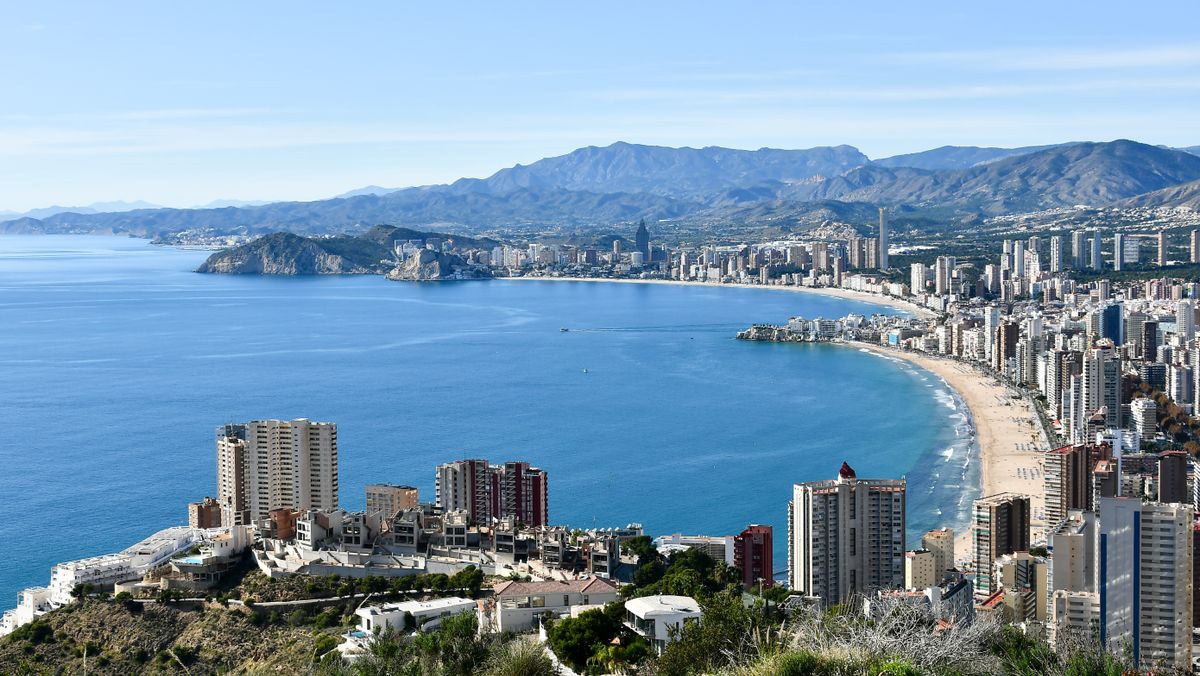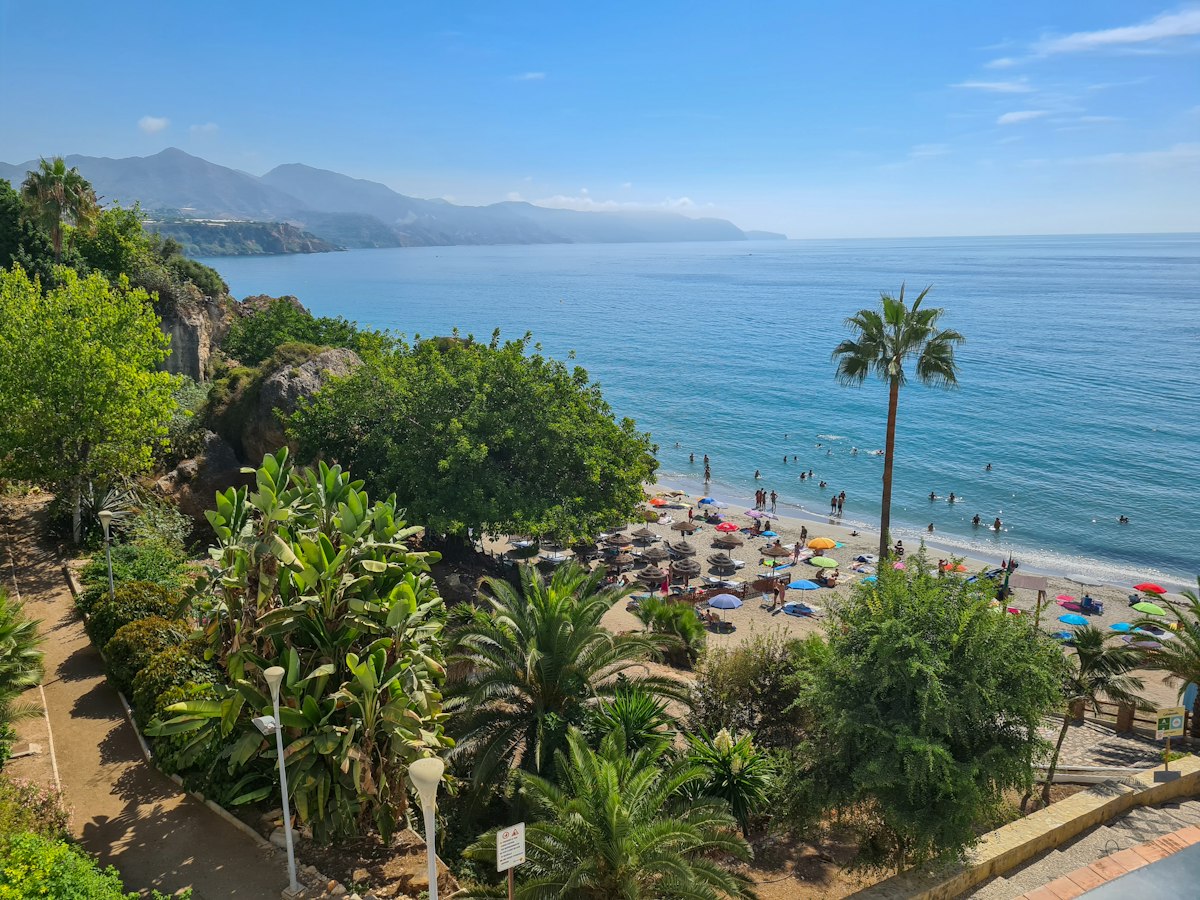
Calpe — officially Calp, its Valencian name — is the northern Costa Blanca's pragmatic option. It sits between the budget mass-market south and the premium enclaves of Moraira and Javea, and it offers something neither end of the coast does: genuine high-rise beachfront apartments at mid-market prices, two long Blue Flag beaches, a working fishing port, and one of the most recognisable landmarks in Spain looming over all of it.
For UK buyers, that combination matters. Calpe is where you can still buy a two-bedroom apartment a few minutes from the sand for under €250,000, or a detached villa with a sea view for what a townhouse costs 20 minutes up the coast. This guide covers what property actually costs in 2026, which areas are worth your attention, what the rental market genuinely returns, and the trade-offs nobody selling you a property will volunteer.
Is Calpe a Good Place to Buy Property?
Yes, with a clear-eyed understanding of what it is. Calpe is a proper resort town of around 30,000 permanent residents — well over half of them foreign — that swells to several times that in summer. It has year-round infrastructure: supermarkets, health centres, a weekly market, English-speaking professional services, and a restaurant scene anchored by the fishing port rather than the tourist strip.
The fundamentals are solid:
- Location: 67km north of Alicante airport, roughly 55 minutes by car on the AP-7. Close enough for weekend use, unlike Javea or Denia which push past the hour mark.
- Beaches: Two long sandy beaches — Arenal-Bol and La Fossa — plus a string of coves. Most northern Costa Blanca towns have rocky shorelines; Calpe has real sand.
- Price point: Averages around €2,900/m² in 2026 — meaningfully cheaper than Moraira (€3,500+/m²), Javea, or Altea, while sharing the same coastline and climate.
- Liquidity: High transaction volume and a deep international buyer pool (British, Dutch, Belgian, German, and increasingly Polish and Czech) mean properties sell. This is not a market where you wait two years for a buyer.
What Makes Calpe Unique
Three physical features define the town, and all three affect property values.
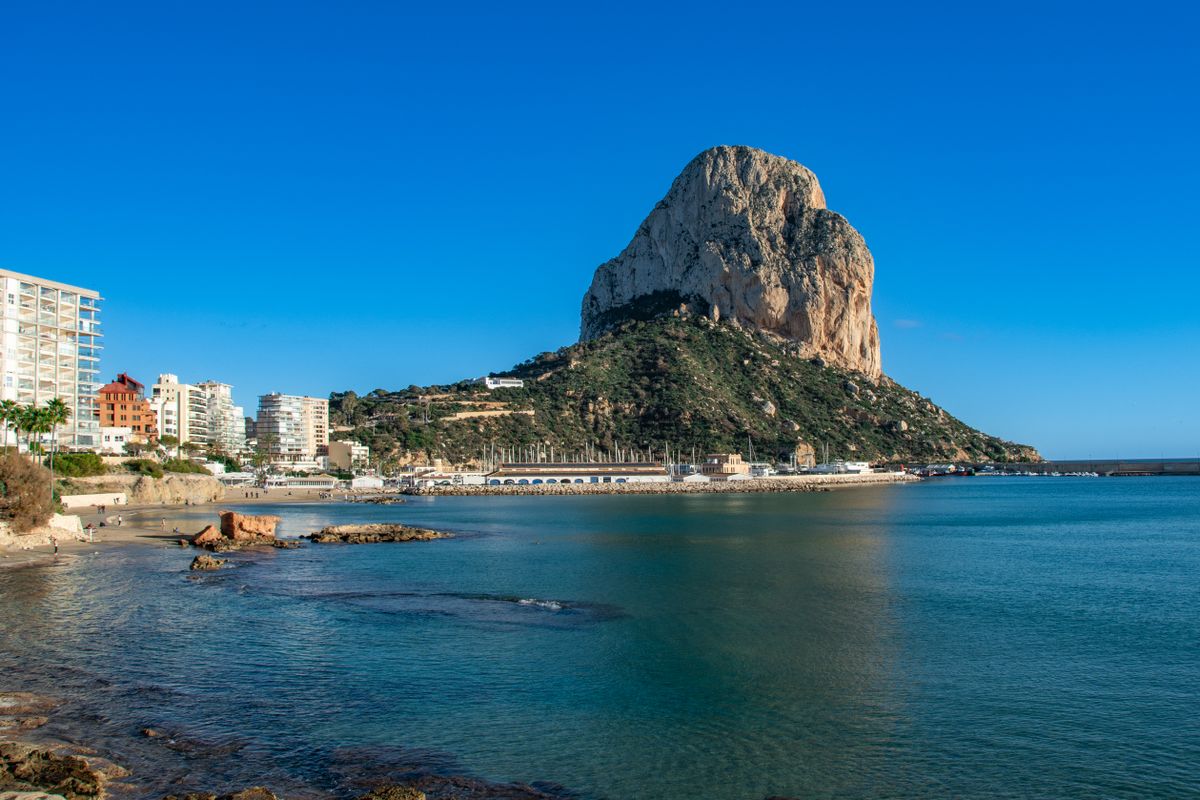
The Peñón de Ifach
The Peñón de Ifach is a 332-metre limestone rock rising straight out of the Mediterranean — a protected natural park, and the single most photographed landmark on the Costa Blanca. Practically, it does two things for property owners. First, it guarantees the view: any apartment or villa oriented toward the Peñón has an unspoilable outlook, because nothing can ever be built on or around it. Second, it anchors Calpe's identity in the holiday rental market. Listings with a Peñón view command a measurable premium — typically 10–20% on comparable stock — both in sale price and nightly rate.
Las Salinas Salt Lake
In the middle of town, between the two beaches, sits Las Salinas — a Roman-era salt lagoon that is now a protected wetland with a resident flamingo population. It cannot be developed. That green-belt effect splits Calpe's urban core in two and caps supply in the streets immediately surrounding it. Properties overlooking the lake trade on the novelty of flamingos from the balcony, but the bigger point is structural: a large chunk of central Calpe land is permanently off-limits to developers.
The Fishing Port
Calpe still runs a working fishing fleet, and the daily fish auction (the lonja, around 4:30pm on weekdays) supplies the row of seafood restaurants along the harbour. The port gives Calpe a year-round economy and a Spanish identity pure resort towns lack — restaurants stay open in January, and the town doesn't shutter between October and Easter.
Calpe Property Prices in 2026
Calpe's market has climbed steadily since 2021, with 2025 registering high single-digit annual growth on the back of strong Dutch, Belgian, and Polish demand alongside the traditional British buyer base. The town average sits around €2,900/m², but that number hides a wide spread by area:
| Area | Price range (€/m²) |
| --- | --- |
| La Fossa / Levante frontline | €3,500–€4,500 |
| Arenal-Bol seafront | €3,000–€4,000 |
| Port area / Peñón foot | €2,800–€3,800 |
| La Manzanera | €2,800–€4,000 |
| Town centre / old town (Tosal) | €2,200–€2,900 |
| Gran Sol and hillside urbanisations | €2,200–€2,800 |
- Studio or one-bed apartment, older block near the beach: €130,000–€180,000
- Two-bed apartment, second line, lift and community pool: €200,000–€300,000
- Frontline two/three-bed with Peñón view: €350,000–€600,000
- Townhouse or semi-detached villa: €280,000–€420,000
- Detached villa with pool, hillside with sea views: €450,000–€850,000
- New-build luxury villa, La Manzanera or Maryvilla: €900,000–€2,000,000+
The Best Areas to Buy in Calpe
Arenal-Bol and the Town Beach
Playa Arenal-Bol is Calpe's main town beach — 1.2km of sand running from the port to the town centre, backed by the promenade, restaurants, and the bulk of the town's commercial life. Property here is dominated by apartment blocks from the 1980s to the 2000s, with renovated and new-build projects filling gaps.
This is the most liquid part of the Calpe market. A two-bed apartment within 300 metres of the sand runs €220,000–€350,000 depending on age, orientation, and whether it has a sea view. Frontline on the promenade pushes €3,000–€4,000/m². For buyers who want walk-to-everything convenience and the strongest resale demand, Arenal-Bol is the default answer — browse current apartments for sale on the Costa Blanca to calibrate.
La Fossa (Playa Levante)
North of the Peñón, La Fossa is the second beach — slightly quieter, arguably prettier, with the rock framing the southern end of every photograph. The frontline here is Calpe's apartment premium zone: modern towers with direct beach access trade at €3,500–€4,500/m², the top of the local market.
La Fossa is also the holiday-rental engine of Calpe. The combination of sand, the Peñón backdrop, and walkable restaurants makes it the highest-occupancy zone in town. If you're buying primarily for rental income, this is where the numbers work best — but check the tourist licence position before you commit (more below).
The Port Area and the Foot of the Peñón
Between the marina, the fishing port, and the base of the rock sits a compact residential zone that many buyers overlook. It's a five-minute walk to Arenal-Bol in one direction and the harbour restaurants in the other, with the Peñón natural park literally at the end of the street. Stock is a mix of older apartments, a handful of newer complexes, and some of the best-positioned townhouses in Calpe.
Prices run €2,800–€3,800/m². The appeal is lifestyle: this is the most "Spanish" corner of coastal Calpe, anchored by the working port rather than tourist traffic. It suits year-round living better than pure holiday use.
Tosal and the Old Town
Inland from the beaches, Calpe's old town — around the Tosal area and the remnants of the medieval walls — is the value play. Narrow streets, the Thursday market, local bars where the menu is only in Spanish, and property at €2,200–€2,900/m². You'll find renovated village houses, older apartments needing work, and small townhouses at prices the beach zones left behind years ago.
The trade-off is a 10–15 minute walk to the sand and less rental pull. But for buyers relocating full-time — retirees, remote workers on a budget — the old town offers the lowest entry cost in central Calpe with all amenities on the doorstep.
Gran Sol
Gran Sol is a hillside urbanisation on the northern edge of town, above La Fossa, with sweeping views over the bay and the Peñón. It's classic Costa Blanca residential hillside: bungalows, linked villas, and detached houses, mostly built from the 1980s onward.
At €2,200–€2,800/m², Gran Sol is where villa money goes furthest in Calpe. A three-bed semi-detached with community pool sits around €280,000–€380,000; detached villas with private pools and sea views run €450,000–€650,000. You'll need a car, and some older properties need modernising — priced correctly, that's your negotiation leverage.
La Manzanera
South of the town centre, La Manzanera is Calpe's architectural claim to fame: the clifftop estate where Ricardo Bofill built La Muralla Roja — the pink-and-red modernist labyrinth that became a global Instagram phenomenon — alongside the Xanadú building. Apartments inside La Muralla Roja itself rarely trade and command collector prices when they do.
The wider La Manzanera zone is a low-density villa area on the rocky coastline, with direct access to small coves. Villas here run €2,800–€4,000/m², with modern new-builds on the upper plots reaching €1M–€2M+. It's the closest thing Calpe has to a prestige address, and the pipeline of high-spec new construction is concentrated here and in neighbouring Maryvilla. See what's currently available among villas for sale on the Costa Blanca.
Rental Potential
Calpe is one of the strongest short-let markets on the northern Costa Blanca. Realistic 2026 numbers:
- Two-bed apartment near La Fossa or Arenal-Bol: €900–€1,400/week in July and August, €500–€750/week in shoulder season. Well-run properties achieve 20–26 weeks of bookings a year.
- Villa with pool: €1,800–€3,500/week peak, depending on size and views.
- Gross yields: typically 5–6.5% on apartments bought at sensible prices; net figures land around 3.5–4.5% after management, cleaning, utilities, and tax.
Pros and Cons of Buying in Calpe
Pros:
- Value: 20–30% cheaper per square metre than Moraira, Javea, or Altea for the same coastline
- Real sandy beaches — rare on the northern Costa Blanca — plus the Peñón, the salt lake, and the port
- Year-round town with a genuine local economy, not a summer-only resort
- 55 minutes from Alicante airport, with Valencia airport as a backup 90 minutes north
- Strong, diversified rental demand and a deep resale market
- Broad stock: from €130,000 studios to €2M clifftop villas
- High-rise beachfront: the towers deliver value and views, but this is not a picture-postcard low-rise town
- August congestion — traffic, parking, and beach crowds are real
- Some hillside urbanisations have ageing housing stock requiring renovation budgets
- Tourist licence rules have tightened, and community-of-owners restrictions on short lets are spreading
- Less prestige cachet than its northern neighbours, if that matters to your resale story
Practical Buying Tips
1. Check the tourist licence first, not last. In apartment buildings, ask for the community statutes and minutes — a vote banning holiday lets destroys the investment case overnight. 2. Budget honestly for purchase costs. 10% ITP plus fees means a €300,000 apartment costs you roughly €335,000 all-in. 3. Instruct an independent lawyer — not one recommended by the selling agent — and have them verify the habitation certificate (cédula), any urbanisation charges, and that hillside villas have no outstanding planning infractions. Older self-built extensions in the urbanisations are a known issue. 4. Orientation is money. South and southeast-facing with a Peñón or sea view rents and resells at a premium; north-facing internal units are cheap for a reason. 5. View in winter if you're relocating. Calpe holds up well off-season, but you should see the town — and your street — in January before committing to full-time life there. 6. Negotiate on dated stock. Plenty of 1990s apartments and villas are priced as if renovated. A realistic reform budget of €600–€900/m² is your leverage.
The Bottom Line
Calpe is the northern Costa Blanca's best value-for-fundamentals trade. You give up the low-rise exclusivity of Moraira and accept a busy August; in exchange you get sandy beaches, an unmistakable landmark, a working Spanish town, and property at €2,200–€4,500/m² in a market with proven liquidity and rental demand. For UK buyers who want the northern coast without northern-coast prices, it's the town to shortlist first.
Frequently Asked Questions
Q: How much does an apartment in Calpe cost in 2026?
Expect €200,000–€300,000 for a two-bedroom apartment on the second line with a lift and community pool, and €350,000–€600,000 for frontline units with Peñón or sea views. Older one-beds in the town centre still start around €130,000–€180,000.
Q: Is Calpe cheaper than Moraira and Javea?
Yes, significantly. Calpe averages around €2,900/m² against €3,500+/m² in Moraira and Javea, largely because Calpe permitted high-rise development and therefore has more supply. You're buying the same coastline and climate at a 20–30% discount per square metre.
Q: Can I rent out my Calpe property to holidaymakers?
Yes, but you need a VT tourist licence from the Valencia regional government, and rules tightened in 2024 — licences renew every five years and apartment communities can vote to restrict short lets. Always verify the licence position before purchase, and expect gross yields of 5–6.5% on well-located apartments.
Q: How far is Calpe from Alicante airport?
Calpe is 67km north of Alicante-Elche airport, around 55 minutes by car via the AP-7 motorway. Valencia airport is about 90 minutes north, giving you two airport options — useful for keeping flight costs down outside peak season.
Q: What are the extra costs when buying in Calpe?
Budget 10–13% on top of the purchase price. The Valencia region charges 10% transfer tax (ITP) on resale properties, or 10% IVA plus 1.5% stamp duty on new builds, plus legal fees (around 1%), notary, and registry costs. A mortgage adds valuation and arrangement fees on top.
Ready to find your property in Spain?
Browse thousands of verified listings from licensed local agents.
Browse properties →