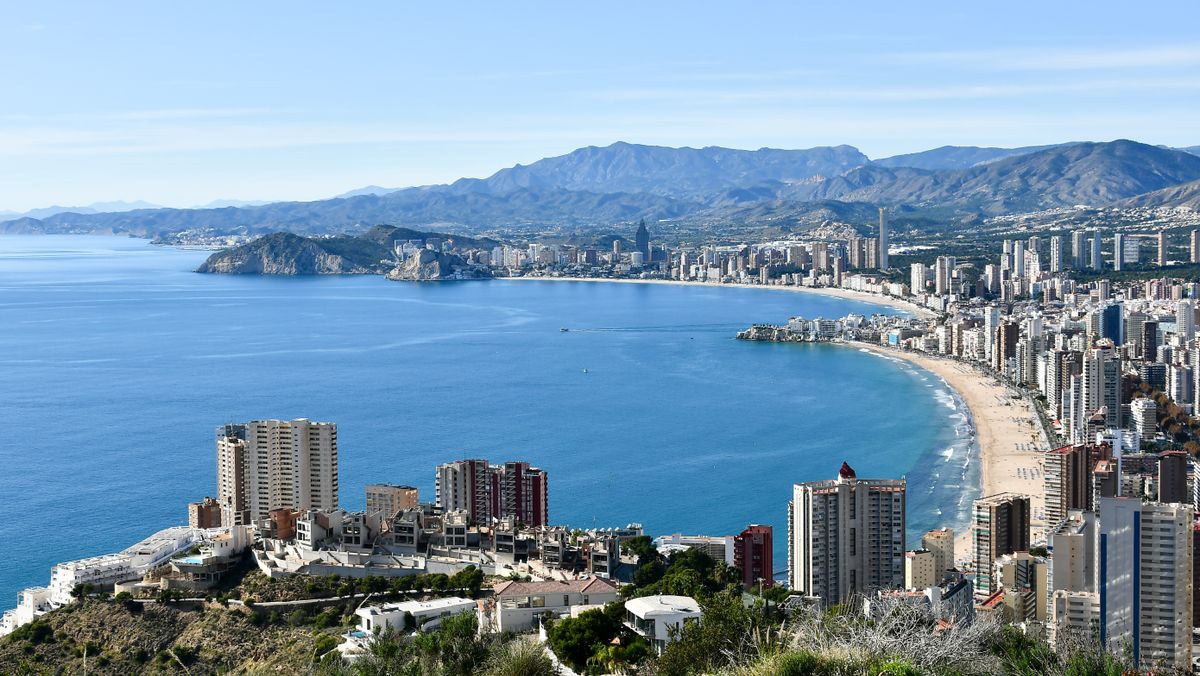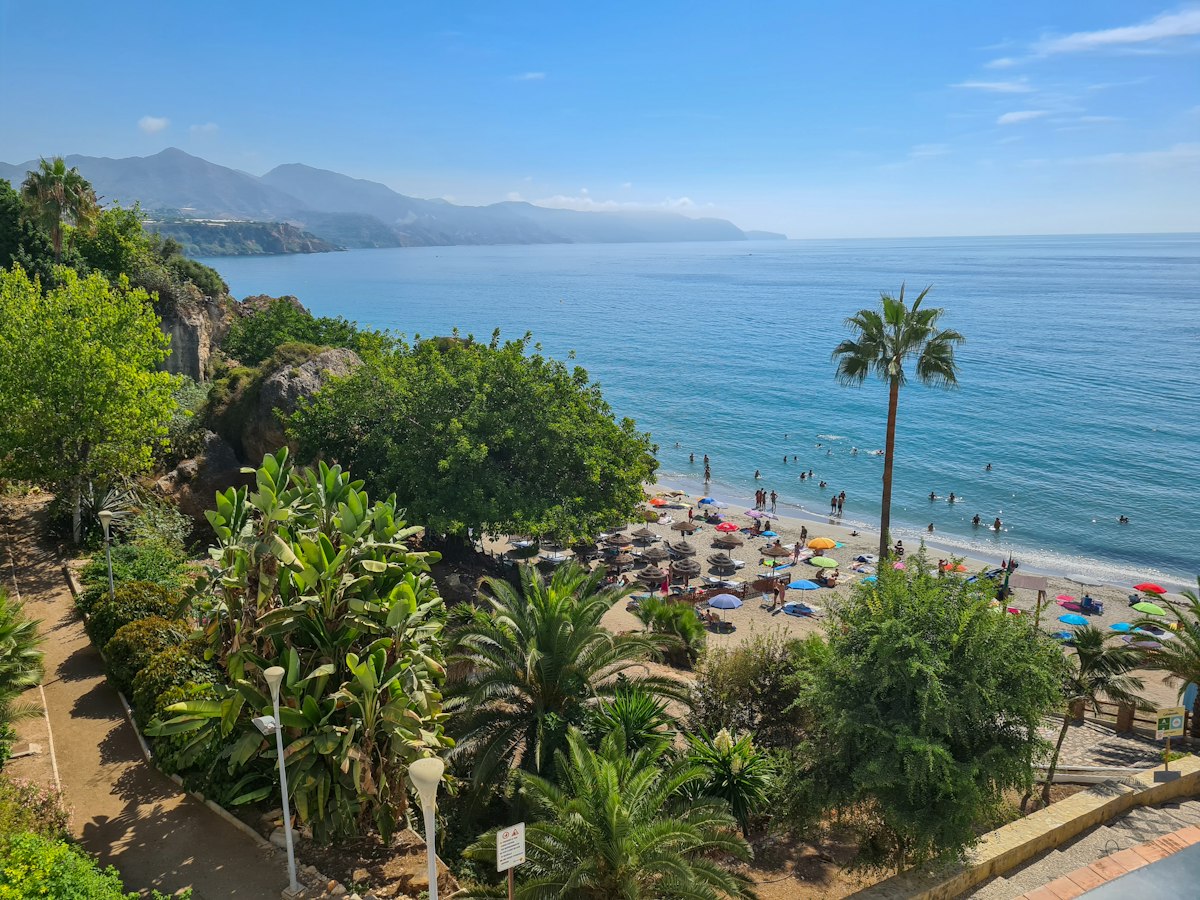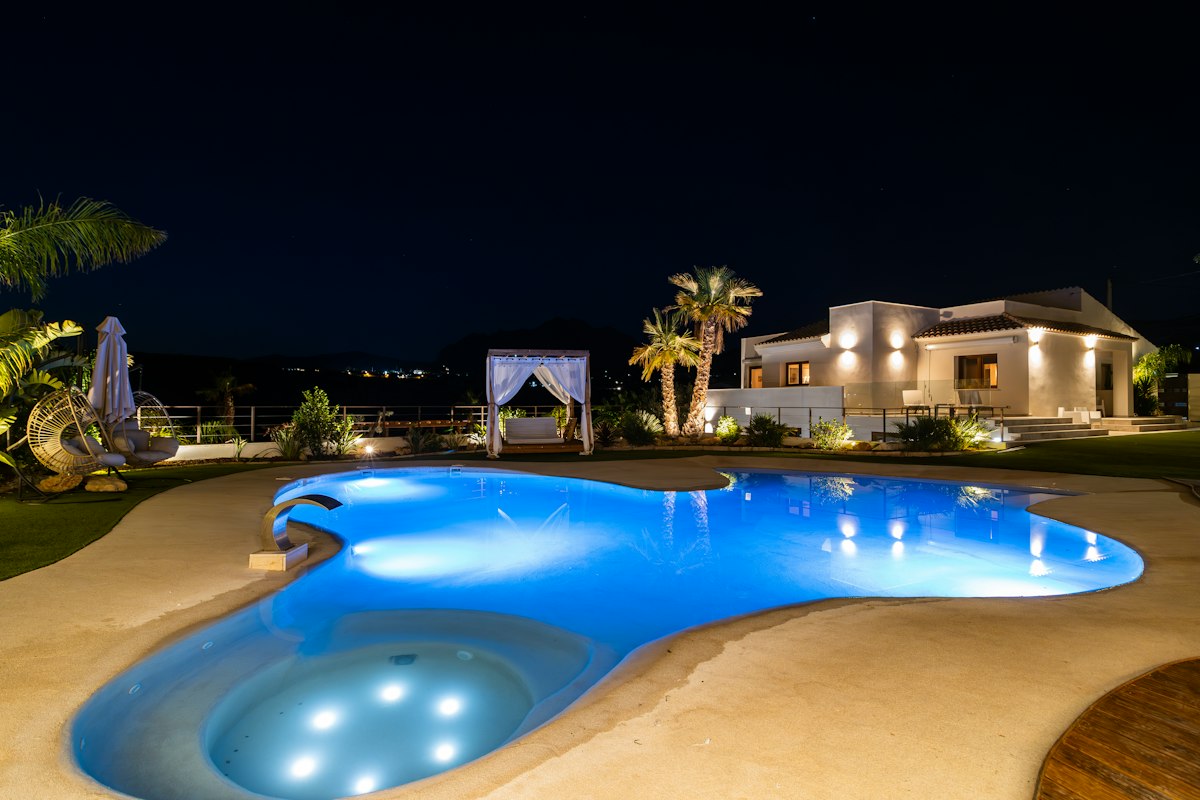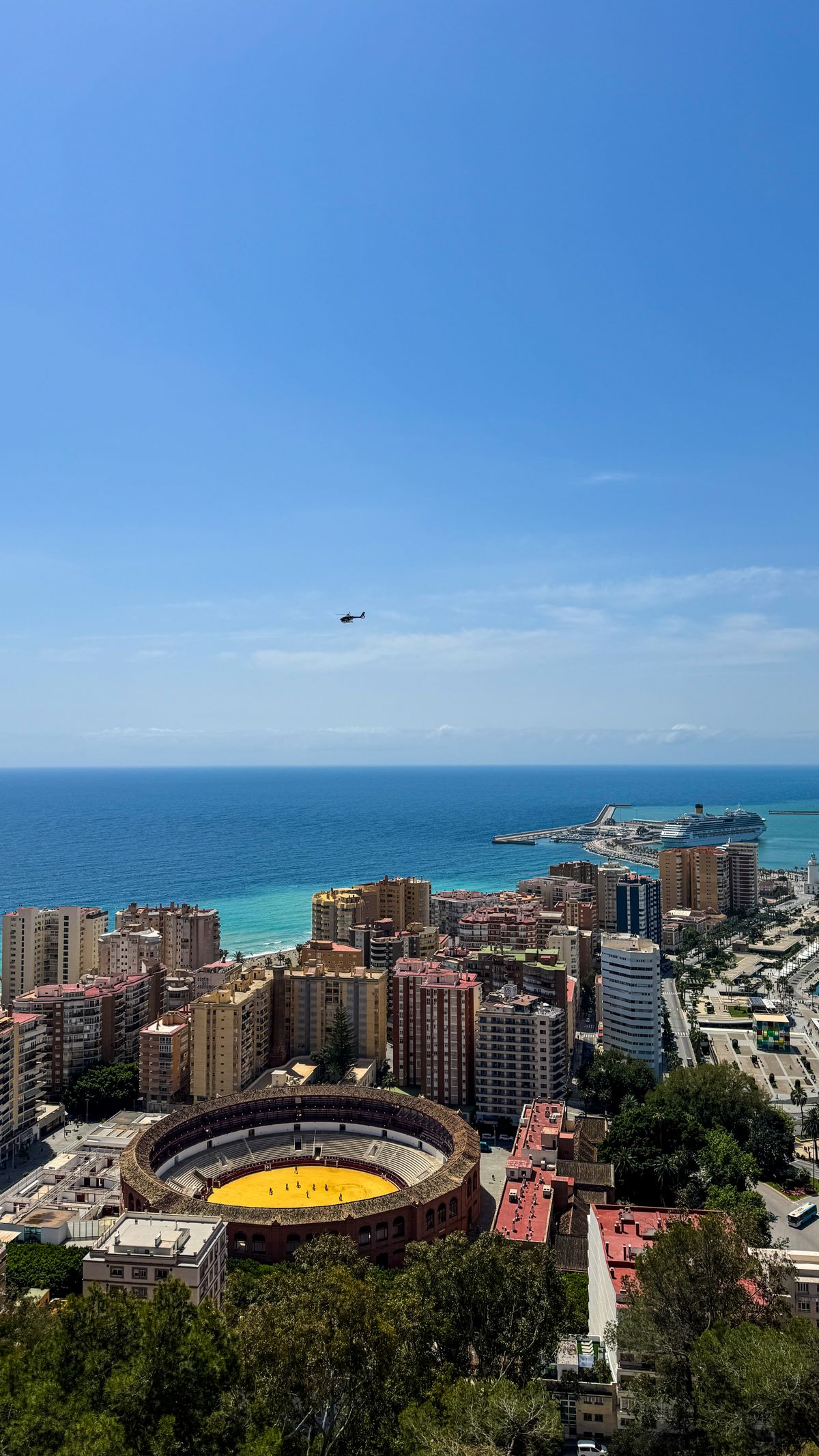
The Axarquía doesn't get the marketing budget that Marbella does. There's no glossy branding campaign, no celebrity golf resort, no Formula 1 associations. What it has instead is something increasingly rare on the Spanish coast: an enormous variety of genuinely different places to live, within 30 kilometres of each other, across a landscape that shifts from subtropical beach to mountain wine village to Moorish hilltop — sometimes within the same afternoon.
This is the comarca (county) immediately east of Málaga city. It stretches from the edge of the capital's sprawl to the border with Granada province, taking in a long strip of Mediterranean coastline, the valleys behind it, and the dramatic sierra above. Nerja anchors the western end. The white villages of Frigiliana, Cómpeta, and Sayalonga spill up into the mountains. Torre del Mar and Algarrobo Costa face the sea between them. And behind it all, the market town of Vélez-Málaga keeps the whole comarca commercial and grounded.
If you've been priced out of Nerja, felt that Marbella isn't really what you came to Spain for, or are simply looking for somewhere that hasn't been discovered yet — the Axarquía is worth a serious look.
What Is the Axarquía?
The Axarquía is the easternmost of Málaga province's seven comarcas. It covers about 31 municipalities, roughly 1,400 square kilometres, and a population of around 200,000 — most of it concentrated on the coast. The name comes from the Arabic Al-Sharquía, meaning "the eastern lands," and the Moorish heritage here runs deep. The white-washed villages, the irrigation terraces cut into hillsides, the Moscatel grapes grown above Cómpeta — all of it has roots in the centuries before the Reconquista.
The character of the Axarquía is fundamentally different from the western Costa del Sol. There is no purpose-built resort strip. The towns are real towns that happen to be near the sea, not tourist infrastructure that happens to have a local attached. For buyers tired of finding the same chain restaurants, the same English-language estate agencies, and the same anonymous apartment blocks that define the costas between Torremolinos and Estepona, this distinction matters.
It also matters practically. Because this region isn't marketed heavily to international buyers, prices remain significantly lower than comparable quality elsewhere on the Costa del Sol.
Key Towns and Where to Buy
Vélez-Málaga — The Commercial Hub
Vélez-Málaga is the comarca's capital: a proper inland town of around 80,000 people, 4 kilometres from the coast, with a functioning economy, a historic Moorish old town, a weekly market, and the full apparatus of Spanish urban life. It's not a tourist town. Most residents are Spanish, most property buyers are local, and prices reflect this.
Apartments in Vélez-Málaga town start from as little as €60,000–€90,000 for a functional one or two-bedroom flat in the residential areas. Even in the old town, you can find character properties — older buildings, courtyard layouts, traditional Andalucian townhouses — for €100,000–€180,000. These are values that simply do not exist on the coast to the west.
The appeal to international buyers is specific: those who want to live in genuinely Spanish surroundings, have a day-to-day life that isn't organised around tourism, and prioritise value above all. It's also worth noting that Vélez-Málaga has good road connections — the A-7 coastal road passes through, and Málaga city is around 35 minutes.
The honest caveat: if you want the beach on your doorstep, Vélez-Málaga is a short drive to Torre del Mar but not a coastal experience itself. For buyers who see the beach as a weekend option rather than a daily requirement, the trade-off is excellent value.
Torre del Mar — The Understated Coast Town
Torre del Mar is the beach town of Vélez-Málaga, separated from the parent town by a 4-kilometre strip of development. It has a long sandy beach — wider and less dramatic than Nerja's coves but genuinely pleasant — a working fishing harbour at the Caleta end, a functioning paseo marítimo, and the kind of lived-in, year-round Spanish beach town atmosphere that is rapidly disappearing from the Costa del Sol.
It is not polished. The architecture is utilitarian. But it works as a place to live. There are supermarkets, bars, restaurants that open year-round, and a permanent Spanish population that keeps the town functioning outside summer. The beachfront paseo has been redeveloped and improved significantly in recent years.
Property prices are reasonable without being exceptional:
- Sea-view apartments: €100,000–€200,000
- Townhouses: €120,000–€220,000
- Larger front-line apartments: €180,000–€280,000
Nerja — The Western Anchor
Nerja is technically part of the Axarquía, though it operates as its own market and has its own guide on this site. It sits at the western edge of the comarca, closest to Málaga airport, and remains the most expensive and most recognisable town in the region. If you're primarily focused on Nerja, read our dedicated Nerja property guide for full detail on prices, areas, and rental potential.
For the purposes of this guide, Nerja acts as the benchmark: everything in the Axarquía east of it is more affordable, less crowded, and less established in the international buyer market.
Frigiliana — The White Village that Stops Traffic
Seven kilometres from Nerja by a winding mountain road, Frigiliana is one of the most visually arresting villages in Andalucía. It sits on the lower slopes of the Sierra de Almijara at around 300 metres, its white-washed houses climbing steeply above a valley of subtropical cultivation. The Barribarto — the old Moorish quarter — is a protected historic zone of narrow cobbled alleys, tiled street art, and terraced views that genuinely take the breath away.
Frigiliana has been "discovered" for decades without losing its character. A significant community of artists, writers, and creative professionals has settled here — drawn by the light, the beauty, and the slower pace — alongside a substantial British and Dutch presence. It's one of the few places on the Spanish coast where estate agents will use the word "authentic" and mean it.
Property is almost entirely village houses and restored traditional properties — apartments are uncommon. Prices run from:
- Village houses (small to medium): €150,000–€300,000
- Larger character properties and casas with terraces and views: €300,000–€450,000+
- Occasional rural properties in the surrounding hills: from €200,000
The honest caveats: Frigiliana in summer is hot — significantly hotter than the coast — and in July and August it fills with day-trippers arriving on organised tours from Nerja. The village infrastructure is limited; you will drive to Nerja for supermarkets, restaurants with variety, and beach days. And the rental market, while it exists, is more limited than coastal Nerja — holiday lettings happen, but you're dealing with a smaller visitor pool seeking a specific niche experience.
Who buys here: Artists and creatives, buyers who have fallen in love with Andalucian village life, buyers who've found Nerja too expensive or too busy, people seeking a genuine second-home base in southern Spain rather than a rental investment.
Cómpeta — The Wine Village With a British Heart
Cómpeta (often written as Competa in older listings) is the best-known of the Axarquía's interior wine villages — a whitewashed hilltop town at around 600 metres, surrounded by slopes of Moscatel vines, with mountain views in every direction. The annual wine festival in August, the Noche del Vino, draws thousands. The local Moscatel wines are genuinely interesting — sweet, aromatic, produced by a small cooperative that has been running for generations.
Cómpeta has one of the largest foreign communities of any village in inland Málaga province — predominantly British and Dutch, with a meaningful German presence. There are English-speaking estate agents, a foreign residents' association, and enough expat infrastructure that first-time buyers in Spain can feel relatively supported. It's been a favourite of buyers escaping the Costa del Sol since the 1980s.
The property offer is broad:
- Village houses and townhouses: €100,000–€250,000
- Rural villas and fincas in the surrounding countryside: €150,000–€450,000
- Larger restored fincas with land and views: €350,000–€600,000+
Who buys here: Retirees seeking full-time Andalucian life, buyers wanting rural properties with land, those who prioritise community (the expat network is real and active), remote workers who want mountain air and fast internet (broadband coverage in Cómpeta village itself is reasonable).
Algarrobo and Algarrobo Costa — The Quieter Option
Between Torre del Mar and Nerja on the coastal strip, Algarrobo Costa is a quieter residential stretch with its own small beach, lower-key atmosphere, and slightly more local character than the larger coast towns. The inland village of Algarrobo sits a few kilometres above.
Prices here run slightly below Torre del Mar — apartments from €90,000–€180,000 for coastal properties — and the buyer profile is predominantly residential rather than holiday-let focused. For buyers who want a coastal base without the tourist apparatus, and aren't fixated on Nerja's cachet, Algarrobo represents straightforward value.
Sayalonga and the Interior Wine Villages
East of Cómpeta, a cluster of small villages — Sayalonga, Arenas, Salares, Canillas de Albaida — dot the interior valleys of the Axarquía. These are for buyers who specifically want the most off-the-beaten-track experience: tiny permanent populations, near-total absence of tourism, and properties that come up infrequently but cheaply.
Village houses in Sayalonga start below €100,000. Rural fincas in the surrounding countryside can be found from €120,000. The caveat is substantial: amenities are minimal, the nearest town is a 20–30 minute drive, and the buyer pool at resale is extremely thin. These villages suit buyers who have specifically chosen to step outside the expat and tourist infrastructure entirely — and who won't find that a hardship.
The Axarquía Appeal: Choose Your Own Version
What makes the Axarquía genuinely different from other Costa del Sol locations is the range of completely different property experiences available within a 30-kilometre arc. You're not choosing between variants of the same thing — you're choosing between fundamentally different lifestyles:
- Beach apartment in Torre del Mar for a Spanish coastal experience at accessible prices
- White village house in Frigiliana for one of the most beautiful village settings in Spain
- Rural finca above Cómpeta for space, land, and mountain views in an established expat community
- Nerja townhouse for the established market with the best rental track record on the eastern coast
- Interior village property in Sayalonga or Arenas for those who want to disappear into genuine rural Andalucía
Climate
The Axarquía has one of the most extreme climate profiles in Spain. The coastal strip — Torre del Mar, Algarrobo Costa, the Nerja seafront — benefits from Mediterranean moderation: mild winters rarely below 10°C at night, summers warm rather than scorching, with sea breezes taking the edge off.
Move inland, and the picture changes dramatically. Cómpeta, Frigiliana, and the interior villages can reach 40°C+ in July and August, with little relief from sea breeze. The flip side is cooler, cleaner winters — Cómpeta at 600 metres sees occasional frost — and a freshness that the coast never quite achieves. The subtropical cultivation along the valley floors (avocados, mangoes, cherimoyas grow here) attests to the particular microclimate of the sheltered valleys.
For buyers intending to use their property in summer, the coast is considerably more comfortable than the interior. For year-round residents who want Mediterranean character without the summer tourist density, the altitude is part of the attraction.
Transport and Access
This is the Axarquía's main practical challenge, and buyers should understand it before committing.
Málaga Airport is 40–50km depending on location, typically 40–60 minutes in normal traffic. This is manageable. However, unlike the western Costa del Sol which benefits from the AP-7 autopista and A-7 dual carriageway running its entire length, the Axarquía has no motorway. The primary coastal route is the N-340/A-7, which passes through or close to most coastal towns — but it's a real road, subject to traffic and the speed constraints of passing through settlements.
Access to the interior villages is via mountain roads — winding, scenic, and slow. Cómpeta from the coast takes around 30 minutes. The interior villages beyond it can be 45 minutes from the coast on good days. This isn't a problem for residents who've adjusted to it; it's a frequent surprise for buyers who underestimate it.
There is no train service in the Axarquía. Bus services connect the main towns but are infrequent. A car is not optional — it is the fundamental infrastructure of life here, whether on the coast or inland.
For buyers accustomed to Alicante's immediate motorway connections from the airport to the Costa Blanca resorts, the Axarquía will feel meaningfully different. Factor this in honestly.
Rural Property and Planning — Essential Due Diligence
The Axarquía's mountains contain a significant stock of rural properties built during Spain's construction boom in the 1970s, 1980s, and 1990s — many of which were erected without proper planning permission or on land not zoned for residential use. This is not unique to the Axarquía, but the region has a particularly high concentration of affected properties.
The consequences for buyers can be severe: inability to obtain an occupation licence (cédula de habitabilidad), difficulty connecting to mains services legally, complications at point of resale, and in the most extreme cases, demolition orders issued by the Junta de Andalucía.
If you are buying a rural property in the Axarquía mountains, specialist legal due diligence is not optional. Appoint a solicitor with specific experience in Andalucian rural property law before you make any offer. Check the property's registration against the catastro (land registry), verify planning status with the local Ayuntamiento, and confirm the property has a valid occupation licence or a clear legal path to obtaining one.
Our rural property in Spain guide covers this in detail. The due diligence guide is also essential reading for any Axarquía purchase. Don't buy a finca above Cómpeta on the basis of how beautiful it looks in the listing photographs — the paperwork matters as much as the view.
Who Buys in the Axarquía
The buyer profile here is distinct from most of the Costa del Sol.
Retirees seeking authentic Andalucía are the largest group — particularly British and Dutch nationals who have visited the interior villages over decades and want to settle in surroundings that feel genuinely Spanish rather than resort-adjacent. Cómpeta especially has an established, functioning retiree expat community.
Remote workers and lifestyle buyers have grown significantly as a buyer segment. Frigiliana and Cómpeta attract professionals who can work from anywhere and want to exchange a UK or northern European existence for mountain air, a home office with Andalucian views, and a slower pace. Broadband quality in the main villages is now adequate for most remote-work needs.
Budget-conscious buyers who've been priced out of Nerja are an increasing group. As Nerja's prices have risen steadily, buyers who want the eastern Costa del Sol character at lower prices have found that Torre del Mar and Algarrobo Costa offer much of the substance at substantially lower cost.
Artists and creatives have a long history with Frigiliana specifically — the light, the setting, and the community have drawn painters, sculptors, writers, and photographers for generations.
Rental Market — Honest Assessment
The Axarquía's rental market varies significantly by location.
Nerja is the regional rental powerhouse — established, proven, with near-full summer occupancy and an improving shoulder season. See the Nerja guide for detailed figures.
Torre del Mar has a solid if unremarkable rental market — predominantly Spanish domestic visitors, with growing northern European interest. Gross yields of 4–6% are achievable for well-managed coastal apartments. It's not a spectacular rental location but provides reliable income for a sensible purchase.
Frigiliana has a niche rental market — visitors who specifically want the village experience rather than the beach. The pool of potential renters is smaller, the booking cycle is less predictable, and management from a distance is harder. That said, well-presented Frigiliana properties command premium nightly rates — the supply of genuinely beautiful village houses is small, and the right property priced correctly will let. Manage expectations: this is a second-home market more than a pure rental investment market.
Cómpeta and the interior villages have very limited holiday rental demand. The audience seeking a rented finca in the Axarquía mountains is a small niche. The interior Axarquía works well as an owner-occupied base or second home; it works less well as a rental investment property.
For the full picture on regulation, tax, and getting a tourist licence in Andalucía, see our renting out property in Spain guide and the holiday rental licence guide.
---
Frequently Asked Questions
What is the Axarquía?
The Axarquía is the easternmost comarca (county) of Málaga province, covering the area between Málaga city and the Granada border. It includes the coastal towns of Torre del Mar, Algarrobo Costa, and Nerja, the inland market town of Vélez-Málaga, and the famous white villages of the interior including Frigiliana, Cómpeta, and Sayalonga. The name derives from the Arabic for "the eastern lands," reflecting the region's deep Moorish heritage.
Is Torre del Mar a good place to buy property?
Torre del Mar is a solid choice for buyers wanting a genuine Spanish coastal town at accessible prices. It has a long sandy beach, a working fishing harbour, year-round amenities, and a permanent Spanish population. It lacks the cachet and international rental appeal of Nerja — and there's no shame in admitting that — but for buyers who prioritise value and authentic atmosphere over brand recognition, it represents good property at fair prices. Sea-view apartments from €100,000–€200,000 compare favourably with most of the Costa del Sol.
Is Frigiliana expensive?
Relative to the surrounding Axarquía, yes — Frigiliana commands a premium because of its extraordinary visual setting and international appeal. Village houses start around €150,000 for smaller properties and rise to €400,000+ for larger, well-restored homes with terraces and views. Compared to Nerja's coastal market, Frigiliana is often competitive for equivalent quality. The key point is that apartments are uncommon here — the market is primarily village houses and character properties, so lower-end entry points are more limited than on the coast.
What is Cómpeta like to live in?
Cómpeta works well as a full-time base for those who actively want rural Andalucian life over coastal resort living. The village has a functioning expat community (predominantly British and Dutch), a handful of bars and restaurants that operate year-round, and a genuine social fabric built up over decades. The wine cooperative and annual festival give it a cultural identity beyond just being "a pretty village." The trade-offs are clear: you need a car for everything, temperatures are extreme in summer, and the 30-minute drive to the coast means the beach is a planned excursion rather than a daily option. For the right buyer — particularly retirees and remote workers — it delivers a quality of life that coastal Spain rarely matches.
---
Before You Buy
Get your NIE number sorted before you view seriously — you'll need it for any formal offer. The buying costs guide covers Andalusia's 7% ITP transfer tax on resale properties. If you're considering financing, the non-resident Spanish mortgage guide sets out what's realistic. And if you're looking at a rural or finca property anywhere in the Axarquía interior, the rural property guide and due diligence checklist should be read before you start viewing.
The Axarquía rewards the buyer who takes the time to understand what they actually want from it. There is no single "Axarquía experience" — there are half a dozen quite different ones. Pick yours, research it properly, and you'll find one of the most genuinely satisfying property markets on Spain's southern coast.
Ready to find your property in Spain?
Browse thousands of verified listings from licensed local agents.
Browse properties →