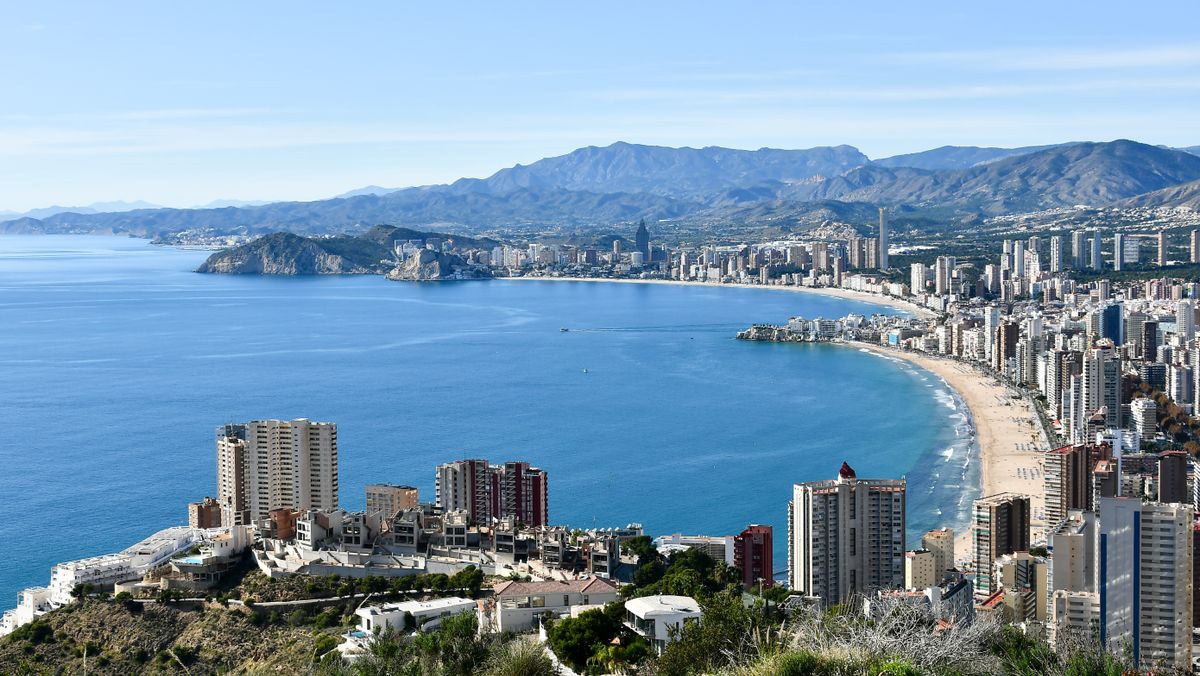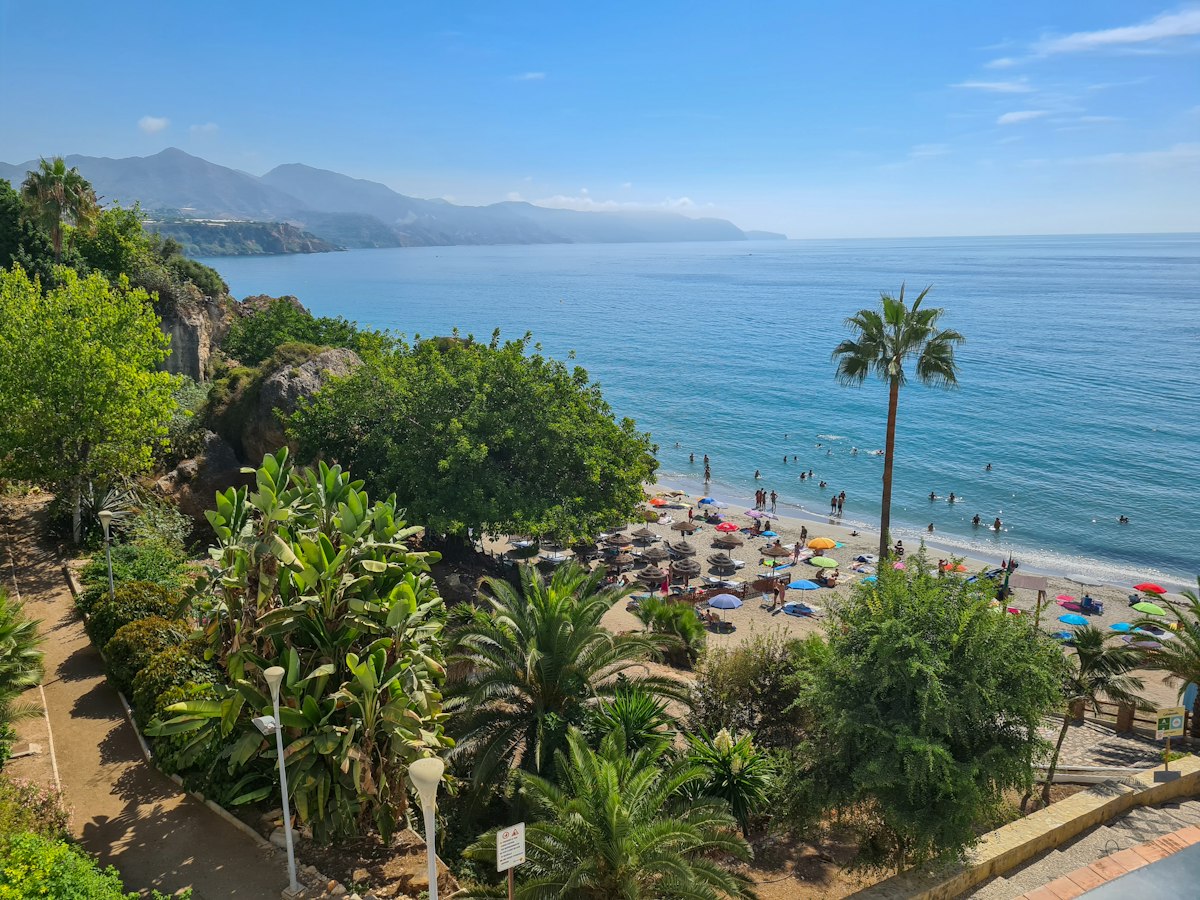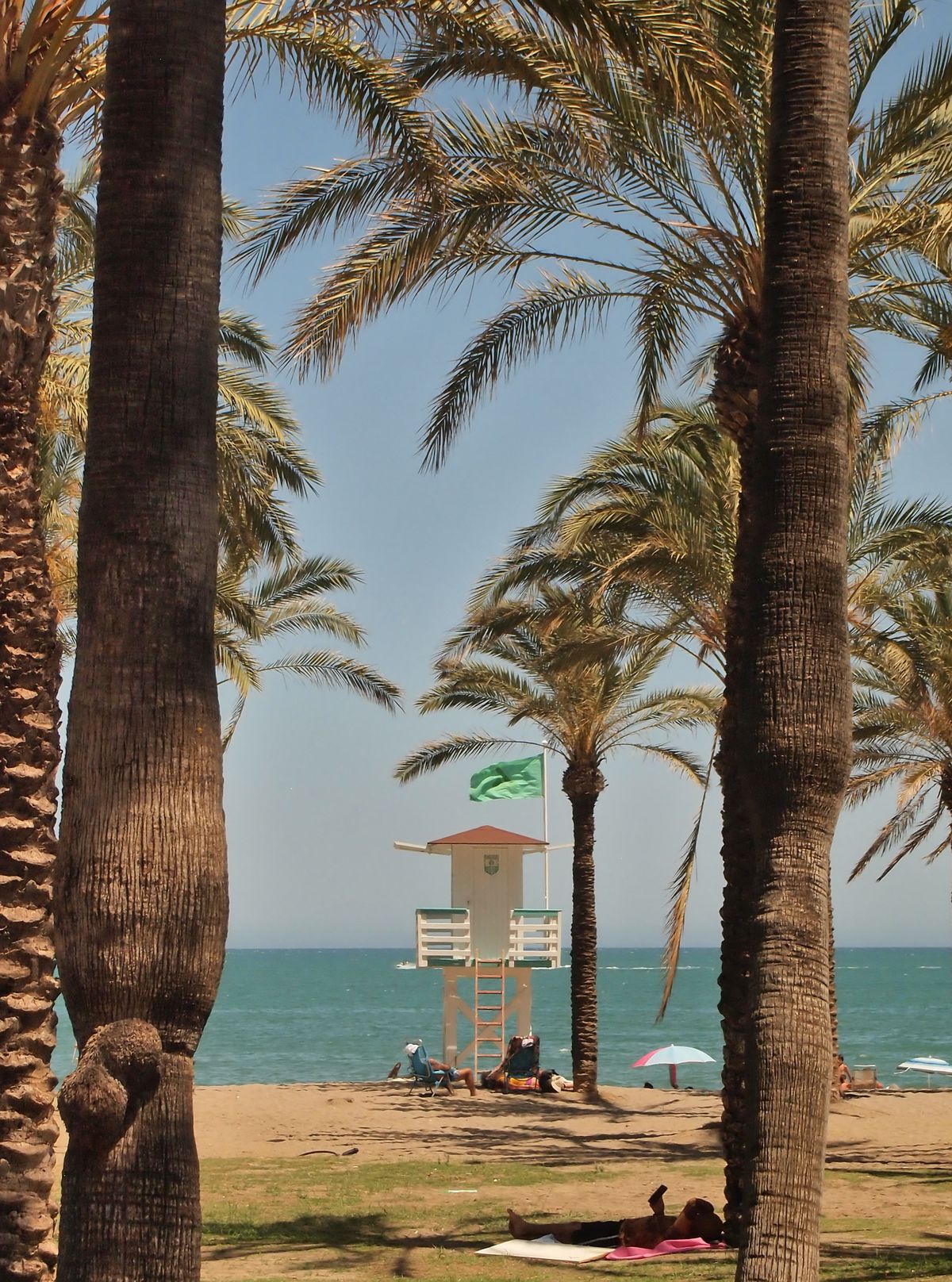
Torremolinos is the town Costa del Sol buyers dismiss without visiting — and that reflex is costing them money. Yes, it was the poster child of the 1980s package holiday: high-rise hotels, full English breakfasts, lager by the litre. That reputation calcified forty years ago and never got updated. The town did.
Here's the current reality. Torremolinos is the cheapest place to buy property on the entire Costa del Sol, at roughly €1,500–€3,000 per square metre in 2026. It's the only coastal town with a direct metro line to both Málaga airport (about 15 minutes) and Málaga city centre (about 20 minutes). And it sits next door to a city that has spent a decade becoming southern Spain's tech and culture hub, pushing workers and priced-out Málaga residents down the coast in search of somewhere affordable to live.
That combination — lowest prices on the coast, best transport links, growing spillover demand from a booming city — is not a common one. This guide covers what the town is actually like now, where to buy, what it costs, and where the catch is.
Reputation vs Reality
Let's deal with the elephant first. Torremolinos was arguably the birthplace of Spanish mass tourism. In the 1960s it was a fishing village with a few bohemian hotels; by the 1980s it was wall-to-wall package holidays, and the town's name became shorthand for everything cheap and cheerful about the Costa del Sol. British sitcoms used it as a punchline.
Two things have happened since that most people outside Andalucía haven't noticed.
First, the town has been steadily cleaned up. The seafront promenade has been renovated in stages, the beaches hold Blue Flag status, La Carihuela's old fishing quarter has been pedestrianised and smartened, and the town hall has spent years investing in public spaces precisely because it knows the old image was a drag on values. Torremolinos also has one of the most established LGBT scenes in Spain, which has brought a wave of bar, restaurant and boutique hotel investment that has done a lot for the town's energy.
Second — and more important for a buyer — Málaga changed the equation entirely. Torremolinos is now effectively a beach suburb of a city with a genuinely strong economy: a growing tech sector, a major university, a booming cultural scene, and property prices rising fast enough to push people outwards. Torremolinos is the first affordable stop on the line out of the city. That structural position is worth more than any promenade renovation.
What Torremolinos is not: glamorous. There are no superyachts, no Michelin cluster, no golden-mile villas. Parts of the town centre are dated, some 1970s apartment blocks are frankly ugly, and peak August is loud and crowded. If you want polish, read our Costa del Sol property guide and look at Marbella or Estepona — and budget two to four times as much per square metre.
Is Torremolinos a Good Place to Buy Property?
For the right buyer, yes — and the case rests on numbers rather than romance.
It's the value floor of the Costa del Sol. At €1,500–€3,000/m², Torremolinos is cheaper than Fuengirola, meaningfully cheaper than Benalmádena's better areas, and less than half the price of Marbella. When an entire coastline rises in value, the cheapest town with good fundamentals tends to have the most room to move. That's not a guarantee, but the gap is wide enough that some convergence is a reasonable base case.
The transport links are the best on the coast, full stop. The Cercanías C-1 line runs through Torremolinos with several stations, reaching Málaga airport in around 15 minutes and Málaga María Zambrano station in around 20. No other Costa del Sol resort town has rail access this good — Marbella has none at all. For holiday-let guests, for owners doing the Friday-night flight from Gatwick, and for tenants commuting into Málaga, this is a permanent advantage.
Málaga's growth is doing the heavy lifting. As Málaga city rents and prices climb, workers and young families are moving down the line. Torremolinos is absorbing that demand now, visible in rising long-term rents and falling time-on-market for well-priced apartments. You're buying into the commuter belt of the fastest-growing city economy in southern Spain — our Málaga property guide covers the city side of that story.
Who shouldn't buy here: anyone who wants prestige, anyone allergic to tourist crowds in summer, and anyone expecting a whitewashed village. Torremolinos is a working, dense, slightly scruffy beach town with excellent bones. Buy it for what it is.
Property Prices in Torremolinos (2026)
The 2026 market in one line: €1,500–€3,000 per square metre, the lowest range on the Costa del Sol.
What that means in practice:
- Studios and one-bedroom apartments in the town centre or El Calvario start around €90,000–€140,000. This is the cheapest entry point to beach-town ownership anywhere on this coast.
- Two-bedroom resale apartments — the core of the market — typically run €140,000–€230,000 depending on area, condition and whether there's a sea view. In La Carihuela or front-line Playamar, expect the top of that range and beyond.
- Three-bedroom apartments and townhouses run roughly €200,000–€350,000, with renovated or sea-view stock pushing higher.
- Front-line, sea-view or fully reformed property in the best pockets trades at the top of the €3,000/m² band, occasionally above it — still cheaper than mid-market stock in Fuengirola or Benalmádena.
The Best Areas to Buy in Torremolinos
La Carihuela
The best area in Torremolinos, and it isn't close. La Carihuela is the old fishing quarter at the western end of town, towards Benalmádena, and it kept its low-rise, village-scale character while the rest of the coast went vertical. Pedestrianised streets, some of the best fish restaurants on the Costa del Sol (the *espetos* — sardines grilled on beach fires — are the local religion), a wide beach, and a genuinely mixed community of Spanish families, long-term expats and holidaymakers.
For buyers, La Carihuela offers the strongest lifestyle case and the most resilient values in town. Stock is a mix of older low-rise apartments, a few townhouses, and some newer builds towards the Benalmádena border. It commands a premium over the rest of Torremolinos — expect the upper half of the town's price range — and well-priced two-beds sell quickly. If your budget stretches to it, start here.
Prices: two-beds roughly €180,000–€280,000; anything front-line or reformed, more.
El Bajondillo
The beach neighbourhood directly below the town centre, reached famously by the cliff-face lift and stepped streets. El Bajondillo has one of the best urban beaches on the coast — long, wide, backed by a busy promenade — and a dense stock of apartment towers from the 1970s boom.
This is the value play for beach access. The towers aren't pretty, but many have been refurbished, the sea-view units are dramatically cheap for what they are, and rental demand — both holiday and increasingly year-round — is strong. Check each building individually: quality of community management varies more here than anywhere else in town. A sea-view two-bed here can cost less than a no-view flat in Fuengirola.
Prices: two-beds roughly €150,000–€240,000, sea views at the top end.
El Calvario
The workaday inland neighbourhood uphill from the centre, where Torremolinos is at its most Spanish and its cheapest. No sea views, no tourist gloss — local bars, markets, and the lowest entry prices in town, with the metro/Cercanías connection close by. This is where Málaga commuters and local families buy and rent, which makes it the most interesting area for long-term rental investors. Ten minutes' walk to the centre, twenty to the beach.
Prices: from around €90,000 for one-beds; two-beds €120,000–€180,000.
Playamar
The purpose-built beachfront strip at the eastern end of town, closest to the airport, dominated by the landmark 1960s–70s tower blocks set in large gardens directly on the sand. The towers divide opinion architecturally, but the fundamentals are excellent: front-line beach, big communal pools and green space, and easy access to the Los Álamos beach-club scene next door, which has become the youngest, trendiest corner of Torremolinos. Strong holiday-let performance thanks to the beach-plus-airport combination.
Prices: two-beds roughly €170,000–€260,000; high-floor sea views command a premium.
Town Centre (Centro)
Around Calle San Miguel, the main pedestrian shopping street, and the plazas that fan off it. Busy, convenient, well connected — the main train station is here — with the cheapest stock after El Calvario. Some streets are charming, some are tired; this is a flat-by-flat market. Good for buyers who want walkability and rental flexibility over charm.
Prices: two-beds roughly €130,000–€200,000.
Who Buys in Torremolinos?
Three groups dominate, and it's worth knowing which one you are.
Budget-conscious lifestyle buyers. British, Irish and northern European buyers who want a lock-up-and-leave on the Costa del Sol and have €100,000–€250,000 to spend. In most of the coast that budget means compromises; in Torremolinos it buys a proper apartment near a proper beach, with an airport journey short enough to make long weekends genuinely practical.
Yield investors. Torremolinos offers some of the best gross rental yields on the Costa del Sol, for a simple reason: purchase prices are the lowest on the coast while rental rates are pulled upwards by tourist demand and Málaga spillover. Gross yields of 5–7% on well-bought apartments are realistic, against 3–4% in the coast's prestige towns.
Expats who want Málaga without Málaga prices. A growing group: remote workers, people with jobs in the city, and retirees who want city healthcare and culture within twenty minutes but a beach on the doorstep. The metro link makes this a real lifestyle rather than a compromise.
The Rental Market
The short-term market is the established story: Torremolinos runs very high summer occupancy — the beaches, the nightlife, the LGBT scene and the airport proximity keep the town full from June to September, with a solid Easter-to-October shoulder. Andalucía requires a tourist rental licence (VUT registration), and while its regime remains relatively permissive, rules are gradually tightening and some communities of owners have voted to restrict holiday lets — verify the specific building before buying with lettings in mind.
The more interesting story is the long-term market. Demand from Málaga workers who can't afford the city has pushed Torremolinos long-term rents up sharply, and vacancy on sensibly priced apartments is minimal. For landlords, this creates a genuine choice that most resort towns don't offer: chase peak-season holiday income with its management overhead, or take a year-round tenant at a yield that still comfortably beats the prestige end of the coast. Winter demand — historically the weakness of every Spanish resort town — is the specific thing Málaga's growth is fixing for Torremolinos.
The Honest Downsides
No guide is worth reading without this section. The building stock is old: most of what you'll view was built between 1965 and 1995, so renovation costs, community fees and pending building works need to be in your numbers from day one. August is genuinely crowded and noisy, especially around the centre and Bajondillo. The town's image, while outdated, is still its image — resale buyers may need the same convincing you did. And Torremolinos will never be Marbella; if any part of you is buying for status, spend more money somewhere else.
None of these are hidden problems. They're the reason the prices are what they are — and the bet, ultimately, is that the fundamentals (metro, beach, Málaga) outlast the reputation.
Next Steps
If Torremolinos fits your budget and your temperament, the process from here is the same as anywhere in Spain: get your NIE, appoint an independent lawyer (not one recommended by the selling agent), and budget 10–12% on top of the purchase price for taxes and fees — our buying costs guide walks through every line item. To compare the town against its neighbours before committing, the Costa del Sol property guide covers the full coast, and you can browse current apartments for sale on the Costa del Sol to see what today's market actually offers at each price point.
Frequently Asked Questions
Q: Is Torremolinos cheap because it's a bad place to buy?
No — it's cheap because of a forty-year-old reputation and an ageing building stock, not because of weak fundamentals. It has the best transport links on the Costa del Sol, Blue Flag beaches, and growing demand from Málaga's expanding economy. The low prices are a perception gap as much as anything, which is precisely what value buyers look for. That said, buy carefully: individual buildings vary enormously in condition and management.
Q: How much does an apartment in Torremolinos cost in 2026?
Prices run roughly €1,500–€3,000 per square metre — the cheapest on the Costa del Sol. In practice that means one-bedroom apartments from around €90,000–€140,000, two-beds typically €140,000–€230,000, and three-beds €200,000–€350,000. Front-line or fully renovated property in La Carihuela or Playamar sits at the top of those ranges. Add 10–12% for taxes and buying costs.
Q: Which is the best area of Torremolinos to buy in?
La Carihuela, the old fishing quarter at the western end of town. It kept its low-rise village character, has some of the best seafood restaurants on the coast, and holds its value better than anywhere else in Torremolinos. El Bajondillo is the value pick for beach access, El Calvario is the budget and long-term rental play, and Playamar suits holiday-let investors who want front-line beach near the airport.
Q: How far is Torremolinos from Málaga airport?
About 15 minutes on the Cercanías C-1 train line, which runs directly through Torremolinos with several stations, and roughly 10–15 minutes by car. Málaga city centre is around 20 minutes by train. No other resort town on the Costa del Sol has rail access this good — it's Torremolinos's single biggest structural advantage for owners, renters and holiday-let guests alike.
Q: Can I rent out a property in Torremolinos?
Yes. For holiday lets you'll need a tourist rental licence (VUT registration with the Junta de Andalucía), and you should check the building's community statutes, as some blocks have voted to restrict short-term rentals. Summer occupancy is very high, and long-term rental demand from Málaga workers is rising fast, so year-round letting is increasingly viable. Well-bought apartments achieve gross yields of roughly 5–7%.
Ready to find your property in Spain?
Browse thousands of verified listings from licensed local agents.
Browse properties →