Here's something that surprises almost every UK buyer in Spain: nobody expects you to get a survey. Not the agent, not the vendor, not the notary — often not even your own lawyer. Spanish buyers rarely commission surveys, the legal process doesn't require one, and the transaction proceeds without anyone putting a professional eye on the building.
For a buyer trained by the UK system — where a HomeBuyer Report is near-universal — this is a dangerous gap. If you don't commission a survey, nobody checks anything, and Spanish law gives you far less comeback on hidden defects than you might expect.
This guide covers why you should always get a survey, which type to choose, what it costs, the Spain-specific issues to look for, and how to use the findings.
Why Surveys Aren't Standard in Spain — and Why That's Your Problem
In the UK, the survey is baked into the culture of buying. In Spain, the culture is *caveat emptor* with the volume turned up. The notary verifies identity, title, and the legality of the documents — not the condition of the building. The vendor has limited disclosure obligations. And once you've signed the escritura, pursuing a seller for hidden defects (*vicios ocultos*) is possible in theory but slow, expensive, and uncertain in practice.
The housing stock itself justifies caution. Much of Spain's coastal and rural property was built quickly during the 1960s–70s tourism boom and the 1997–2007 bubble, often to standards that would raise eyebrows today. Common problems in older Spanish properties include:
- Rising damp and penetrating humidity, especially in ground-floor and older village properties built without damp-proof courses
- Structural cracking from subsidence, clay soils, or poor foundations
- Asbestos cement (fibrocemento) in flat roofs, water tanks, and outbuildings — extremely common in pre-1990s construction
- Unpermitted extensions added over decades without planning consent
- Swimming pool structural problems — cracked shells, failed liners, leaking buried pipework
- Outright illegal builds, particularly rural, constructed without any licence at all
The Types of Survey Available in Spain
The terminology trips up a lot of UK buyers, so let's be precise about what each product actually is.
Informe de tasación (bank valuation) — not a survey
If you're taking a Spanish mortgage, the bank will commission a tasación — an official valuation by a registered valuation company. Buyers often assume this is the Spanish equivalent of a survey. It is not. The tasación tells the bank what the property is worth as loan security; the valuer may spend twenty minutes on site, and the report says almost nothing about condition or structural integrity. Treating a tasación as a clean bill of health is one of the costliest mistakes UK buyers make.
Inspección técnica / condition report — the UK HomeBuyer equivalent
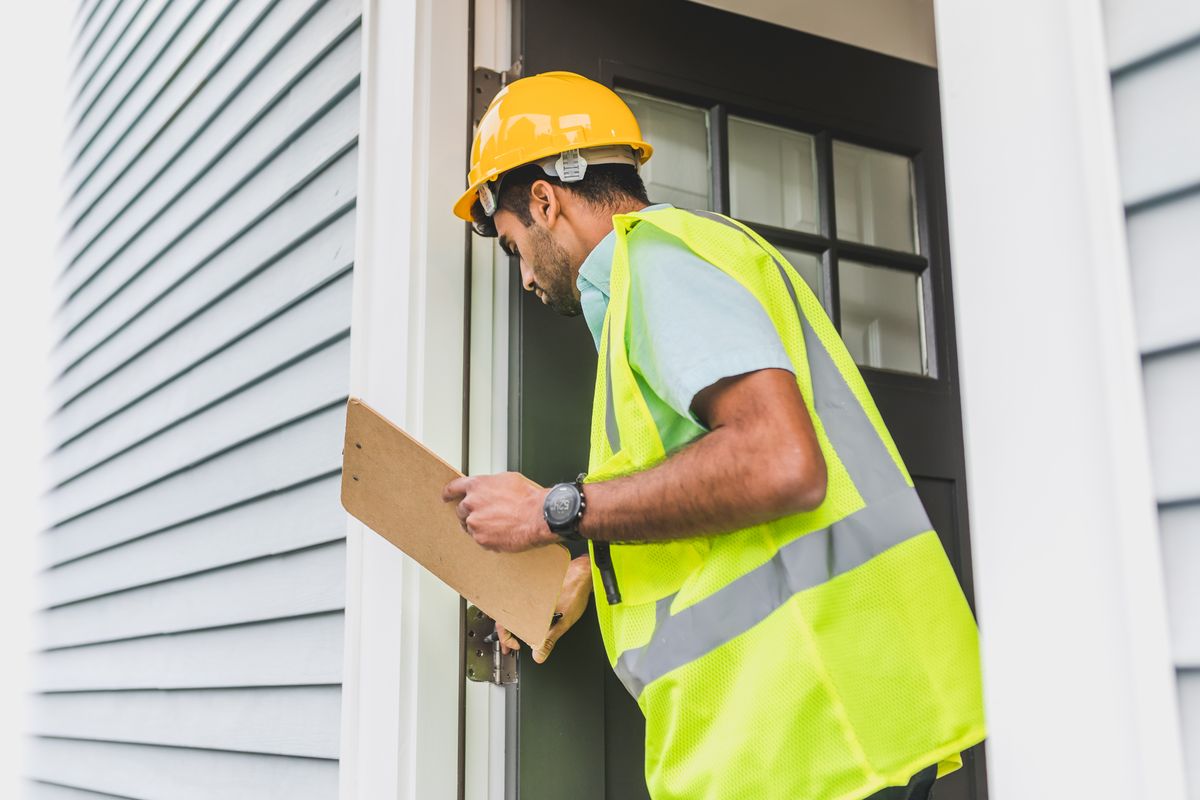
This is what most buyers actually need. A qualified building professional — an arquitecto técnico, also known as an aparejador — inspects the property and produces a written report on its condition: structure, roof, damp, cracks, electrics, plumbing, terraces, and visible defects, with photographs and recommendations.
It's broadly equivalent to a UK Level 2 HomeBuyer Report. Expect to pay €400–€900 depending on size and location. For a typical resale apartment or villa, this is the minimum you should commission.
Full structural survey — for older or complex properties
For properties that are old, visibly cracked, extended multiple times, built into hillsides, or simply large, commission a full structural survey from an arquitecto (a fully qualified architect, a step above the arquitecto técnico). This is the UK Level 3 equivalent: deeper investigation of structure and foundations, assessment of movement, and costed remediation recommendations.
Budget €800–€2,000+. On a rural finca, a pre-1970s villa, or anything with visible structural distress, this is money well spent.
Pool survey — a separate specialist job
Pools fail in ways a general surveyor may not catch: shell cracks below the waterline, leaking pipe runs buried under the terrace, worn-out pumps and filtration. A specialist inspection — including a pressure test of the pipework — typically costs €150–€400 and is worth it on any property with a pool. A leaking shell can cost €10,000–€20,000 to rebuild, and you can't tell by looking at the water.
Electrical and plumbing inspection
Sometimes bundled into the condition report, sometimes commissioned separately. Older Spanish properties frequently have non-compliant installations — undersized consumer units, no earth bonding, and aluminium wiring, common before the 1990s and a genuine fire risk. On pre-1990 properties, insist the electrics are inspected properly, not just glanced at.
What to Check That's Specific to Spain
A UK survey mindset — damp, roof, structure — covers a lot, but Spain adds categories of risk with no real UK equivalent. Make sure your surveyor and your lawyer address these explicitly.
Illegal builds and undeclared extensions
This is the single biggest Spain-specific risk. Extensions, garages, casitas, and pools are routinely added without planning permission. The test is simple: does what you can see on the ground match what's registered? Your lawyer should compare the nota simple (Land Registry extract) and the catastro (cadastral record) against the physical property. A 200m² villa registered as 120m², or a pool on satellite imagery but not on any official record, is a problem you inherit at completion — potential demolition orders in the worst cases, and real difficulties when you sell or mortgage.
The AFO certificate in Andalucía
In Andalucía, older illegal builds on rural land can sometimes be regularised through an AFO (*Asimilado Fuera de Ordenación*) certificate — recognition that the build is out of planning but tolerated, restoring legal certainty and access to services. The absence of an AFO where one is needed is a serious red flag: regularisation costs money (often 2.5–4.5% of build value plus fees), takes time, and isn't always possible. Never assume the seller will "sort it out" — price it in or walk away.
The energy certificate
Every property sold in Spain legally requires a Certificado de Eficiencia Energética. Don't just check it exists — read the rating. An F or G rating means poor insulation, single glazing, and high heating and cooling bills for as long as you own the property, plus regulatory risk as EU energy standards tighten.
The ITE report
For buildings over a certain age (the threshold varies by municipality, commonly 45–50 years), Spanish law requires a periodic structural inspection called the ITE (*Inspección Técnica de Edificios*). Buying an apartment in an older building? Ask for the most recent ITE report. A failed or missing ITE can mean the community of owners is facing significant repair bills — which you'll share.
Coastal Properties: The Salt Air Problem
The Mediterranean lifestyle comes with a corrosive atmosphere. On near-coastal properties, salt-laden air attacks concrete over decades through carbonatation: the concrete loses its alkalinity, the steel rebar corrodes and expands, and the concrete spalls off in chunks — visible as rust stains and blown patches on balconies, beams, and cantilevered terraces. Repair is expensive, and on apartment buildings it becomes a community-wide bill.
Also high on the coastal checklist: flat roof and terrace waterproofing. Membranes have a finite life, and failure shows up as damp ceilings in the rooms below. Persistent humidity and condensation mould round out the usual coastal suspects.
Rural Properties: A Different Checklist Entirely
Buying a finca or country villa? The survey needs to extend beyond the building:
- Water supply: Mains, registered well, unregistered well, or a deposit tank filled by lorry? Each has wildly different implications for cost and legality. Well water rights should be documented.
- Septic tank: Most rural properties are off mains drainage. Have the tank located and inspected — old properties sometimes have little more than a soakaway pit, which is no longer legal.
- Electricity connection: Confirm a legal mains connection with a contract in place — not a generator, a solar-only setup misdescribed as mains, or a cable run informally from a neighbour. Getting a new legal rural connection can cost five figures.
- Access: Is the access road public or private? If private, are rights of way documented in the title? A property you can't legally reach is worth a lot less than you paid for it.
How to Find a Surveyor
You have two good routes:
- RICS-registered surveyors operate throughout the main expat areas — Costa Blanca, Costa del Sol, the Balearics. Search the RICS website's "Find a Surveyor" directory for Spain. You get UK-style reporting, in English, to standards you already understand.
- Spanish arquitectos técnicos are rigorous, fully qualified professionals, usually cheaper, and often know local construction quirks better than anyone. Many in coastal areas produce reports in English.
The Cost-Benefit Maths
On a €250,000 resale villa, a proper condition report costs around €600 — a rounding error next to the 10–12% you're already paying in taxes and fees (see our buying costs guide).
Against that €600, consider what surveys routinely find on 20-year-old Spanish villas: a terrace needing re-waterproofing (€4,000–€8,000), a pool shell repair (€6,000–€15,000), rewiring (€5,000–€10,000), or structural crack remediation (open-ended). It's entirely normal for a survey on an older property to identify €15,000 or more of genuine remediation work — a 25x return on the fee, either as money saved through renegotiation or as a disaster avoided entirely.
Our rule of thumb: a survey is non-negotiable on any resale property more than 15 years old, and strongly advisable on everything that isn't a new build with a developer's warranty.
Using the Survey to Negotiate
Here's the part UK buyers underuse: in Spain, a survey report is a negotiating instrument. Spanish sellers are accustomed to haggling over condition issues, and a written report from a qualified professional — with photographs and cost estimates — is legitimate, credible grounds to reopen the price conversation.
The playbook: get the survey done before the arras. If it finds significant issues, have your surveyor put rough costs against each one, then go back through the agent with a revised offer reflecting the documented work — not a vague "the house needs stuff doing" but "the report identifies €14,000 of necessary works; our offer is adjusted accordingly." A reduction of 50–70% of documented remediation costs is a realistic outcome, and even a partial win pays for the survey many times over.
And if the vendor refuses to engage at all on serious structural findings? That's information too. There is always another property.
For how the survey fits into the full purchase journey — offer, arras, legal checks, notary, completion — see our complete guide to buying property in Spain.
Frequently Asked Questions
Q: Do I legally need a survey to buy property in Spain?
No. Surveys are not legally required and are not standard practice in Spain — most Spanish buyers never commission one. That's precisely why UK buyers should always get one: nobody else in the transaction is checking the building's condition, and your legal comeback on hidden defects after completion is limited.
Q: How much does a property survey cost in Spain?
A condition report (inspección técnica) from an arquitecto técnico — the UK HomeBuyer Report equivalent — typically costs €400–€900. A full structural survey from an arquitecto runs €800–€2,000+ for older or complex properties. Specialist pool inspections add €150–€400.
Q: Is the bank's tasación the same as a survey?
No, and confusing the two is a common and expensive mistake. The tasación is a mortgage valuation that tells the bank what the property is worth as loan security. It says almost nothing about condition, defects, damp, structure, or electrics. Even with a tasación in hand, you still need a separate condition survey.
Q: What are the biggest issues surveys find in Spanish properties?
The recurring themes are damp and failed flat-roof waterproofing, structural cracking, asbestos cement (fibrocemento) in roofs and outbuildings, non-compliant or aluminium wiring, leaking pool shells, and — most serious — unpermitted extensions or illegal builds where the physical property doesn't match the nota simple and catastro records.
Q: Can I renegotiate the price based on survey findings?
Yes, and you should. Spanish vendors are used to negotiating on condition issues, and a written report with photographs and cost estimates is legitimate grounds to revise your offer. Do the survey before signing the arras (or make the arras conditional on it), then present the documented costs through the agent. Recovering 50–70% of documented remediation costs is a realistic outcome.
Ready to find your property in Spain?
Browse thousands of verified listings from licensed local agents.
Browse properties →