Most UK buyers researching property in Málaga province never look more than five kilometres from the sea. But an hour inland, perched on a cliff edge 800 metres above sea level, sits a city that has seduced writers and travellers for two centuries — and which is quietly becoming one of the most interesting property plays in southern Spain.
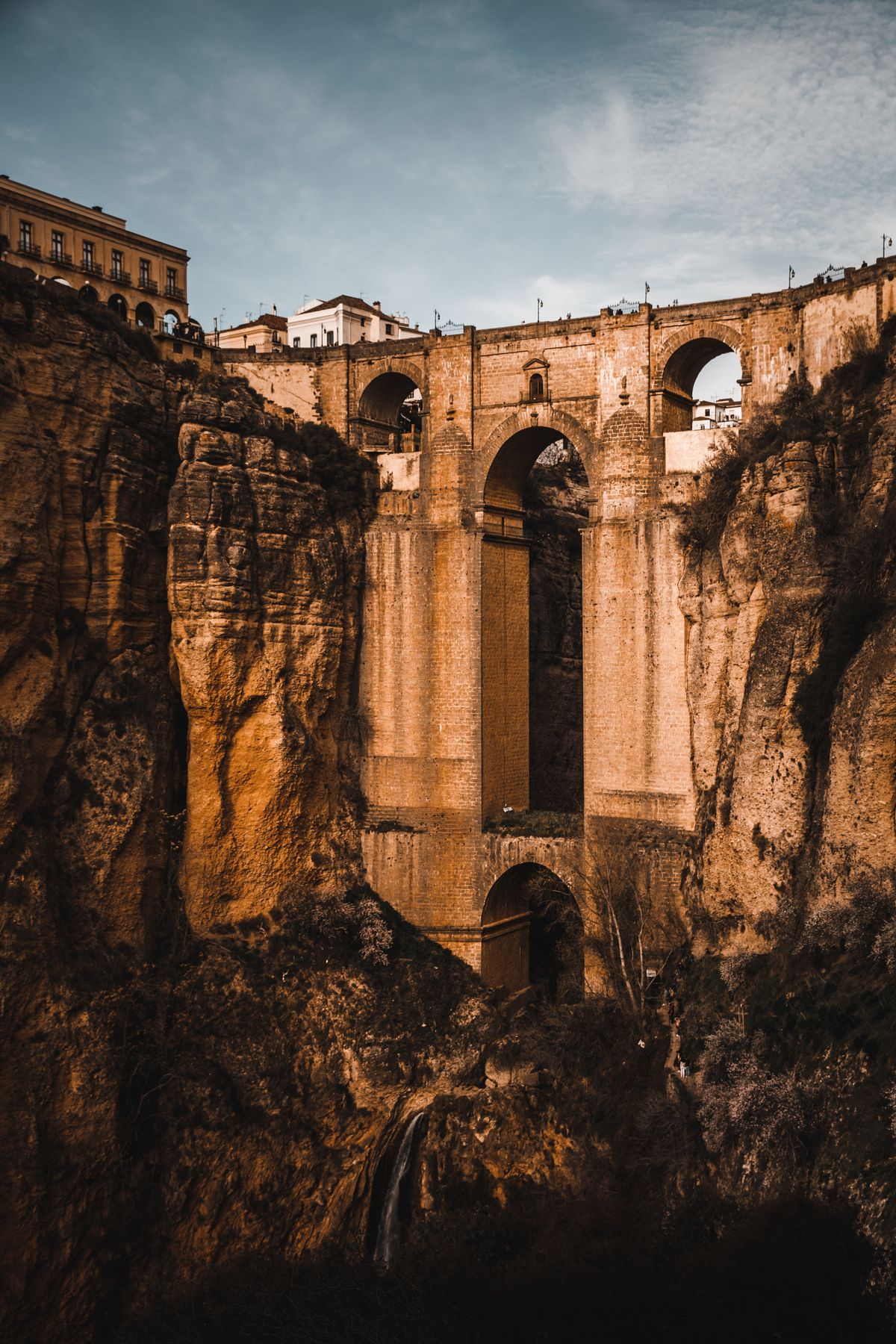
Ronda is not a beach town, and it is not trying to be one. It's an ancient city of around 33,000 people split in two by the El Tajo gorge — a 100-metre-deep chasm carved by the Guadalevín river, spanned by the 18th-century Puente Nuevo, one of the most photographed structures in Spain. Ernest Hemingway spent summers here and drew on it for *For Whom the Bell Tolls*. Orson Welles loved it so much his ashes are buried on a bullfighter's estate just outside town. Rilke called it "the dreamed-of city."
None of that history pays your mortgage. What might is this: Ronda offers genuine Spanish city life at prices dramatically below the coast, a rental market fed by roughly half a million visitors a year, and a growing wave of international buyers who have decided the Costa del Sol is too hot, too built-up, or too expensive — or all three.
Where Is Ronda and What Is It Actually Like?
Ronda sits in the Serranía de Ronda, the mountain range that fills the western interior of Málaga province. It's roughly 100km from Málaga city and its airport, and about 110km from Marbella by road — though the more direct mountain road from San Pedro de Alcántara covers the distance in around an hour to an hour and a quarter. This is a genuine inland city, not a coastal suburb.
The altitude matters more than the distance. At around 800 metres, Ronda has a proper mountain climate: hot, dry summers with cool evenings, and cold winters where frost is normal and the occasional dusting of snow on the surrounding peaks is not unusual. This is completely different from the coastal Costa del Sol, and for a growing number of buyers it's precisely the point. If you've spent an August in Fuengirola and found it oppressive, Ronda's summer evenings — when the temperature drops sharply after sunset — feel like a different country.
The city divides into two halves either side of the gorge. La Ciudad, the Old Town on the southern side, is the Moorish and medieval core: narrow streets, whitewashed houses, palacios with internal courtyards. El Mercadillo, on the northern side, is the "new" town (new meaning post-15th century), home to the famous bullring — one of the oldest in Spain and the birthplace of the modern bullfighting tradition under the Romero dynasty — plus the shops, banks, schools, and most of the everyday commercial life.
Crucially, Ronda is a fully functioning city rather than a pretty village. It has a public hospital (Hospital de la Serranía), a campus of the University of Málaga, secondary schools, supermarkets, a weekly market, a train station with connections towards Algeciras and Granada, and every service a permanent resident needs. That combination — postcard looks plus real infrastructure — is rarer than you'd think in inland Andalucía.
Who Is Buying in Ronda?
Ten years ago, the answer was mostly Spanish families and a scattering of adventurous northern Europeans. That has changed noticeably. The buyer profile now includes:
- Remote workers, who need fibre broadband (Ronda has it) and an inspiring place to live rather than proximity to an office. The post-pandemic remote work shift has been the single biggest driver of new international demand here.
- Writers, artists, and creative professionals following a well-worn path — Ronda's romantic reputation is not a marketing invention, and the town has a small but genuine international creative community.
- Retirees who want Spain, not the expat coast. Buyers who have done their research and concluded that they want Spanish neighbours, Spanish prices, and a Spanish pace of life, with a hospital ten minutes away.
- Coastal refugees — owners or would-be owners on the Costa del Sol who have been priced out, or who simply find July and August on the coast unbearable and want altitude.
- Investors targeting the short-term rental market, drawn by Ronda's status as one of Andalucía's must-visit tourist destinations.
Ronda Property Prices in 2026
Ronda's market breaks into three distinct segments, each with its own dynamics.
La Ciudad (Old Town): €150,000–€800,000+
The Old Town is the trophy market. Stock ranges from small townhouses needing complete renovation (from around €150,000) through renovated family houses (€250,000–€450,000) up to genuine palacios — large historic houses with courtyards, some with gorge views — at €600,000–€800,000 and occasionally well beyond. Anything with a direct view over El Tajo or towards the Puente Nuevo commands a substantial premium and rarely stays on the market long.
Buying here means buying old fabric: thick stone walls, uneven floors, and renovation projects that need proper architectural and structural advice. It also means buying in a protected historic environment, so alterations require permissions and patience. Get an independent survey and a lawyer who knows the local planning rules — our due diligence guide covers what to check before you commit.
El Mercadillo and the Modern Town: €80,000–€200,000
Across the bridge, the newer part of Ronda offers conventional Spanish apartments at prices that look almost implausible to anyone shopping on the coast. Functional two- and three-bedroom flats start from around €80,000; renovated apartments in good central positions run €120,000–€200,000. Townhouses in the residential streets behind the centre sit in a similar band.
This is where most permanent residents actually live, and where the long-term rental demand is (more on that below). It's not glamorous, but €130,000 buys a solid, walkable city-centre home — a figure that wouldn't get you a studio in central Marbella.
Rural Fincas in the Serranía: €120,000–€500,000+
The third segment is the countryside. The Serranía de Ronda is scattered with traditional farmhouses — cortijos and fincas — with olive groves, almond trees, and views that go on forever. Entry-level rustic properties needing work start around €120,000; habitable fincas with a few hectares typically run €200,000–€400,000; and fully renovated country houses with pools and guest accommodation reach €500,000 and above.
This is the segment growing fastest with buyers from the UK, the Netherlands, Germany, and Scandinavia. It's also the segment with the most legal complexity: rural properties in Andalucía come with questions about land classification, building legality (the AFO regularisation process), water rights, and access. None of these are dealbreakers, but all of them are reasons to use an experienced independent lawyer rather than the seller's recommendation.
Across all three segments, budget an additional 10–12% for purchase costs — ITP transfer tax, notary, land registry, and legal fees. Our buying costs guide breaks down exactly where that money goes.
Why Are Ronda Prices Rising?
Ronda is still dramatically cheaper than the coast — a like-for-like comparison with Marbella isn't even close — but prices have been climbing steadily, and the drivers look durable rather than speculative:
Remote work. Ronda offers what remote workers actually optimise for: beauty, affordability, community, and fast internet. Every year of normalised remote work adds to the buyer pool.
Tourism and rental demand. Ronda receives roughly 500,000 visitors a year. It's a fixture on every Andalucía itinerary and increasingly an overnight destination in its own right, as visitors realise the town is at its best after the day-trip coaches leave. That underpins a strong holiday rental market, which supports property values.
Infrastructure and access. Road connections to the coast and to Málaga have improved significantly, and the drive to Málaga via the A-357 corridor and the motorway network now takes around 1 hour 15 minutes in normal conditions. Ronda is close enough to Málaga airport for a viable lock-up-and-leave second home, which wasn't really true of most inland towns a generation ago.
The coast overflow effect. As Costa del Sol prices push ever higher — see our Costa del Sol property guide for the current picture — a segment of buyers inevitably looks inland. Ronda, as the most famous and best-equipped inland city in the province, catches a disproportionate share of them.
Rental Potential: Two Genuine Markets
Ronda is unusual among inland towns in having two credible rental markets.
Short-term holiday rentals are the headline. Half a million annual visitors, year-round appeal, and a shortage of characterful accommodation in the Old Town mean that well-presented properties — especially anything with a terrace, a view, or historic charm — book strongly. Gross yields of 5–7% are achievable on well-bought central properties, with the usual caveats about management costs and seasonality. Note that Andalucía regulates tourist rentals: you'll need to register the property and comply with the regional decree before taking a single booking. Our holiday rental licence guide explains the process.
Long-term rentals are the quieter opportunity. The University of Málaga campus, the hospital, and Ronda's role as the service hub for the whole Serranía generate steady demand from students, healthcare workers, and local professionals. Yields are lower than short-term but so is the workload, and the €80,000–€130,000 apartment segment in El Mercadillo is well suited to it.
The Honest Downsides
No serious guide should skip these.
The streets are steep and the terrain is vertical. Ronda is built on a cliff. Parts of the Old Town involve serious gradients and steps, which matters enormously if you're buying for retirement and thinking twenty years ahead. Test-walk your route to the supermarket before you buy, not after.
English-speaking services are limited. Compared with the coast, there are far fewer English-speaking doctors, tradespeople, and administrative services. Day-to-day life is conducted in Spanish. Many buyers count this as a feature; be honest with yourself about whether you will.
Winters are real winters. Cold, sometimes grey, occasionally frosty. The town quietens once the tourist season fades, and some foreign residents find January and February isolating. Central heating — often absent in older Spanish properties — is not optional here; factor installation into any renovation budget.
Resale liquidity is thinner than the coast. The buyer pool is growing but remains smaller than in Málaga city or Marbella. Buy with a medium- to long-term horizon.
Ronda vs the Coast: A Different Product Entirely
It's tempting to frame Ronda as "the cheap alternative to the Costa del Sol," but that undersells it. The nearest beaches are about an hour away, so this is not a beach property with a longer drive — it's a different lifestyle purchase altogether: a historic mountain city where you live among Spaniards, heat matters less, and your money buys two or three times the property it would in Marbella.
If what you actually want is the coast, read our Málaga property guide and Costa del Sol property guide first — Málaga city in particular offers urban Spanish life with a beach attached, and for some buyers that's the better fit. But if you've found yourself lingering on photos of the Puente Nuevo, wondering what it would be like to have a morning coffee overlooking a 100-metre gorge, Ronda is one of the few places in Spain where the reality genuinely matches the photograph — and where the entry price still leaves room for the rest of your life.
Final Verdict
Ronda in 2026 is what the smarter end of the market looks like when it moves early. The fundamentals — beauty, infrastructure, tourism, improving access, and a structural discount to the coast — all point the same way. Prices are rising, but from a base so far below coastal levels that the value case remains compelling, whether you're buying a €90,000 apartment for long-term rental, a €300,000 Old Town house to live in, or a Serranía finca with olive trees and silence.
Go in with open eyes: learn some Spanish, budget for heating, respect the legal complexity of rural purchases, and buy for the long term. Do that, and you're buying into one of the most extraordinary urban settings in Europe at a price the coast forgot decades ago.
Frequently Asked Questions
Q: Is Ronda a good place to buy property in 2026?
Yes, for the right buyer. Ronda offers a genuine Spanish city with full services (hospital, university campus, schools, train station), a strong tourist rental market fed by around 500,000 visitors a year, and prices dramatically below the Costa del Sol. It suits buyers seeking authenticity, a cooler mountain climate, and long-term value — less so buyers who want beach access and English-speaking convenience.
Q: How much does property in Ronda cost?
In 2026, apartments in the modern El Mercadillo side start from around €80,000, with renovated central flats at €120,000–€200,000. Old Town (La Ciudad) houses range from €150,000 for renovation projects to €800,000+ for historic palacios with gorge views. Rural fincas in the Serranía de Ronda run from €120,000 for rustic projects to €500,000+ for renovated country houses with land.
Q: How far is Ronda from the beach and the airport?
Ronda sits about 100km from Málaga and its airport (roughly 1 hour 15 minutes by road) and around 110km from Marbella, with the direct mountain road from San Pedro de Alcantara taking about an hour. The nearest beaches are therefore around an hour's drive — close enough for day trips, far enough that Ronda is a mountain-city lifestyle, not a coastal one.
Q: What is the climate like in Ronda compared to the Costa del Sol?
Very different. At around 800 metres altitude, Ronda has hot, dry summers with notably cool evenings, and cold winters where frost is common. The coast is milder year-round but far hotter and more humid in summer. Many buyers choose Ronda specifically because they find July and August on the coast oppressive — but budget for heating, which many older properties lack.
Q: Can I rent out a property in Ronda?
Yes, and the market is stronger than most inland towns. Short-term holiday rentals perform well thanks to Ronda's status as a must-visit destination — gross yields of 5–7% are achievable on well-bought central and Old Town properties — but you must register under Andalucía's tourist rental rules first. There's also steady long-term demand from university students, hospital staff, and local workers, suiting the cheaper apartment segment.
Ready to find your property in Spain?
Browse thousands of verified listings from licensed local agents.
Browse properties →