Most cost-of-living articles about Spain are written to flatter the reader: compare everything with London, marvel at the €1.20 coffee, and conclude you'll live like royalty on a state pension. That's not a budget — it's a sales pitch. Murcia is genuinely one of the cheapest regions in Spain to live well, but "cheap" without numbers is useless when you're deciding whether your income actually stretches to a life there. So here are the numbers, line by line, as they stand in 2026.
What does it cost to live in Murcia, Spain? A couple can live comfortably in the Murcia region on €2,200–€3,000 per month including rent, running a car, private health insurance and regular eating out. Own your home outright and that drops to roughly €1,600–€2,300. A careful single person can manage on €1,400–€1,800 with rent included.
Now let's break down where every euro goes.
Housing: The Line That Decides Everything
Housing is 30–40% of most budgets, so get this number right first.
Renting. A decent two-bedroom apartment runs €600–€900/month — the lower end in Murcia city's ordinary residential barrios and inland towns, the upper end for modern builds near the coast or the smarter parts of the city centre. Three-bed townhouses on Mar Menor urbanisations typically rent at €800–€1,100. Long-term contracts (under Spain's urban tenancy law, the LAU) usually want a month or two of deposit plus, increasingly, proof of income. Coastal rents spike absurdly in July–August on short contracts, so if you're renting to "try before you buy" — which we recommend — sign an 11-month or annual contract starting in autumn.
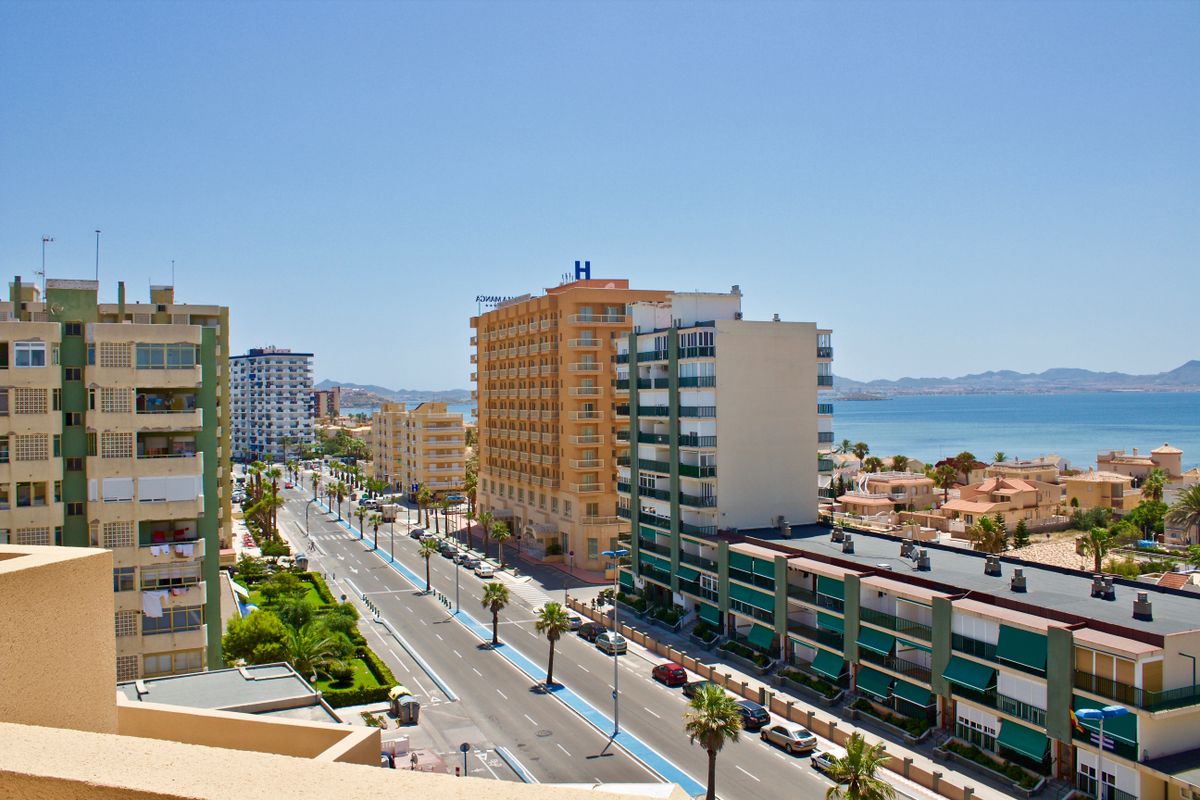
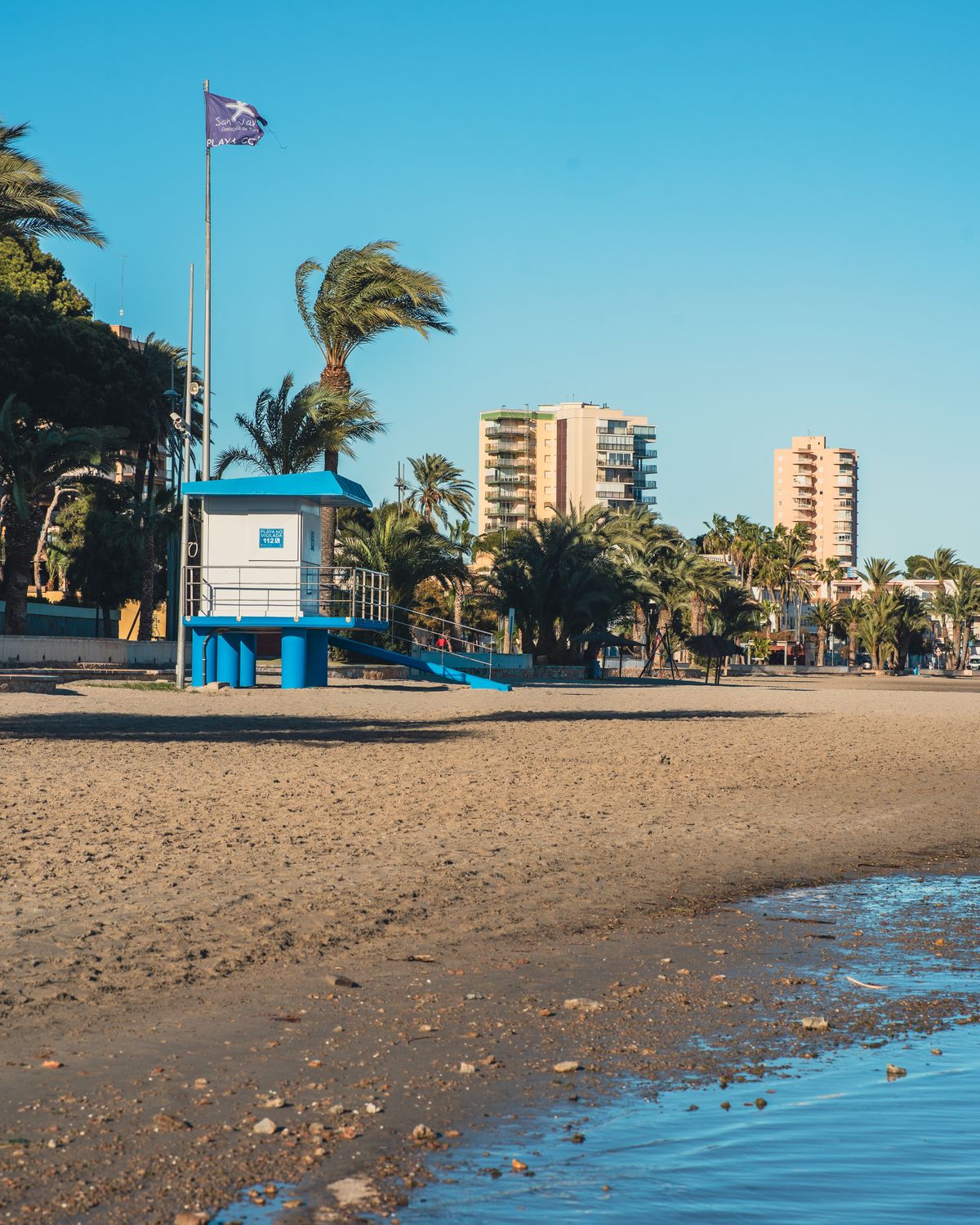
Buying. €200,000 in the Murcia region buys a lot: a modern three-bedroom townhouse with communal pool near the Mar Menor, a two-bed apartment a street or two from the beach in Los Alcázares or Santiago de la Ribera, or a large village house inland with change to spare. Murcia remains one of the cheapest coastal provinces in Spain per square metre. If you're weighing rent versus buy, remember purchase costs add roughly 10–13% on top (transfer tax, notary, registry, legal fees) — the full breakdown is in our guide to the ongoing costs of owning property in Spain, and the market context is in our Murcia property market 2026 report.
Utilities: The Bills Nobody Warns You About
Spanish utilities surprise new arrivals — not because they're extreme, but because electricity is billed differently and summer air conditioning is non-negotiable in Murcia.
- Electricity: €80–€140/month averaged across the year for a couple in an apartment. Your bill has a fixed capacity charge (*potencia*) plus consumption, and July–August bills with daily air conditioning can hit €150–€200 even in a modest flat, while spring bills drop to €60–€70. You can compare regulated vs free-market tariffs on the CNMC's official comparator at comparador.cnmc.gob.es.
- Water: €20–€30/month. Murcia is a dry region and water is metered and moderately priced. Villas with gardens and private pools should budget €40–€60.
- Internet: around €35/month for fibre, often bundled with mobile lines for €50–€60 total. Coverage in towns is excellent; check specific rural addresses before committing.
- Gas: most Murcia homes have no mains gas — you'll buy butane bottles (~€18 each) for hot water or cooking if the property isn't all-electric. A couple typically uses one or two bottles a month.
Food: Where Murcia Genuinely Delivers
Murcia is Spain's market garden — the region grows a huge share of the country's fruit and vegetables, and it shows in the prices at any weekly market.
- Supermarket shop: €300–€500/month for a couple, depending on how much you lean on Mercadona/Lidl own-brands versus imported British products (the imported aisle is where budgets quietly die). Shopping fruit and veg at municipal markets rather than supermarkets cuts the bill further and improves what you eat.
- Menú del día: €12–€18 for three courses with a drink at lunchtime — still one of the best deals in European life. Eat your main meal at lunch like the locals and your food budget transforms.
- Coffee: €1.30–€1.80. A caña of beer: €1.50–€2.50. House wine: frequently cheaper than the water.
Transport: Do You Actually Need a Car?
Honest answer: in Murcia city, no; almost everywhere else, yes.
- City living: Murcia city has buses and a tram line, the urban bus fare is around €1–€1.10 with discounts on multi-trip cards, and the city centre is compact and walkable. A car-free life is entirely realistic, which removes €200+ a month from your budget at a stroke.
- Coastal and inland towns: the Mar Menor towns are individually walkable but you'll want a car for hospitals, airports, big shops and simply living a full life. Budget for one honestly:
- Fuel: around €1.60/litre for petrol in 2026 — a typical mixed-use driver spends €80–€120/month.
- Insurance: €300–€500/year fully comprehensive on an ordinary car.
- ITV (the Spanish MOT): ~€40–€50 when due, plus annual road tax (IVTM) of €50–€130 depending on the car and municipality.
- A reliable used car costs more in Spain than in the UK — decent second-hand stock starts around €8,000–€10,000.
Healthcare: The Cost That Depends on Your Paperwork
This is the line item with the widest variation, and it's driven by residency status rather than lifestyle.
- Public healthcare (INSS/SNS): if you're employed, self-employed, a state pensioner with a UK-issued S1 form, or paying into the *convenio especial* scheme, you access Murcia's public system — which is genuinely good, with major hospitals in Murcia city and Cartagena. Registered users pay only prescription co-payments. Check S1 entitlement rules via the Spanish social security portal.
- Private health insurance: €60–€120/month per person, age-dependent — a healthy 55-year-old pays around €70–€90, a 70-year-old €120–€180. Non-lucrative visa applicants must hold full-coverage private insurance with no co-payments, so budget the upper end. The established providers expats use most are Sanitas, Adeslas, ASISA and DKV; all have decent English-language support and hospital networks in the region.
- Dental and optical are largely private for everyone: a check-up and clean around €50–€70, glasses noticeably cheaper than the UK.
Leisure: The Part You Moved For
- Gym: €30–€50/month for a decent private gym; municipal sports centres are cheaper still.
- Golf: €30–€80 per round on Murcia's resort courses depending on season and course — annual memberships from around €1,000–€1,800 make the region one of Europe's cheapest places to play seriously.
- Dinner for two: €30–€50 at a good mid-range restaurant with wine; you can double that at the destination restaurants in Murcia city and still call it cheap by northern-European standards.
- Cinema ~€8, padel court ~€4–€6 per person, mountain hiking and Mar Menor beaches: free.
Annual Costs Homeowners Forget to Divide by Twelve
If you buy, these recur every year whether you're in Spain or not:
- IBI (council property tax): €200–€600/year on typical apartments and townhouses, more for large villas. Set by each town hall against cadastral value.
- Community fees: €40–€120/month for apartments and urbanisation townhouses with pools; luxury complexes with lifts, gardens and gated security run higher.
- Home insurance: €150–€350/year.
- Non-resident income tax (IRNR) if you're not tax-resident: usually a few hundred euros a year on an average property.
The Realistic Monthly Budget: A Couple in Murcia, 2026
| Category | Renting (€/mo) | Owning outright (€/mo) |
| --- | --- | --- |
| Housing | 600–900 | 100–200 (IBI, fees, insurance) |
| Utilities | 150–220 | 150–220 |
| Food & drink | 450–650 | 450–650 |
| Car & transport | 150–250 | 150–250 |
| Private healthcare | 150–300 | 150–300 |
| Leisure | 200–400 | 200–400 |
| Contingency | 100–200 | 100–200 |
| Total | ≈ €2,200–€3,000 | ≈ €1,600–€2,300 |
How Murcia Compares Within Spain
Context matters, because "Spain is cheap" hides enormous regional variation. Murcia consistently ranks among the three or four cheapest regions in mainland Spain for overall living costs — meaningfully cheaper than the Costa del Sol, Barcelona or the Balearics, and 10–20% cheaper than the neighbouring Costa Blanca for like-for-like housing. A couple's €2,500/month budget that lives comfortably in Los Alcázares would feel noticeably tighter in Marbella and genuinely stretched in Palma. You can sanity-check regional price data yourself through Spain's national statistics institute, the INE, which publishes consumer price indices by region.
The flip side of cheap is fewer of certain amenities: Murcia has less international-school choice than Málaga, a thinner luxury retail and dining scene, and fewer direct winter flight routes than Alicante or Málaga airports (though Alicante is under an hour from the Mar Menor, so in practice this costs you little). For most expats — particularly retirees and remote workers — that trade is comfortably worth making. You're exchanging amenities you'd rarely use for €500–€800 a month you'll keep.
Surprisingly Cheap, Surprisingly Expensive
Cheaper than you expect: wine and beer, fresh produce, menú del día lunches, taxis, dental work, golf memberships, property taxes compared with UK council tax, and prescription medication.
More expensive than you expect: electricity in July and August, second-hand cars, imported British groceries, anything involving officialdom and a *gestor*, international school fees if you have children (€400–€800/month), and flights home in school holidays. None of these break the budget — but they're the lines that make a naive "Spain is half the price of the UK" spreadsheet wrong.
The honest summary: Murcia isn't magic, it's just efficiently priced. Your money buys roughly a third to a half more life than it does in the UK, Netherlands or Scandinavia — provided you live even slightly like a local rather than importing your old cost base at Spanish prices plus shipping.
---
*Figures are typical 2026 ranges and vary by town, property and lifestyle. Tax and residency rules change — take professional advice before relocating.*
---
Thinking about making Murcia home? Read our complete guide to retiring to Murcia, get the market picture in our Murcia property market 2026 report, or browse properties across the Murcia region to see what your budget buys.
Ready to find your property in Spain?
Browse thousands of verified listings from licensed local agents.
Browse properties →